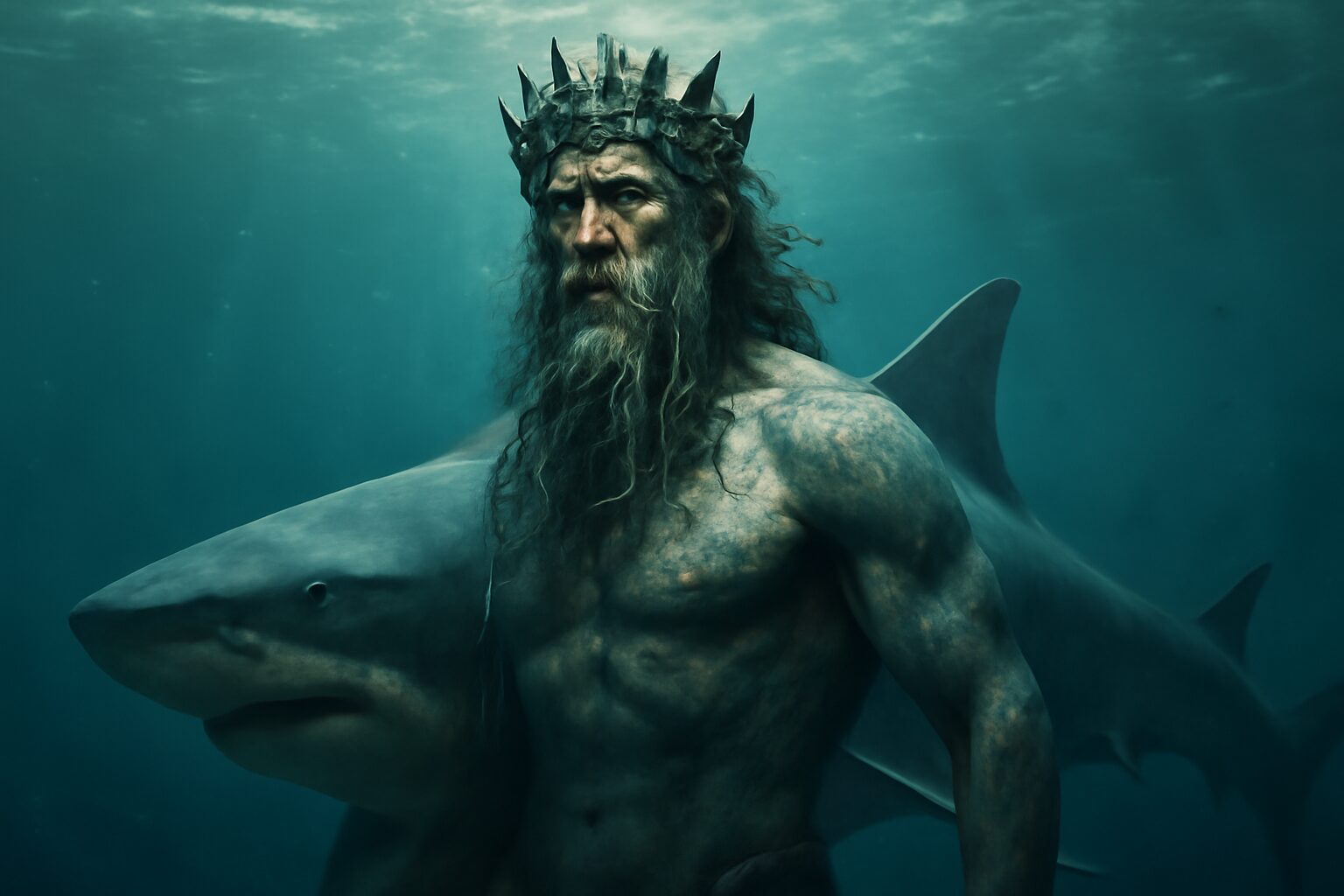
Akheilos: The Shark-Shaped Sea Daemon
In the lesser-known corners of Greek mythology lurks Akheilos, a fascinating and fearsome sea deity often depicted as a shark-shaped daemon. His name, derived from the Greek word akhē (meaning "pain" or "distress"), hints at his terrifying nature as a bringer of maritime chaos.
Origins and Nature
Akheilos appears in the Bibliotheca of Pseudo-Apollodorus as one of the many sea deities spawned by the primordial gods. Unlike the more benevolent sea gods like Poseidon or Nereus, Akheilos represents the dangerous, unpredictable aspects of the ocean. He embodies the terror sailors felt when encountering sharks or sudden storms at sea.
Appearance and Powers
Ancient sources describe Akheilos as having a hybrid form - part human, part shark. Some accounts suggest he could shapeshift between a monstrous shark-like creature and a more humanoid form. His powers included:
- Command over sharks and other predatory sea creatures
- Ability to summon violent whirlpools and rogue waves
- Creating the optical illusion of calm waters to lure sailors to their doom
Mythological Significance
While not as prominent as other sea deities, Akheilos played an important role as:
- A personification of maritime dangers
- A cautionary figure representing the ocean's unpredictable wrath
- A balance to the more benevolent sea gods in Greek cosmology
Relationships with Other Deities
Akheilos was often associated with:
- Keto: The primordial sea monster goddess, sometimes considered his mother
- Phorcys: Another sea deity who fathered many marine monsters
- Scylla: The famous six-headed sea monster who may have been his sibling
Unlike the organized pantheon of Olympians, Akheilos belonged to the older, more chaotic generation of sea deities who represented nature's untamed forces rather than human-like personalities.
Cultural Legacy
While not widely worshiped, Akheilos appears in some ancient sailor's prayers as a deity to be appeased. His image sometimes adorned ships' prows as both a warning and a protective charm. Today, he serves as an interesting example of how the Greeks personified their very real fears of the sea's dangers.
Alternative Names for Akheilos
God Name: Acheilus (Greek)
A variant spelling of Akheilos, found in some ancient Greek texts, reflecting regional or dialectal differences in pronunciation.
God Name: Achelou00fcs (Roman)
The Roman adaptation of Akheilos, often associated with the river god Achelous, though their myths may have been conflated over time.
God Name: Akheloios (Greek)
An alternative form used in certain poetic or regional contexts, emphasizing the god's connection to water or rivers.
Tales about Akheilos
Akheilos and the Wrath of Poseidon
In the tempestuous depths of the Aegean Sea, Akheilos, the shark-formed sea daimon, once crossed paths with the mighty Poseidon. It was said that Akheilos, in his arrogance, challenged the god of the seas to a race across the waves, boasting that his swift, predatory form could outpace even the divine steeds of the ocean king.
The Divine Retribution
Enraged by such impudence, Poseidon summoned a colossal whirlpool, trapping Akheilos in its vortex. The shark daimon thrashed and fought, but the god’s power was absolute. As punishment for his hubris, Poseidon cursed Akheilos to forever roam the shallows, forbidden from the ocean’s depths where the great god held court. To this day, sailors tell tales of spotting a frustrated shark-like figure patrolling the coastal waters, a eternal reminder of the price of challenging the gods.
In his exile, Akheilos sometimes encountered other sea beings like Thoosa, the swift nereid of dangerous currents, and Peisinoe, one of the alluring sirens whose songs could mesmerize even predators. He also learned to avoid the wrathful Poine, the spirit of retribution and punishment who roamed the waters seeking those who defied divine will.
Akheilos and the Cunning of Thetis
Another legend tells of Akheilos encountering Thetis, the revered nereid known for her wisdom and transformative abilities. Akheilos, ever the predator, sought to make a meal of Thetis as she rested upon a sunlit reef. But Thetis, foreseeing his approach, shifted her form into that of a giant, venomous sea serpent.
A Lesson in Respect
Confronted by this terrifying new visage, Akheilos halted his advance, his predatory instincts overcome by shock and confusion. Thetis, in a voice that echoed like the deep currents, admonished him, teaching that not all in the sea are as they appear and that respect must be earned, not taken. Humbled, Akheilos retreated, and it is said he thereafter showed a wary deference to the older, wiser beings of the deep, a lesson carved into his very nature.
This newfound caution extended to other powerful figures he encountered, including Pemphredo, one of the ancient Graeae who guarded the sea's secrets, and Deino, another of the fearsome Graeae sisters whose terrible aspect could paralyze the boldest of hunters. He also gave wide berth to Kakia, the personification of vice and moral badness who sometimes drifted through the murkier waters, tempting creatures toward corruption.
Frequently Asked Questions
Who is Akheilos in Greek mythology?
Akheilos is a lesser-known sea deity in Greek mythology, often associated with sharks or the personification of sharks. He represents the fearsome and untamed aspects of the sea.
What does the name Akheilos mean?
The name Akheilos likely derives from the Greek word 'akhe,' meaning 'pain' or 'distress,' reflecting his connection to the dangerous and unpredictable nature of the sea.
Why is Akheilos important in Greek mythology?
Akheilos symbolizes the darker, more dangerous side of the ocean, reminding people of the sea's power and unpredictability. He complements other sea deities by representing threats like sharks and storms.
How does Akheilos compare to other Greek sea gods?
Unlike Poseidon, the ruler of the sea, or Triton, his messenger, Akheilos embodies the sea's predatory and chaotic elements, similar to how Keto represents sea monsters.
Are there any myths or stories about Akheilos?
Akheilos is rarely mentioned in surviving myths, but he appears in some regional tales as a figure who warns sailors of dangers or embodies the terror of shark attacks.