
Syntribos: The Crushing Spirit of Greek Mythology
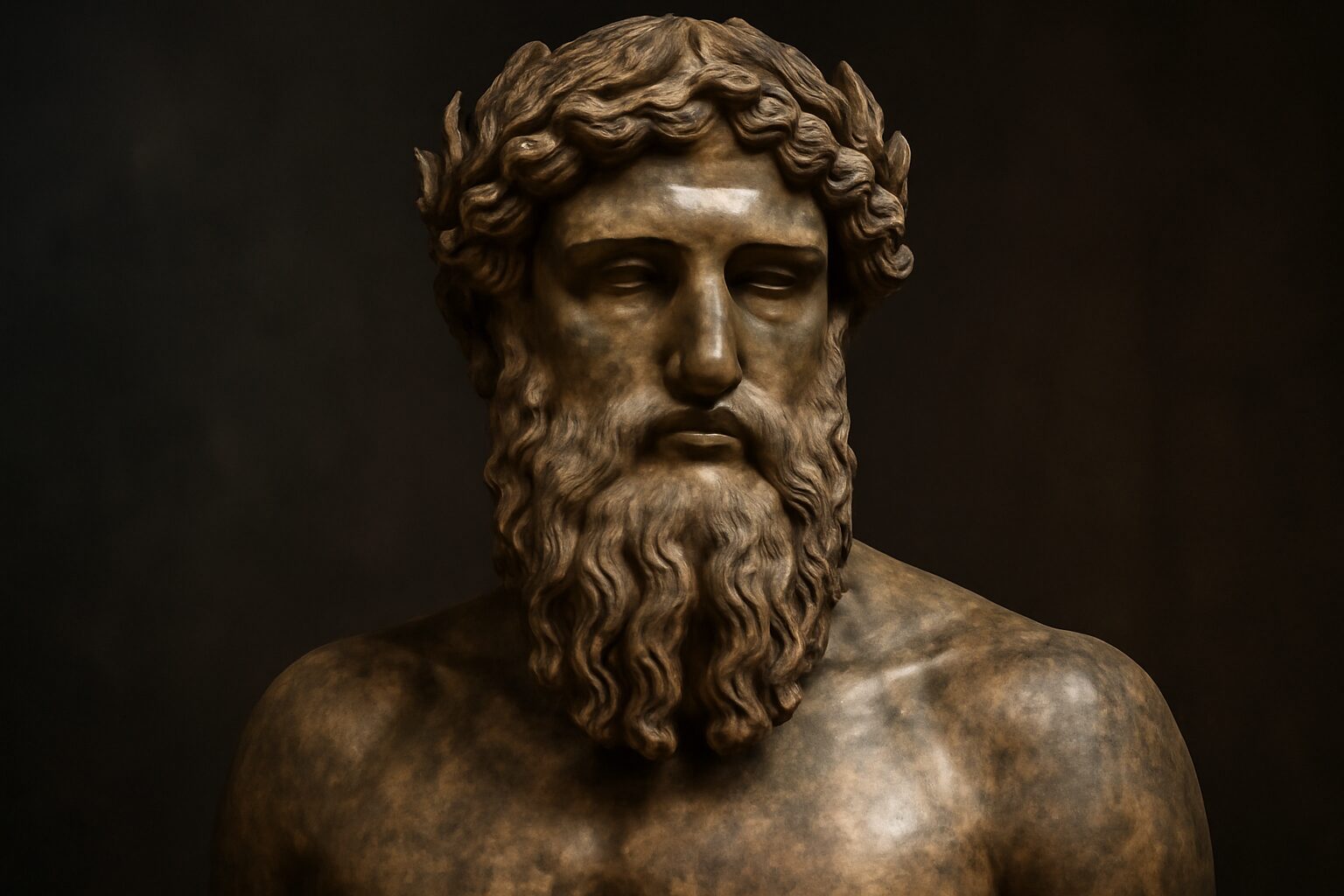
In the vast pantheon of Greek mythology, Syntribos is one of the lesser-known but fascinating deities. He belongs to a group of malevolent spirits known as the Kakodaimones, who personify misfortune and destruction. His name, derived from the Greek word syntribō, means "the crusher" or "the breaker," reflecting his terrifying role in ancient lore.
Role and Powers
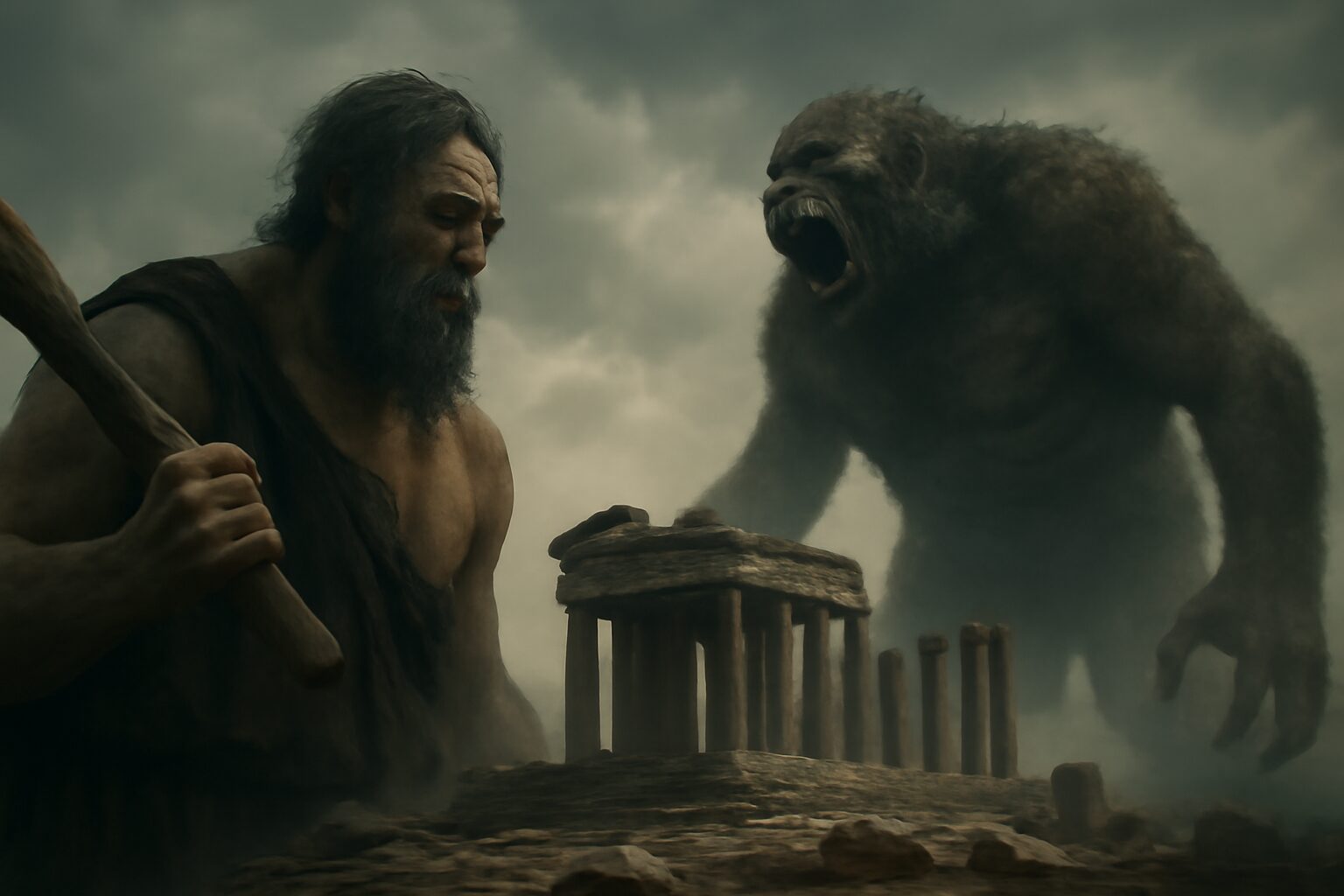
Syntribos was believed to be a destructive force, specializing in causing accidents, collapses, and crushing disasters. Alongside his companions—the spirits Asbetos (the incendiary) and Sabaros (the destroyer)—he was feared for his ability to bring sudden ruin. Ancient Greeks invoked his name when explaining unexpected structural failures, shipwrecks, or cave-ins, attributing such calamities to his unseen hand.
Unlike major Olympian gods, Syntribos was not worshiped but rather dreaded as an embodiment of chaos. His influence was thought to lurk in unstable buildings, precarious cliffs, and storm-tossed seas, waiting to strike without warning.
Mythological Significance
Syntribos appears in surviving texts primarily as part of a trio of destructive spirits. In some traditions, these spirits were considered offspring or minions of darker primordial forces, such as Eris (Strife) or Thanatos (Death). Their presence reinforced the Greek belief that unseen, malevolent forces could disrupt human life at any moment.
Though not a central figure in grand myths, Syntribos represents the ancient Greeks' understanding of natural disasters and accidents—phenomena they personified to make sense of the unpredictable world around them.
Relationships and Legacy
Syntribos had no temples or cults dedicated to him, but his name survived in curses and protective charms. People would invoke apotropaic (warding-off) rituals to keep him and his fellow Kakodaimones at bay. His legacy endures in modern interpretations of Greek mythology as a symbol of sudden, uncontrollable destruction.
While overshadowed by more prominent gods, Syntribos serves as a reminder of how the ancient Greeks personified even the most chaotic and feared aspects of existence—giving shape to the unseen dangers that lurked in their world.
Alternative Names for Syntribos
God Name: Syntribos (Greek)
The primary name of the god, associated with destruction or shattering in Greek mythology.
God Name: Quassator (Roman)
A Roman equivalent or alternative name for Syntribos, derived from Latin 'quassare,' meaning 'to shatter' or 'to break.' Reflects similar destructive attributes.
God Name: Triklops (Greek)
An epithet or alternative name in Greek tradition, possibly referencing a three-eyed or three-faced aspect of the god, though details are scarce in surviving texts.
God Name: Rhegnumi (Greek)
Another Greek name linked to Syntribos, derived from 'u1fe5u03aeu03b3u03bdu03c5u03bcu03b9,' meaning 'to break apart.' Emphasizes the god's role in fragmentation or destruction.
Tales about Syntribos
The Shattering of the Golden Lyre
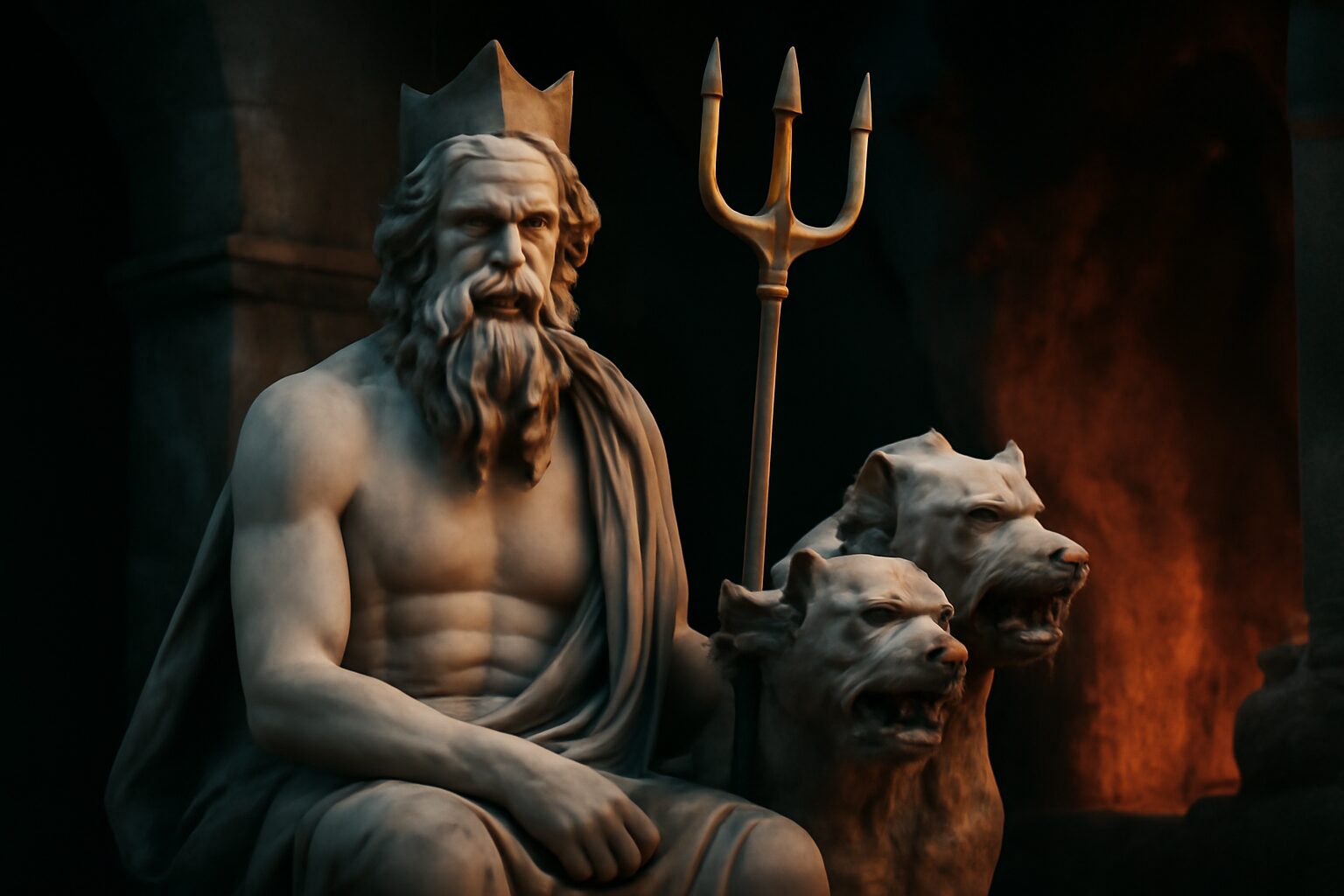
In the shadowy halls of Hades, the god of the underworld kept a collection of artifacts from fallen heroes. Among them was a golden lyre, once played by Orpheus himself, whose music could charm even the stones. Syntribos, the spirit of shattering and fragmentation, grew envious of the instrument's enduring beauty and sought to claim it for his own domain of broken things.
One night, as Hades attended to the flow of souls across the River Styx, Syntribos crept into the treasure chamber. With a mere touch, he channeled his essence into the lyre, and it splintered into a thousand shimmering fragments. The sound of the break echoed through the underworld, a dissonant crack that drew Hades's ire. Though the lord of the dead could not restore what was broken, he bound Syntribos to guard the fragments for all eternity, a prison of his own making.
The Unmaking of a Titan's Pride
High atop Mount Olympus, Prometheus, the titan who gifted fire to humanity, crafted a magnificent marble statue in honor of mankind's resilience. It stood as a symbol of unbroken spirit, much to the annoyance of Syntribos, who despised anything whole and perfected.
Under the cover of a thunderstorm sent by Zeus, Syntribos ascended to the peak. With a whisper of destructive intent, he laid his hands upon the statue. Cracks radiated from his touch, and the marble crumbled to dust at the titan's feet. Prometheus arrived too late, finding only ruin. In his sorrow, he gathered the dust and cast it into the winds, where it became the sands of every desert—a testament to Syntribos's relentless power to reduce grandeur to fragments.
Frequently Asked Questions
Who is Syntribos in Greek mythology?
Syntribos is one of the lesser-known deities or divine figures in Greek mythology, often associated with destruction or crushing forces. While not as prominent as major gods like Zeus or Athena, Syntribos represents the concept of inevitable, often violent, change or collapse.
Why are minor deities like Syntribos important in Greek mythology?
Minor deities like Syntribos help complete the Greek mythological world by representing specific, often niche aspects of life or nature. They show how the ancient Greeks personified even minor or destructive forces, giving them divine forms to explain and understand the world around them.
What can we learn from figures like Syntribos today?
Figures like Syntribos remind us that ancient cultures saw divinity in all aspects of existence, even destructive ones. Today, they help us understand how people explained uncontrollable forces and provide insight into ancient Greek philosophy about balance between creation and destruction.
Are there any myths or stories about Syntribos?
Unlike major gods, Syntribos doesn't feature prominently in surviving Greek myths. Most references to such minor deities come from ancient lists or passing mentions, suggesting they were more conceptual than central to major mythological narratives.
How does Syntribos compare to more famous destructive gods like Ares?
While Ares represents the chaos and violence of war, Syntribos embodies a more fundamental, impersonal destructive force - like structural collapse or crushing weight. This shows the Greek tendency to categorize different types of destruction under separate divine figures.