Alexiares: The Lesser-Known Guardian of Olympus
In the vast pantheon of Greek mythology, Alexiares stands as one of the lesser-known but fascinating deities. The son of Heracles (the legendary hero later deified) and Hebe, the goddess of youth, Alexiares embodies the enduring legacy of his father's heroic lineage. His name, meaning "he who wards off war" or "defender," hints at his role as a protector, though his myths are sparse compared to other Olympian figures.
Origins and Family
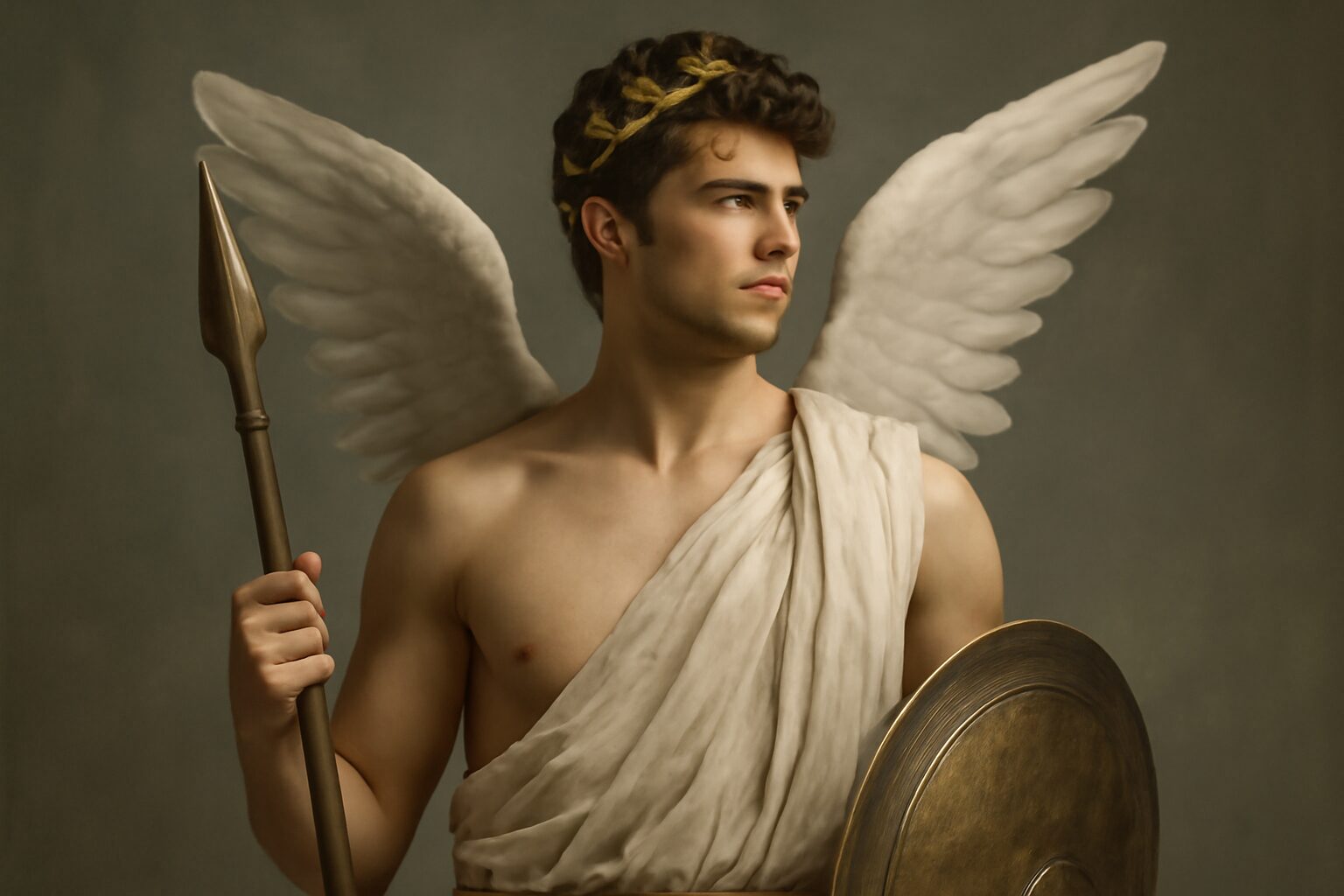
Alexiares was born into divine royalty—his mother, Hebe, was the daughter of Zeus and Hera, while his father, Heracles, was Zeus’s mortal son who ascended to godhood. Alongside his brother Anicetus (whose name means "the unconquerable"), Alexiares was worshiped as a guardian of Olympus. The brothers were often depicted as youthful, strong figures, embodying the eternal vigor inherited from their mother, the goddess of youth.
Role and Powers
Though not as prominent as other gods, Alexiares played a crucial role in the divine hierarchy. Along with Anicetus, he was said to oversee the protection of Olympus, ensuring its gates remained secure against threats. Some myths suggest he inherited his father's immense strength, though his domain was more defensive than combative. Unlike Heracles, who was known for his labors and battles, Alexiares symbolized the preservation of peace and order.
Worship and Significance
Alexiares and Anicetus were venerated in parts of Greece, particularly in regions where Heracles' cult was strong. Their worship was often linked to rites celebrating youth and protection. Though no major temples were dedicated solely to them, they appeared in local traditions as minor but respected deities. Their existence reinforced the idea of Heracles' divine legacy, bridging the mortal and immortal worlds.
While Alexiares may not dominate the grand myths of Zeus or Athena, his presence highlights the intricate web of relationships and roles within Greek mythology. As a guardian and symbol of enduring strength, he remains a quiet but meaningful figure in the stories of Olympus.
Alternative Names for Alexiares
God Name: Anicetus (Greek)
Anicetus is sometimes considered an alternative name or epithet for Alexiares, particularly in contexts where he is associated with invincibility or protection. The name means 'unconquerable' in Greek, highlighting his role as a guardian deity.
God Name: Alexiades (Roman)
Alexiades is a Romanized version of Alexiares, used in some Roman texts to refer to the god. It maintains the original Greek meaning but adapts the name to Roman linguistic conventions.
God Name: Heracles Alexikakos (Greek)
In some traditions, Alexiares is associated with Heracles (Hercules in Roman mythology) under the epithet 'Alexikakos,' meaning 'averter of evil.' This reflects a syncretic blending of their roles as protectors.
Tales about Alexiares
Alexiares and the Healing of Aceso
In the divine halls of Olympus, Alexiares, the youthful guardian of defense, once found himself observing the quiet diligence of Aceso, the goddess of the healing process. Intrigued by her gentle yet persistent nature, he approached her as she tended to a wounded sparrow, her hands glowing with a soft, restorative light.
A Lesson in Patience
"Your strength lies in swift action," Aceso remarked, not looking up from her work. "But healing, like defense, requires patience. It is not always about the immediate strike, but the enduring safeguard." Alexiares, accustomed to the vigor of battle, watched as the sparrow’s wing slowly mended under her care. He realized that true protection wasn’t just in repelling threats, but in ensuring recovery and resilience afterward.
From that day, Alexiares incorporated Aceso’s wisdom into his duties, understanding that a strong defense also means fostering the strength to heal and endure. He later consulted Sophrosyne on temperance, Homonoia on unity, and Eupraxia on well-conducted action, weaving their virtues into his protective strategies.
Alexiares and the Guidance of Aether
High above the mortal realm, where the air thins into the pure essence of the upper atmosphere, Alexiares sought counsel from Aether, the primordial god of light and the bright, glowing upper air. He found Aether shimmering at the boundary between earth and heaven, a radiant figure whose presence was both calming and invigorating.
Clarity in the Highest Air
"You guard the tangible," Aether’s voice echoed like a clear chime. "But remember, the greatest threats often cloud the mind before they strike the body. Seek clarity, as I embody the purest air, unobstructed and true." Alexiares, inspired, began to meditate in the heights where Aether resided, learning to perceive dangers not just with his eyes, but with an unclouded mind, anticipating conflicts before they could manifest.
This alliance with Aether endowed Alexiares with a foresight that made his defensive strategies unparalleled, blending physical readiness with ethereal insight. He also drew wisdom from Epiphron on prudence, Pistis on trust, and Euthymia on confidence, enhancing his ability to safeguard both realms and minds.
Frequently Asked Questions
Who is Alexiares in Greek mythology?
Alexiares is a minor deity in Greek mythology, often considered the son of Heracles (Hercules) and Hebe, the goddess of youth. He is associated with warding off war and protecting homes.
What does the name Alexiares mean?
The name Alexiares means 'he who wards off war' or 'protector from war,' reflecting his role in Greek mythology as a guardian against conflict.
Why is Alexiares important in Greek mythology?
Alexiares, though a lesser-known figure, symbolizes peace and protection, offering insight into how ancient Greeks valued harmony and sought divine intervention to avoid war.
What can we learn from the story of Alexiares?
Alexiares teaches the importance of peacekeeping and protection, showing how even minor deities played a role in ancient Greek beliefs about maintaining balance and safety.
How does the concept of Alexiares apply today?
The idea of Alexiares resonates today as a reminder of the enduring human desire for peace and the need to protect communities from conflict, reflecting timeless values.