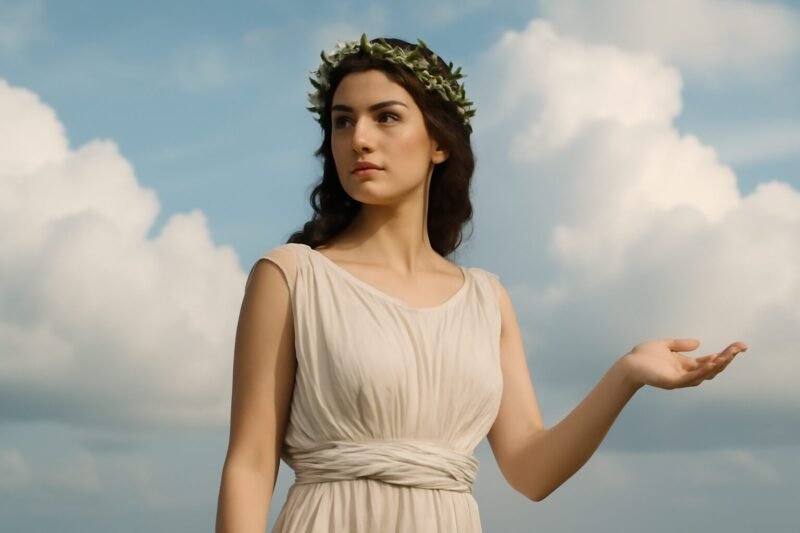
Maia: The Shy Nymph of Greek Mythology
In Greek mythology, Maia was one of the seven Pleiades, the daughters of the Titan Atlas and the Oceanid Pleione. Her name means "mother" or "nurse," reflecting her nurturing nature. Though less prominent than some Olympian deities, Maia played a crucial role in the divine hierarchy as the mother of Hermes, the mischievous messenger god.
The Shyest of the Pleiades
Maia was known as the most beautiful and also the most reclusive of the Pleiades. She lived alone in a secluded cave on Mount Cyllene in Arcadia, avoiding the company of both gods and mortals. Despite her shyness, she caught the attention of Zeus, the king of the gods, who visited her in secret. Their union resulted in the birth of Hermes, who would become one of the most clever and resourceful Olympians.
Mother of Hermes
Maia's most significant mythological role was as the mother of Hermes. According to legend, Hermes was born at dawn and by noon had already invented the lyre and stolen Apollo's cattle—an impressive feat for a newborn. Though Maia tried to shield her son from Zeus's wrath, Hermes's charm and wit quickly won over the gods. Maia's protective nature highlights her role as a maternal figure, even among divine beings.
Symbolism and Worship
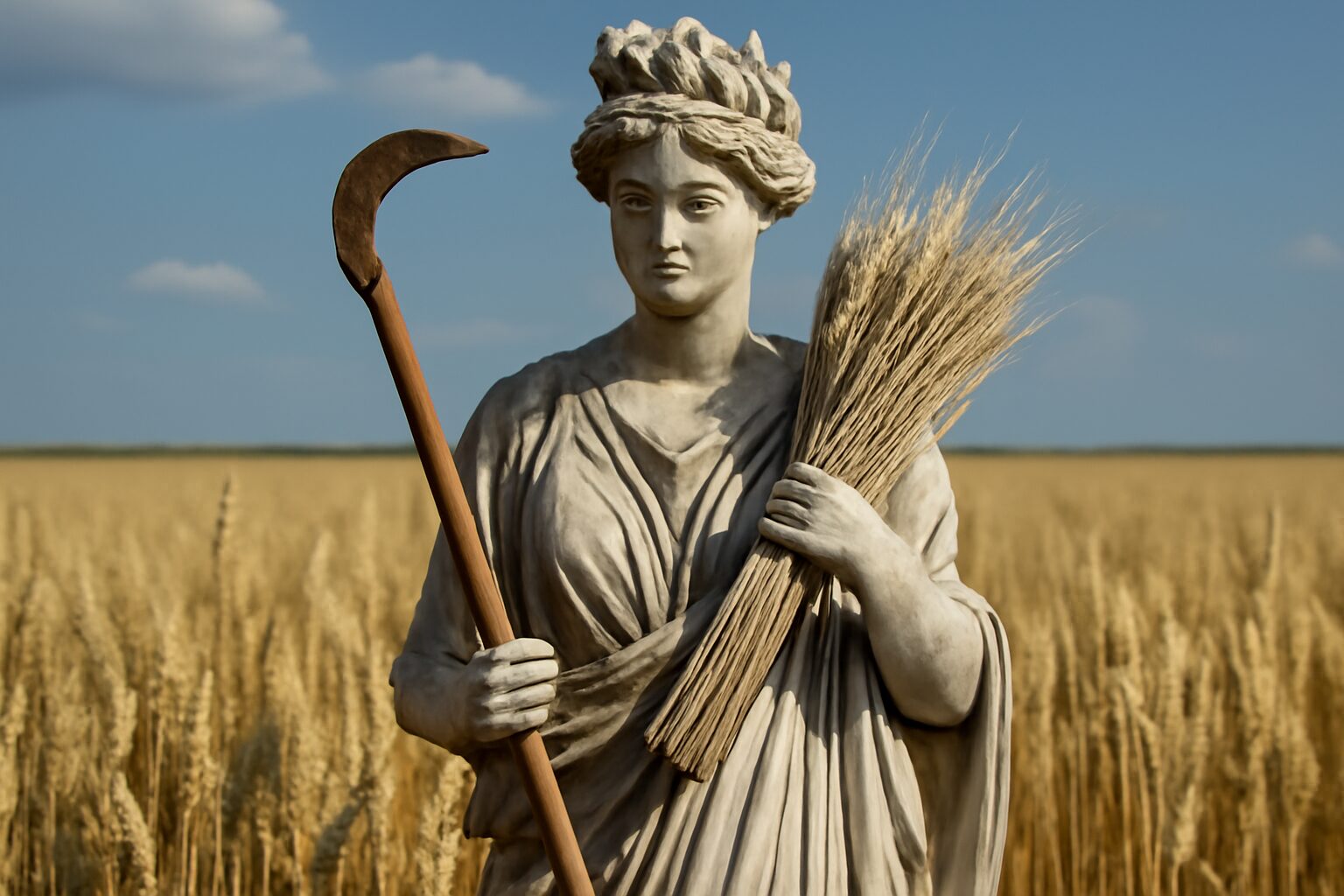
Maia was associated with growth and nurturing, both in nature and in human life. The month of May (derived from her name) was sacred to her, symbolizing spring's renewal. In Roman mythology, she was conflated with Maia Maiestas, a goddess of fertility and abundance, further emphasizing her connection to life and prosperity.
Though not as widely worshiped as other deities, Maia was honored in Arcadia and Rome, where festivals celebrated her role in agriculture and motherhood. Her legacy endures as a symbol of quiet strength and the nurturing forces of nature.
Alternative Names for Maia
God Name: Maiesta (Roman)
In Roman mythology, Maia was identified with the goddess Maiesta, who was associated with growth and increase, particularly in the context of spring and fertility.
God Name: Maia (Greek)
The primary Greek name for the goddess, Maia is one of the Pleiades and the mother of Hermes. She is associated with nurturing and the earth.
God Name: Bona Dea (Roman)
Maia was sometimes conflated with the Roman goddess Bona Dea, who was worshiped as a goddess of fertility, healing, and chastity. This association reflects Maia's nurturing aspects.
God Name: Maia Makaira (Greek)
An epithet meaning 'blessed Maia,' highlighting her role as a benevolent and nurturing figure in Greek mythology.
Tales about Maia
Maia and Hermes: The Birth of a Trickster
Deep in the shadowy recesses of Mount Cyllene, the Pleiades nymph Maia gave birth to a son in secret. She had been courted by none other than Zeus, king of the gods, and wished to avoid the jealous eyes of Hera. Her child, Hermes, was no ordinary babe—within hours of his birth, he displayed astonishing cunning. While Maia slept, he slipped from his cradle, crafted the first lyre from a tortoise shell, and stole the sacred cattle of Apollo. When Apollo confronted him, Maia defended her clever son with a mother’s fierce love. Zeus, amused by Hermes’s antics, welcomed him into the pantheon as the god of messengers, thieves, and travelers.
The Aftermath: A Mother’s Pride
Though initially fearful of divine retribution, Maia watched with pride as Hermes charmed the gods with his wit and earned his place on Olympus. Their bond remained strong, a testament to her nurturing spirit amid the tumult of godly affairs.
Maia and Atlas: A Titan’s Daughter
Long before her encounter with Zeus, Maia was known as the daughter of the Titan Atlas, who bore the weight of the heavens on his shoulders. While her father endured his eternal punishment, Maia and her sisters, the Pleiades, became celestial beings, shining as stars in the night sky. Maia often gazed upon her father’s strained form, her light a small comfort in his endless labor. Though they were separated by fate—he in the mortal realm, she among the stars—their connection symbolized resilience and the enduring bonds of family.
A Legacy in the Stars
Maia’s star, one of the brightest in the Pleiades cluster, is said to glow with particular intensity when viewed from the place where Atlas stands. This eternal light serves as a reminder of her empathy and the silent strength she inherited from her Titan father.
Frequently Asked Questions
Who is Maia in Greek mythology?
Maia is a nymph and one of the Pleiades in Greek mythology. She is the daughter of Atlas and Pleione, and the mother of Hermes, the messenger god, by Zeus.
Why is Maia important in Greek mythology?
Maia is important because she is the mother of Hermes, one of the major Olympian gods. Her role as a nurturing figure and her connection to Hermes highlight her significance in the divine family tree.
What does Maia represent in Greek mythology?
Maia represents nurturing, motherhood, and the earth. As a nymph associated with growth and nature, she embodies the fertile and protective aspects of the natural world.
How is Maia connected to the sky deities in Greek mythology?
Maia is connected to the sky deities through her father, Atlas, who holds up the heavens, and her son Hermes, who travels between the earth and the sky as a messenger of the gods.
What can we learn from the story of Maia today?
Maia's story teaches us about the importance of nurturing and the interconnectedness of nature and the divine. Her role as a mother and earth nymph reminds us of the value of caregiving and our connection to the natural world.