Pemphredo: The Dreadful Sister of Greek Mythology
In the shadowy corners of Greek mythology, Pemphredo stands as one of the lesser-known but fascinating figures. She is one of the Graeae, a trio of ancient sisters who personified the horrors of old age. Her name translates to "the dreadful one" or "alarm", a fitting title for a being whose very presence evoked fear.
The Graeae Sisters
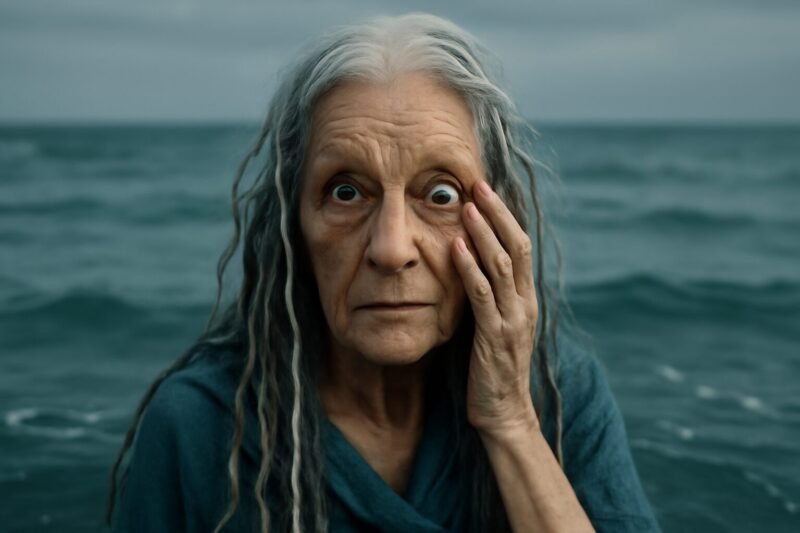
Pemphredo and her sisters, Deino (the terrible) and Enyo (the warlike), were daughters of the primordial sea deities Phorcys and Ceto. Often depicted as old women from birth, they shared a single eye and a single tooth among them, passing these between each other to see and eat. Their grotesque appearance and eerie nature made them symbols of decay and inevitability.
Role in Myth
Pemphredo and her sisters played a crucial role in the myth of Perseus. When the hero sought to slay Medusa, he needed the location of the Gorgons, which only the Graeae knew. By stealing their shared eye, Perseus forced them to reveal the information, showcasing their vulnerability despite their fearsome reputation.
Symbolism and Legacy
The Graeae, including Pemphredo, represented the inescapable passage of time and the dread of aging. Unlike the Fates, who controlled destiny, the Graeae embodied the physical and psychological toll of growing old. Their shared eye symbolized the limited perspective of mortality, while their tooth hinted at the decay that comes with age.
Though not as widely recognized as other Greek deities, Pemphredo and her sisters remain compelling figures, embodying the ancient Greeks' fear of time's relentless march. Their myth serves as a reminder of humanity's struggle against the inevitable.
Alternative Names for Pemphredo
God Name: Pemphredo (Greek)
Pemphredo is one of the Graeae, the three sisters who shared one eye and one tooth among them. Her name means 'the grim one' or 'the wasp.'
God Name: Graia (Greek)
Pemphredo is sometimes referred to collectively as one of the Graeae, meaning 'the gray ones' or 'the old ones,' emphasizing their ancient and fearsome nature.
God Name: Deino (Roman)
In Roman mythology, Pemphredo is sometimes equated with Deino, one of the Graeae, whose name means 'the terrible one' or 'dread.'
God Name: Persis (Greek)
A rare alternative name for Pemphredo, possibly derived from regional variations or poetic epithets, though its exact origin is unclear.
Tales about Pemphredo
The Gray Sister and the Sea God
In the shadowy depths where light fears to tread, Pemphredo and her sisters guarded their single eye and tooth with grim determination. One stormy night, as waves churned like boiling cauldrons, Phorcys, the ancient sea god, sought their counsel. His daughter, the gorgon Medusa, had been slain by the hero Perseus, and his rage was as deep and cold as the abyss.
Phorcys, with his fish-tail and crab-claw hands, approached the Graeae’s cave. "Sisters," he intoned, his voice like the grinding of tectonic plates, "I must know where Perseus journeys. Your sight pierces all veils."
Pemphredo, the "wasp," was the most cunning of the three. She clutched the shared eye, its milky orb glowing faintly. "We see him, Father of Monsters," she hissed. "He flies westward on winged sandals, clutching my sister’s head. But knowledge has its price."
Phorcys offered a treasure from the deep: a pearl that held the captured light of extinct stars. Pemphredo accepted, and the eye revealed Perseus’s path. But as Phorcys departed to summon storms against the hero, Pemphredo smiled. She had omitted one detail: Athena’s shield protected Perseus. Some truths, she knew, were best left unshared.
Why This Tale Matters
This story highlights Pemphredo’s role as a keeper of secrets and a negotiator even among primordial beings. It shows her ability to manipulate outcomes by controlling information, a subtle power that even gods must respect.
The Eye and the Night
Long before heroes walked the earth, Pemphredo and her sisters dwelled in a cavern where the sea met the edge of night. One evening, Nyx, the primordial goddess of night, swept into their abyss. Her cloak was woven from void and dotted with cold, distant stars, and her presence silenced even the eternal drip of water in the cave.
"Daughters of Phorcys," Nyx murmured, her voice the absence of sound. "My son, Hypnos, has misplaced a dream that foretells the fall of Titans. Your eye sees what is lost. Lend it to me."
Pemphredo, wary of the ancient darkness that was Nyx, replied, "Great Night, we are but three sharing one eye. To lend it is to blind us all. What assurance have we?"
Nyx extended a hand, and from her palm blossomed a flower made of solidified shadow, which never wilted and could illuminate the darkest places. "This will light your cave in the eye’s absence, and I will return it before the moon sets twice."
Trusting the primordial oath, Pemphredo handed over the eye. Nyx vanished into her realm, and true to her word, returned the eye exactly as promised, the lost dream now found. From that day, the shadow-flower glowed in the Graeae’s cave, a testament to the bond between the gray sisters and the night itself.
Symbolism in the Story
This narrative explores themes of trust and exchange between ancient forces. Pemphredo’s caution and Nyx’s honor reflect the delicate balances of power in Greek mythology, where even the most fearsome beings adhere to cosmic rules.
Frequently Asked Questions
Who is Pemphredo in Greek mythology?
Pemphredo is one of the Graeae, three ancient sea deities who were sisters and shared one eye and one tooth among them. She is often associated with the sea and represents the dangers of the ocean.
What does the name Pemphredo mean?
The name Pemphredo translates to 'the grim one' or 'the wasp-like,' reflecting her fearsome and intimidating nature as one of the Graeae in Greek mythology.
Why are Pemphredo and the Graeae important in Greek myths?
Pemphredo and her sisters, the Graeae, are important because they guard the path to the Gorgons, particularly Medusa. Their role in myths often involves testing heroes like Perseus, symbolizing obstacles that must be overcome.
What can we learn from the story of Pemphredo?
The story of Pemphredo teaches us about the themes of wisdom, cunning, and perseverance. Heroes like Perseus had to outsmart the Graeae to achieve their goals, showing that intelligence can triumph over brute strength.
How does the myth of Pemphredo apply today?
The myth of Pemphredo reminds us that challenges and obstacles, like the Graeae, can be overcome with creativity and determination. Itu2019s a timeless lesson about facing fears and finding solutions in difficult situations.