
Nike: The Winged Goddess of Victory
In Greek mythology, Nike (pronounced Nee-kay) is the divine personification of victory, both in war and peaceful competition. Her name literally means "victory" in Greek, and she was worshiped as a powerful symbol of triumph and success. Often depicted with wings, she was a constant companion to Zeus and Athena, embodying the glory of conquest.
Mythology and Role
Nike was the daughter of the Titan Pallas and the river goddess Styx, making her a sibling to Zelos (Rivalry), Kratos (Strength), and Bia (Force). These four deities were closely associated with Zeus, serving as his enforcers and symbols of his supreme power. Nike’s role was to crown victors in battle, sport, and artistic competitions, ensuring their success was divinely recognized.
She played a crucial part in the Titanomachy, the great war between the Olympian gods and the Titans. Alongside her siblings, she sided with Zeus, helping secure his victory and the establishment of Olympian rule. As a reward, she was granted a place of honor beside Zeus’ throne, where she remained a constant presence.
Depiction and Symbols
Nike is most commonly portrayed as a winged woman, often holding a laurel wreath, a palm branch, or a sash—symbols of victory. Her swift, graceful form was meant to represent the fleeting nature of triumph, always moving forward. One of the most famous representations of Nike is the Winged Victory of Samothrace, a stunning Hellenistic statue that captures her dynamic energy.
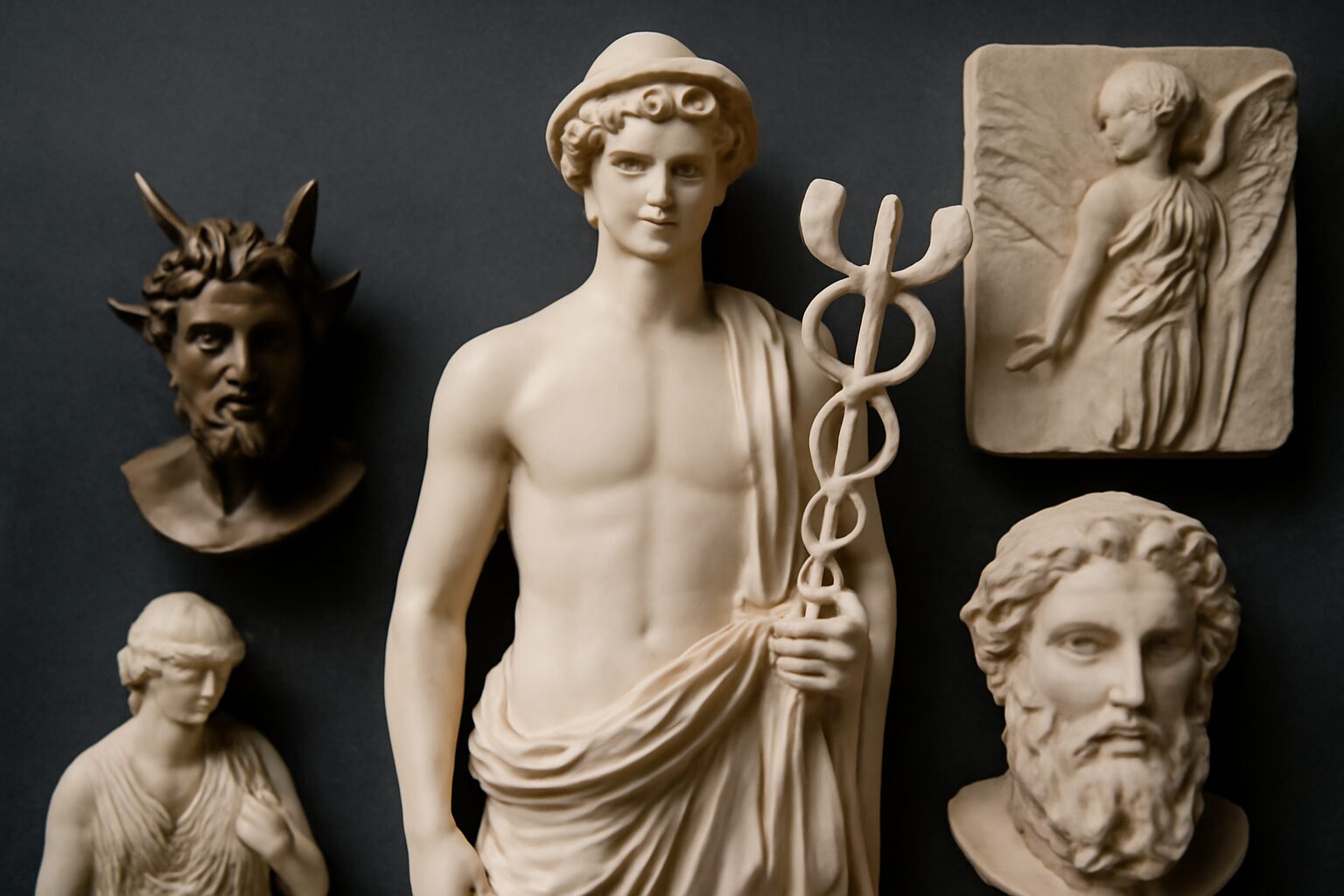
In art, she is frequently seen alongside Athena, the goddess of wisdom and warfare, reinforcing their shared connection to strategic victory. She was also associated with Hermes, the messenger god, due to her speed and agility.
Worship and Legacy
Nike was widely venerated in ancient Greece, particularly in Athens, where she had a temple on the Acropolis. The Panathenaic Games, held in Athena’s honor, often invoked Nike to bless the victors. Her influence extended beyond mythology into daily life, as athletes, warriors, and leaders sought her favor.
Today, Nike’s legacy endures in modern culture—most notably as the namesake of the famous sportswear brand, symbolizing speed, strength, and victory. Her imagery continues to inspire, a timeless reminder of humanity’s eternal pursuit of triumph.
Alternative Names for Nikon
God Name: Victoria (Roman)
In Roman mythology, Victoria is the goddess of victory, often associated with Nike in Greek mythology. While Nikon is not directly equivalent, the concept of victory is a shared attribute, making Victoria a relevant alternative name in Roman context.
God Name: Nike (Greek)
Nike is the Greek goddess of victory, closely related to the concept of Nikon. The names share similar roots and meanings, with Nike being a more widely recognized deity in Greek mythology associated with triumph and success.
God Name: Bia (Greek)
Bia is the Greek personification of force and power, sometimes associated with victory and strength. While not identical to Nikon, the thematic connection to power and dominance makes Bia a plausible alternative name in certain contexts.
Tales about Nikon
Nikon and the Healing Waters of Asclepius
In the age when mortals sought cures for their ailments, the sea deity Nikon grew curious about the healing arts practiced by Asclepius. Nikon, whose domain included the restorative properties of seawater, journeyed to Asclepius’s sanctuary at Epidaurus. There, he observed the god using serpents and herbs to mend broken bodies. Inspired, Nikon offered the secrets of brine and ocean minerals, which Asclepius blended into poultices that could soothe even the deepest wounds. Together, they taught mortals to harness the sea’s vitality, and their collaboration birthed coastal healing temples where waves whispered remedies to the sick.
The Gift of Tides
Nikon’s alliance with Asclepius did not end there. When a plague struck a fishing village, Nikon summoned tidal pools infused with Panacea’s essence, while Asclepius provided sacred serpents to guard the waters. Villagers who bathed in the pools found their fevers broken by the next high tide. To this day, sailors speak of "Nikon’s Blessing"—a phenomenon where storm-tossed sailors recover after drinking seawater under a full moon, a remnant of the sea god’s pact with the healer.
Nikon’s Dance with the Nereides
Beneath the Aegean’s sun-dappled surface, Nikon once joined the Nereus’s daughters in a celestial ballet. The Nereides, led by Amphitrite, were weaving currents into shimmering tapestries to honor Poseidon. Nikon, whose name means "Victory," orchestrated the rhythm of the waves, guiding the nymphs as they spun pearls and coral into crowns for sea turtles. Their dance grew so enchanting that Iris descended to paint the foam with rainbows, and for a day, the ocean became a living hymn to joy.
The Pearl of Unity
As the celebration waned, Nikon gifted Amphitrite a luminescent pearl forged from his laughter and the Nereides’ tears of delight. The pearl, when placed in Poseidon’s trident, calmed tempests and ensured safe passage for mortals who respected the sea. This tale is echoed in mariners’ lore: when dolphins leap beside ships, they are reenacting Nikon’s dance, a tribute to the harmony between sea deities and those who traverse their realm.
Frequently Asked Questions
Who are the main sea deities in Greek mythology?
The main sea deities in Greek mythology are Poseidon (god of the sea), Amphitrite (his wife and queen of the sea), Oceanus (the Titan god of the ocean), Nereus (the old man of the sea), and the Nereids (sea nymphs who were his daughters).
Why was Poseidon important in Greek mythology?
Poseidon was one of the most important Olympian gods because he ruled the seas, controlled storms and earthquakes, and was worshiped by sailors and coastal communities who depended on the sea for survival and trade.
What can we learn from Greek sea deities today?
Greek sea deities teach us about ancient Greek culture's respect for nature's power, their attempts to explain natural phenomena through storytelling, and how maritime life shaped their worldview - lessons that remain relevant for understanding human-nature relationships today.
How did ancient Greeks honor sea deities?
Ancient Greeks honored sea deities through temple worship, sacrifices (often throwing horses or bulls into the sea), nautical festivals, and prayers for safe voyages. Many coastal cities had temples dedicated to Poseidon.
Are there any famous myths about Greek sea gods?
Yes, famous myths include Poseidon creating horses, his rivalry with Athena over Athens, Theseus proving his divine lineage to Poseidon, and Odysseus's encounters with sea deities like the sirens and Poseidon's wrath during his voyage home.