The Hesperides: Guardians of the Golden Apples
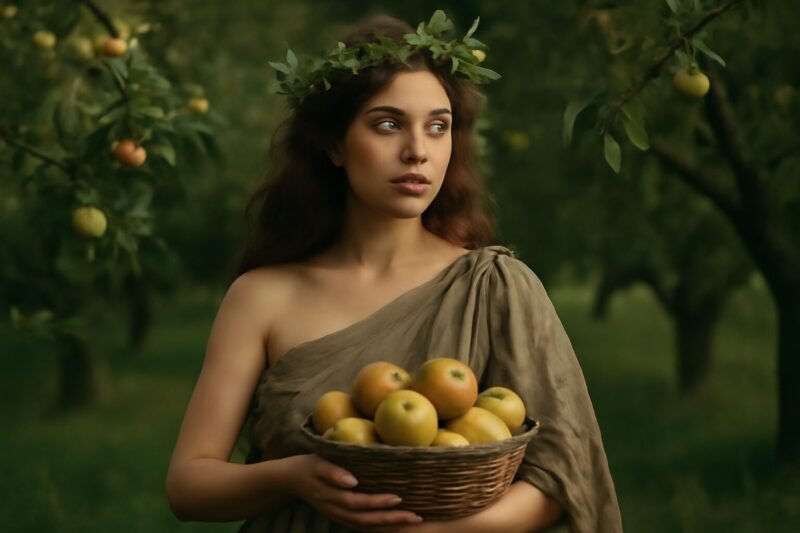
In Greek mythology, the Hesperides were nymphs of the evening and the golden light of sunsets. They were best known as the guardians of the sacred golden apples, a wedding gift from Gaia to Hera. These divine fruits granted immortality, making them highly sought after by gods and mortals alike.
Origins and Role
The Hesperides were often depicted as three sisters—Aegle, Erytheia, and Hesperia—though their number and names varied in different myths. They resided in a lush garden at the western edge of the world, near the Atlas Mountains, where they tended the golden apple tree with the help of the hundred-headed dragon Ladon, placed there by Hera to ensure the apples' protection.
Mythological Significance
The Hesperides played a key role in several myths. Most famously, their golden apples were the object of Heracles' eleventh labor, in which he was tasked with retrieving them. With the help of the Titan Atlas, Heracles succeeded, though the apples were later returned to the garden by Athena, as they were too sacred to remain in mortal hands.
Another myth links the Hesperides to the goddess Aphrodite, who was said to have planted the tree herself. The apples symbolized beauty, fertility, and eternal youth, reinforcing their divine importance.
Powers and Symbolism
As nymphs, the Hesperides possessed immortality and a deep connection to nature. Their garden was a paradise, representing the boundary between the mortal world and the divine. The golden apples they guarded were not just symbols of immortality but also of temptation and the unattainable—a recurring theme in Greek mythology.
Relationships and Legacy
The Hesperides were often associated with other mythological figures. Some traditions name them as daughters of Atlas, the Titan who held up the sky, or of Nyx, the primordial goddess of night. Their role as protectors of divine treasures cemented their place in Greek lore, inspiring later interpretations in art and literature.
Though lesser-known than some deities, the Hesperides remain a fascinating example of the intertwining of nature, divinity, and myth in ancient Greek culture.
Alternative Names for Hesperides
God Name: Hesperides (Greek)
The primary name referring to the nymphs of the evening and golden light, often associated with a garden at the western edge of the world.
God Name: Vesperides (Roman)
The Roman adaptation of the Hesperides, derived from 'Vesper,' the evening star, maintaining their role as guardians of the golden apples.
God Name: Atlantides (Greek)
An alternative name for the Hesperides, referencing their father, the Titan Atlas, who was often associated with their guardianship.
God Name: Aegle (Greek)
One of the individual Hesperides, whose name ('radiance' or 'light') was sometimes used poetically to refer to the group collectively.
God Name: Erytheia (Greek)
Another individual Hesperid, whose name ('red' or 'blushing') was occasionally used to denote the group, particularly in contexts involving the setting sun.
Tales about Hesperides
The Hesperides and Atlas: Guardians of the Golden Apples
In the far western reaches of the world, nestled in a lush garden at the edge of Oceanus, the Hesperides—nymphs of the evening—tended the legendary golden apples bestowed upon Hera as a wedding gift. These divine fruits granted immortality, and their protection was paramount.
Hera, wary of theft, appointed the hundred-headed dragon Ladon to coil around the apple tree, its many eyes ever watchful. Yet, she also enlisted the aid of the Titan Atlas, who bore the heavens upon his shoulders nearby. The Hesperides, including Aegle ("radiance"), often sang soothing melodies to ease Atlas’s eternal burden, their voices blending with the rustling leaves of the sacred tree.
When Heracles arrived seeking the apples for his labors, he approached Atlas, offering to temporarily hold the sky if the Titan would retrieve the apples. The Hesperides, though initially alarmed, recognized the hero’s destiny and did not interfere. Atlas returned with the apples, but Heracles, with clever persuasion, convinced him to resume the sky, securing the apples and fulfilling his task. The garden, though briefly disturbed, returned to its serene watch, with the Hesperides continuing their eternal vigil.
The Hesperides and Heracles: A Test of Cunning and Respect
The Hesperides were known not only for their beauty but for their unwavering dedication to guarding Hera’s golden apples. Their garden, a paradise of eternal sunset, was a place of peace until the arrival of the hero Heracles, sent to retrieve the apples as his eleventh labor.
Heracles, aware he could not defeat the vigilant Ladon or bypass the Hesperides through force, chose a path of diplomacy. He spoke respectfully to the nymphs, acknowledging their role and the sanctity of their duty. Aegle, the most prominent of the sisters, was moved by his honesty and provided guidance, advising him to seek the aid of Atlas rather than confront the guardian directly.
With their tacit approval, Heracles negotiated with Atlas, leading to the successful retrieval of the apples. The Hesperides, though guardians of the divine, demonstrated that even immortality’s keepers could recognize and assist in a hero’s noble quest, blending their eternal purpose with the changing tides of fate.
Frequently Asked Questions
Who are the Hesperides in Greek mythology?
The Hesperides are nymphs in Greek mythology, often depicted as the daughters of the Titan Atlas. They are known as the 'nymphs of the evening' and are associated with the golden apples of immortality in the Garden of the Hesperides.
What is the significance of the Garden of the Hesperides?
The Garden of the Hesperides is a sacred orchard in Greek mythology where the golden apples grow, granting immortality. It is guarded by the Hesperides and a dragon named Ladon. The apples play a key role in myths, such as Hercules' 12 Labors.
Why are the Hesperides considered rustic deities?
The Hesperides are considered rustic deities because they are associated with nature, specifically the evening and the far western edge of the world. They embody the beauty and mystery of the natural world, much like other nymphs and rustic gods in Greek mythology.
How do the Hesperides relate to modern culture?
The Hesperides appear in modern literature, art, and media as symbols of mystery and nature's beauty. Their story inspires themes of guardianship, immortality, and the allure of the unknown, making them relevant in contemporary storytelling.
What can we learn from the myth of the Hesperides?
The myth of the Hesperides teaches about the value of guardianship, the consequences of seeking immortality, and the connection between humans and nature. It also highlights the importance of challenges, as seen in Hercules' quest for the golden apples.