Praxis: The Embodiment of Action in Greek Mythology
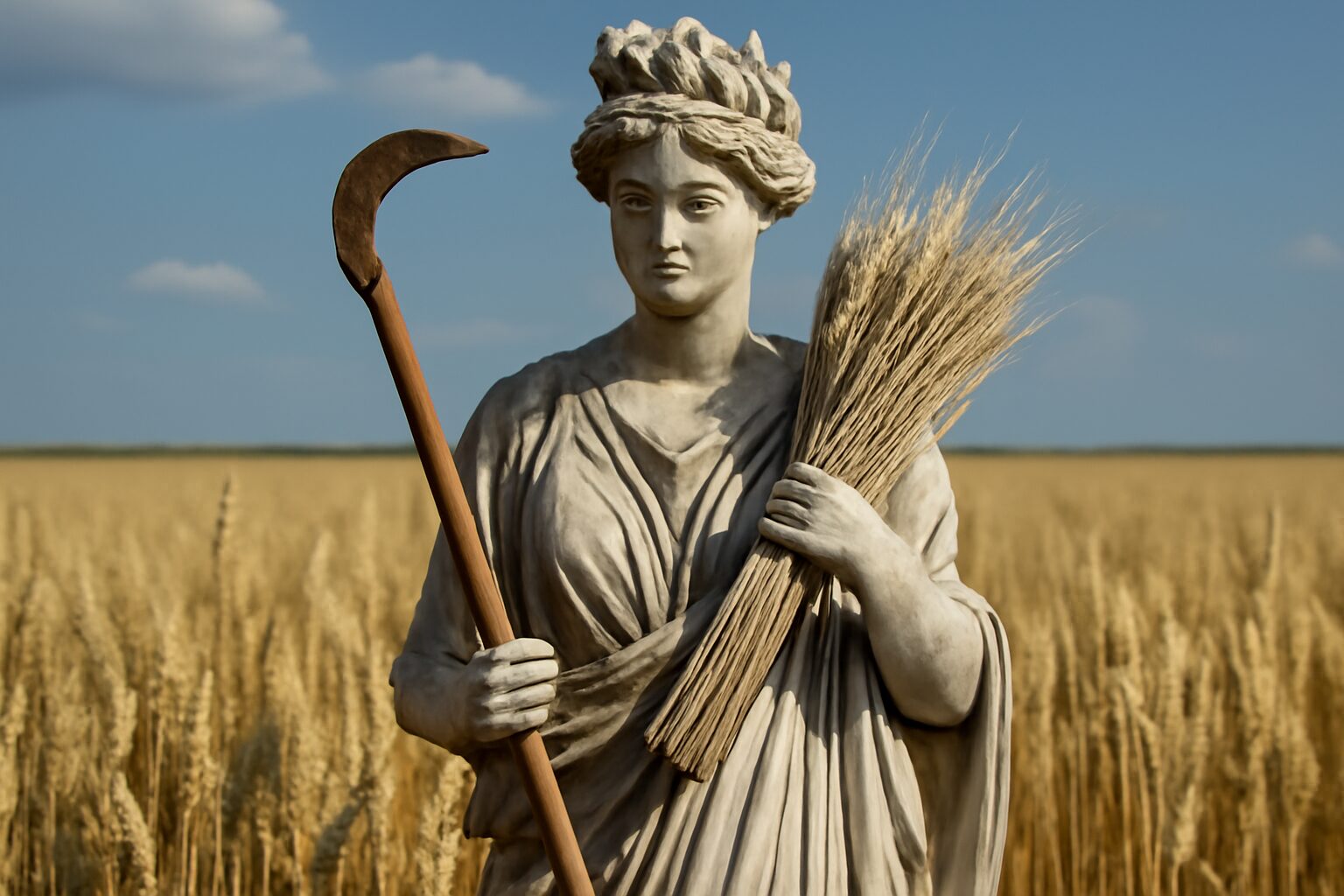
In Greek mythology, Praxis (meaning "action" or "practice") is a lesser-known but fascinating deity who personifies the concept of practical action, execution, and the application of knowledge. While not as prominent as the Olympian gods, Praxis represents an essential aspect of human and divine activity—bridging the gap between thought and deed.
Role and Significance
Praxis embodies the idea that knowledge is meaningless without action. Unlike deities associated with wisdom or strategy (like Athena), Praxis focuses on the doing—the tangible results of decisions and plans. This made Praxis an important figure in philosophical and practical contexts, especially in later Greek thought, where the term "praxis" became central to discussions of ethics and politics.
Though not widely worshiped in cults or temples, Praxis was often invoked metaphorically in philosophical teachings, particularly by Aristotle, who distinguished between theoria (contemplation) and praxis (practical action).
Mythological Connections
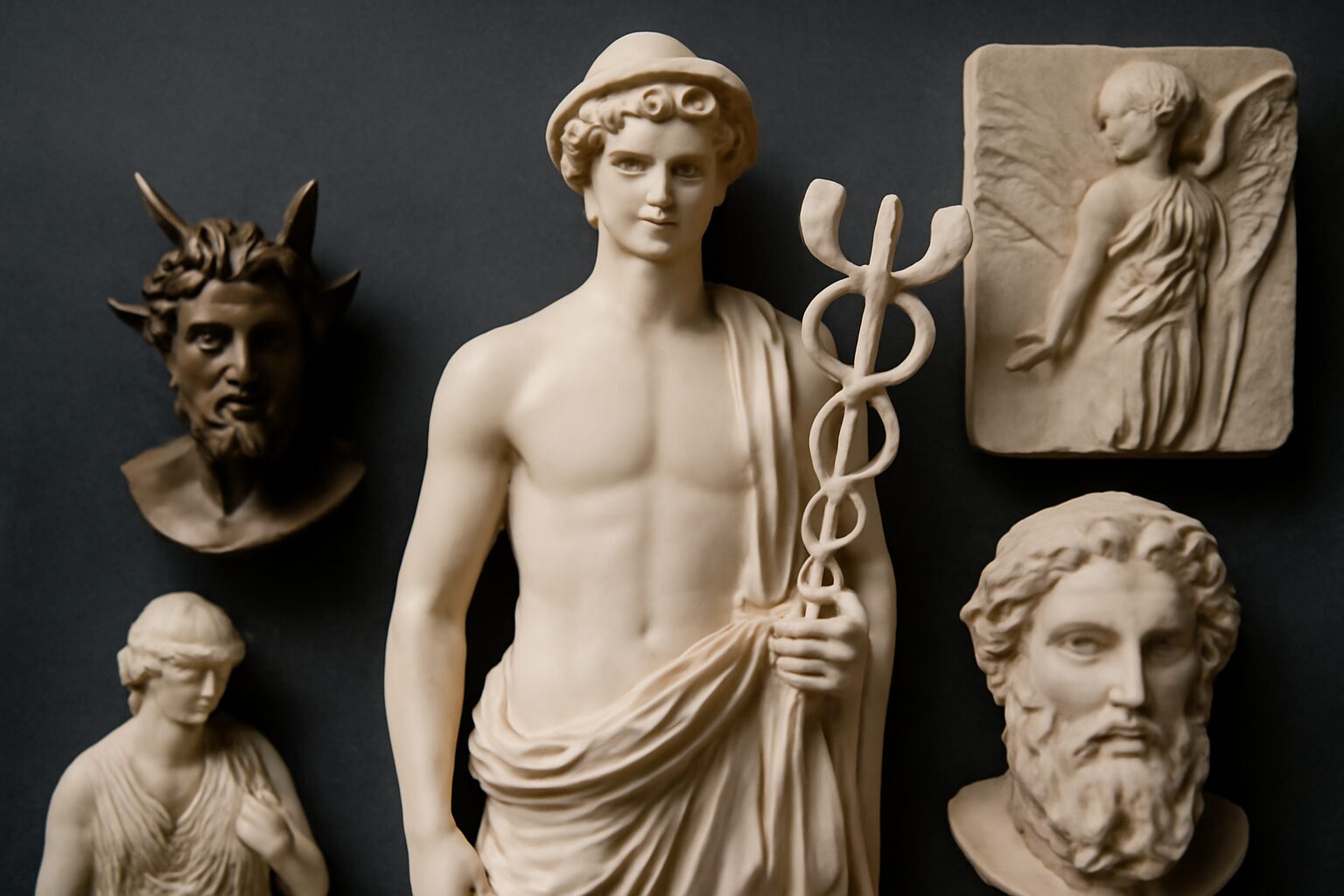
Praxis is sometimes linked to Hermes, the god of communication and movement, as both deities emphasize action and execution. In some interpretations, Praxis is considered a daughter of Nike (Victory) and Bia (Force), reinforcing the idea that success comes from decisive action.
Another association places Praxis among the Daimones—minor deities or spirits who influenced human behavior. In this role, Praxis could inspire individuals to act decisively in moments of hesitation.
Legacy and Influence
The concept of Praxis endured beyond ancient Greece, influencing Roman thought and later Western philosophy. The term remains relevant today in fields like education, politics, and social theory, where "praxis" describes the cycle of action, reflection, and refinement.
While Praxis may not have grand myths or epic tales, this deity's enduring legacy lies in the universal truth they represent: that ideas only gain meaning when put into action.
Alternative Names for Praxis
God Name: Actus (Roman)
In Roman mythology, Actus is a deity associated with action and deeds, similar to the Greek god Praxis. The name derives from the Latin word 'actus', meaning 'act' or 'deed', reflecting the same thematic focus on action and implementation.
God Name: Energos (Greek)
An alternative Greek name for Praxis, meaning 'the active one' or 'worker'. This name emphasizes the god's role in energizing and facilitating actions, derived from the Greek word 'energeia', meaning 'activity' or 'operation'.
God Name: Drastes (Greek)
Another Greek epithet for Praxis, meaning 'the doer' or 'the one who acts'. This name highlights the god's function as an executor of deeds, stemming from the Greek verb 'dran', which means 'to do' or 'to act'.
Tales about Praxis
Praxis and the Healing Touch of Asclepius
In the ancient city of Epidaurus, where the sick and weary sought the divine intervention of Asclepius, the god of medicine, Praxis found herself drawn to the art of healing. She watched as the god’s sacred serpents coiled around the afflicted, their venom a paradoxical cure. Praxis, embodying practical action, approached Asclepius with a proposal: to systematize the treatments, ensuring that every pilgrim received not just miraculous intervention, but consistent, repeatable care.
The Temple’s Transformation
Asclepius, intrigued by her methodical mind, granted her permission to organize the healing rituals. Praxis created detailed records of symptoms and remedies, training priests to apply poultices, administer herbs, and guide therapeutic exercises. She introduced structured schedules for bathing in the sacred springs and resting in the abaton, the dream-filled hall where the god visited supplicants. Under her guidance, the temple became not only a place of divine wonder but a beacon of reliable practice, blending faith with method.
Word spread of Epidaurus’s newfound efficiency, and even Zeus took notice, marveling at how Praxis had turned reverence into results. Asclepius, grateful, gifted her a golden serpent staff—a symbol of their partnership—declaring, "Where there is action, there is healing."
Praxis and the Cunning of Hermes
One crisp morning, as dew clung to the olive groves of Arcadia, Hermes, the swift-footed messenger god, devised a challenge. He sought to test whether cleverness alone could outmatch practical execution. He summoned Praxis, the spirit of action, and proposed a contest: whoever could most efficiently deliver a message to every corner of Greece in a single day would earn a favor from the gods themselves.
The Race Against Time
Hermes, confident in his speed, darted into the skies, his winged sandals carrying him from mountaintop to shore. But Praxis did not chase him; instead, she rallied the Dryades and Nephelai, organizing them into a relay. She assigned nymphs to whisper through forests and cloud nymphs to carry echoes across valleys. While Hermes raced alone, Praxis orchestrated a network, ensuring the message flowed like a river.
As the sun set, Hermes returned, breathless but triumphant—or so he thought. To his astonishment, the message had already reached every hamlet, thanks to Praxis’s coordination. Nike, the goddess of victory, appeared and declared Praxis the winner, praising her for "turning effort into empire." Hermes, ever the gracious trickster, laughed and granted her the gift of seamless travel between thought and deed.
Frequently Asked Questions
What is a daimon in Greek mythology?
In Greek mythology, a daimon (or daemon) is a divine spirit or lesser deity that acts as an intermediary between gods and humans. They are often personifications of concepts like love, fate, or vengeance, and can influence human lives in both positive and negative ways.
What is the difference between a daimon and a god in Greek mythology?
While gods in Greek mythology are major deities with distinct personalities and domains (like Zeus or Athena), daimones are more abstract spirits or personifications of ideas, emotions, or natural forces. Daimones are usually less powerful and more specialized than the Olympian gods.
Why are personifications important in Greek mythology?
Personifications help explain abstract concepts and natural phenomena in relatable ways. By giving human-like forms and stories to ideas like Love (Eros), Victory (Nike), or Strife (Eris), Greek mythology made complex aspects of life and nature easier to understand and discuss.
Are daimones good or evil in Greek mythology?
Daimones weren't strictly good or evil - they represented neutral forces that could have positive or negative effects depending on circumstances. For example, Nemesis was the daimon of retribution, bringing justice but also vengeance. Their morality depended on context and human perspective.
How do Greek daimones relate to modern concepts of spirits or demons?
The Greek concept of daimones evolved over time. Originally neutral spirits, later Christian interpretations transformed them into 'demons' with negative connotations. Today, some modern spiritual practices still reference daimones as guiding spirits or personified energies, though interpretations vary widely.