
Kakia: The Goddess of Vice and Moral Corruption
In Greek mythology, Kakia (Κακία) personifies vice, moral corruption, and wickedness. Her name literally translates to "badness" or "evil," and she represents the temptations that lead mortals astray from virtue. Though not as widely known as the Olympian gods, Kakia plays a significant role in allegorical tales about morality and human weakness.
Mythology and Symbolism
Kakia appears most notably in the writings of the ancient philosopher Prodicus, as recounted by Xenophon in his work Memorabilia. She is depicted as a seductive but deceitful figure who tries to lure the hero Heracles (Hercules) away from the path of virtue, represented by her counterpart Arete (Excellence or Virtue). In this allegory, Kakia promises Heracles a life of ease, pleasure, and indulgence, while Arete offers a harder but more honorable path.
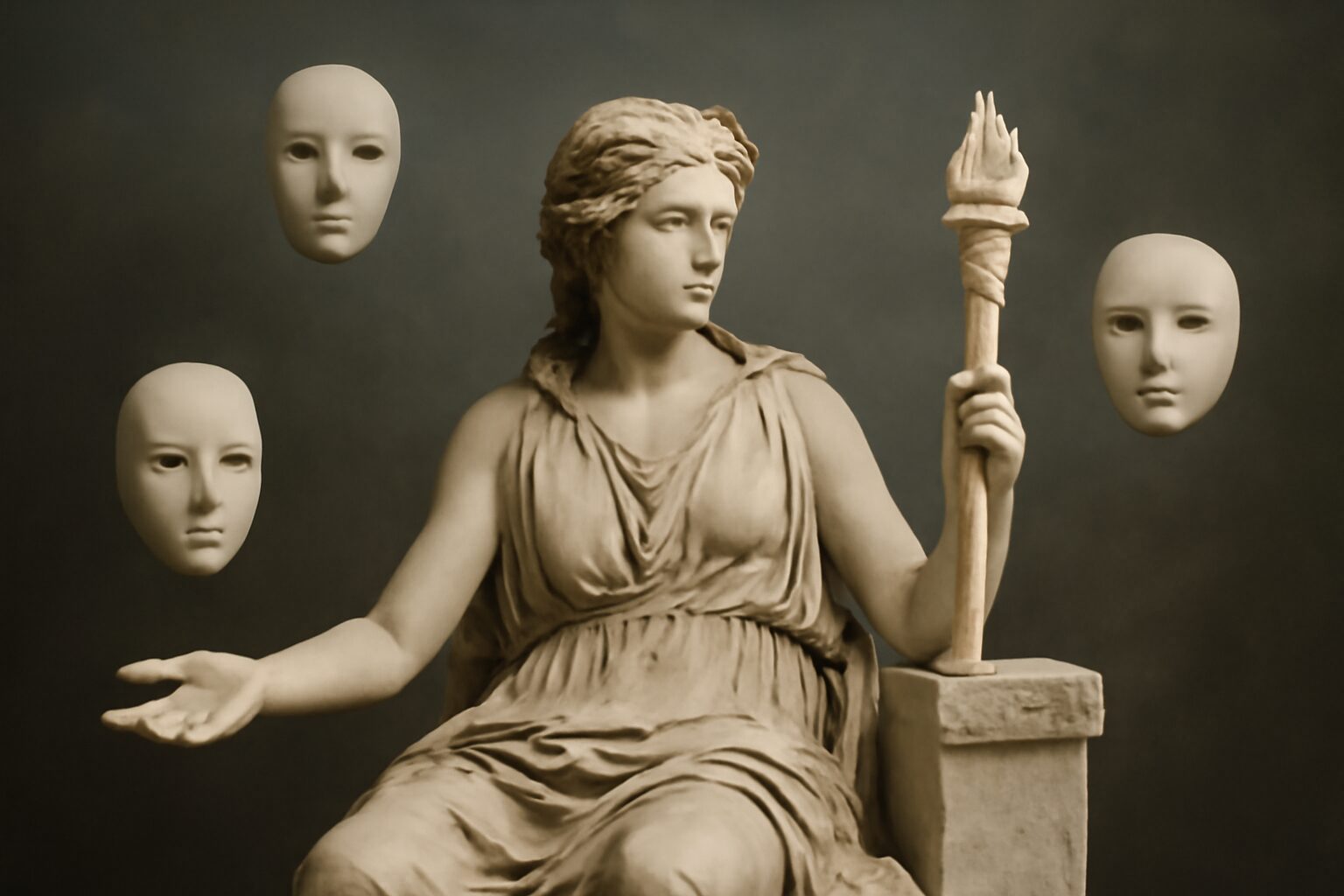
Kakia is often portrayed as richly adorned but with a disheveled appearance beneath her finery, symbolizing the superficial allure of vice. Her promises of immediate gratification contrast sharply with the long-term rewards of virtuous living.
Powers and Influence
As a personification of vice, Kakia's power lies in her ability to manipulate human desires. She embodies greed, laziness, deceit, and other moral failings. Unlike gods who wield physical power, Kakia's influence is psychological, preying on weaknesses in human nature. Her role in myths serves as a cautionary tale about the dangers of choosing short-term pleasure over lasting integrity.
Relationships and Significance
Kakia is often contrasted with Arete, highlighting the eternal struggle between vice and virtue. While not part of major myths involving the Olympians, she appears in philosophical and moral teachings. Her presence underscores the Greek belief in personal responsibility and the consequences of one's choices.
In later traditions, Kakia's influence can be seen in Christian depictions of vice and sin, showing how Greek moral concepts persisted through time. Though not worshiped like other deities, she remains an important symbolic figure in understanding ancient Greek ethics.
Alternative Names for Kakia
God Name: Kakia (Greek)
The primary Greek name for the goddess or personification of vice and moral badness.
God Name: Vitium (Roman)
The Roman equivalent of Kakia, representing vice and moral corruption. Vitium was less personified than Kakia but served a similar conceptual role in Roman morality.
God Name: Kakon (Greek)
An alternative Greek term sometimes used to refer to the concept of evil or badness, closely related to Kakia but more abstract and less personified.
God Name: Poneria (Greek)
Another Greek term associated with wickedness or moral corruption, sometimes used interchangeably with Kakia in philosophical texts.
Tales about Kakia
The Temptation of Heracles
In the age of heroes, Kakia, the spirit of vice and moral badness, sought to corrupt the great hero Heracles. She appeared to him at a crossroads, disguised as a beautiful maiden offering a life of ease, pleasure, and immediate gratification. With honeyed words, she promised him wealth without labor, fame without effort, and indulgence without consequence.
The Choice of Virtue
But Arete, the goddess of virtue and excellence, also appeared, presenting a path of hardship, discipline, and eternal glory. Heracles, after careful contemplation, chose the difficult road of virtue, spurning Kakia's empty promises. This decision cemented his fate as a symbol of strength through struggle, leaving Kakia to slink back into the shadows, her temptation foiled by heroic integrity.
Kakia and the Forge of Hephaestus
Kakia once slithered into the workshop of Hephaestus, the god of the forge, seeking to corrupt his creations. She whispered doubts into his ear as he worked, suggesting he cut corners, use weaker materials, and create flawed but beautiful objects to deceive the gods and mortals alike.
The Integrity of Craft
But Hephaestus, though physically imperfect, was steadfast in his craft. He recognized Kakia's voice for what it was and drove her out with a shower of sparks from his anvil. His dedication to true artistry and function prevailed, ensuring that every item from his forge was a testament to quality and honesty, leaving no room for Kakia's deceit.
Frequently Asked Questions
Who is Kakia in Greek mythology?
Kakia is the personification of vice and moral badness in Greek mythology. She represents evil, wickedness, and corruption, often depicted as a seductive woman who tempts people toward immoral behavior.
What is the difference between gods and daimones in Greek mythology?
Gods (theoi) are major deities with distinct personalities and domains, while daimones (or daimones) are lesser spirits or personifications of abstract concepts, forces, or emotions. Daimones could be benevolent or malevolent and often influenced human lives in subtle ways.
Why were personifications like Kakia important in Greek mythology?
Personifications like Kakia helped ancient Greeks understand and explain abstract concepts like vice, virtue, or emotions by giving them human-like forms and stories. They served as moral lessons and made complex ideas more relatable.
How does the concept of Kakia apply to modern life?
Kakia's representation of vice and temptation remains relevant today as a symbolic way to discuss moral choices. The struggle between virtue and vice is a timeless human theme that appears in psychology, philosophy, and ethics.
Are there any myths or stories featuring Kakia?
One notable story involves Kakia appearing to the hero Heracles (Hercules) along with her counterpart Arete (Virtue), offering him a choice between an easy life of pleasure or a difficult but honorable path - illustrating the eternal human dilemma of moral choice.