Karpo: The Greek Goddess of Autumn's Bounty
In Greek mythology, Karpo (also spelled Carpo) was one of the Horae, the goddesses of the seasons and the natural order of time. Her name means "fruit" or "harvest," reflecting her role as the deity of autumn and the ripening of crops. Alongside her sisters Thallo (spring) and Auxo (summer), Karpo completed the trio of seasonal Horae in early Greek tradition.
Role and Significance
Karpo presided over the bountiful harvest season, ensuring the successful growth and maturation of fruits and grains. Farmers and agrarian communities revered her, as she symbolized the culmination of nature's yearly cycle. Unlike later traditions that expanded the Horae to represent hours or more abstract concepts, Karpo remained firmly tied to her agricultural roots.
As a seasonal goddess, Karpo also represented the passage of time and the cyclical nature of life. The transition from summer to autumn under her watch was seen as both a time of abundance and preparation for winter's dormancy.
Powers and Attributes
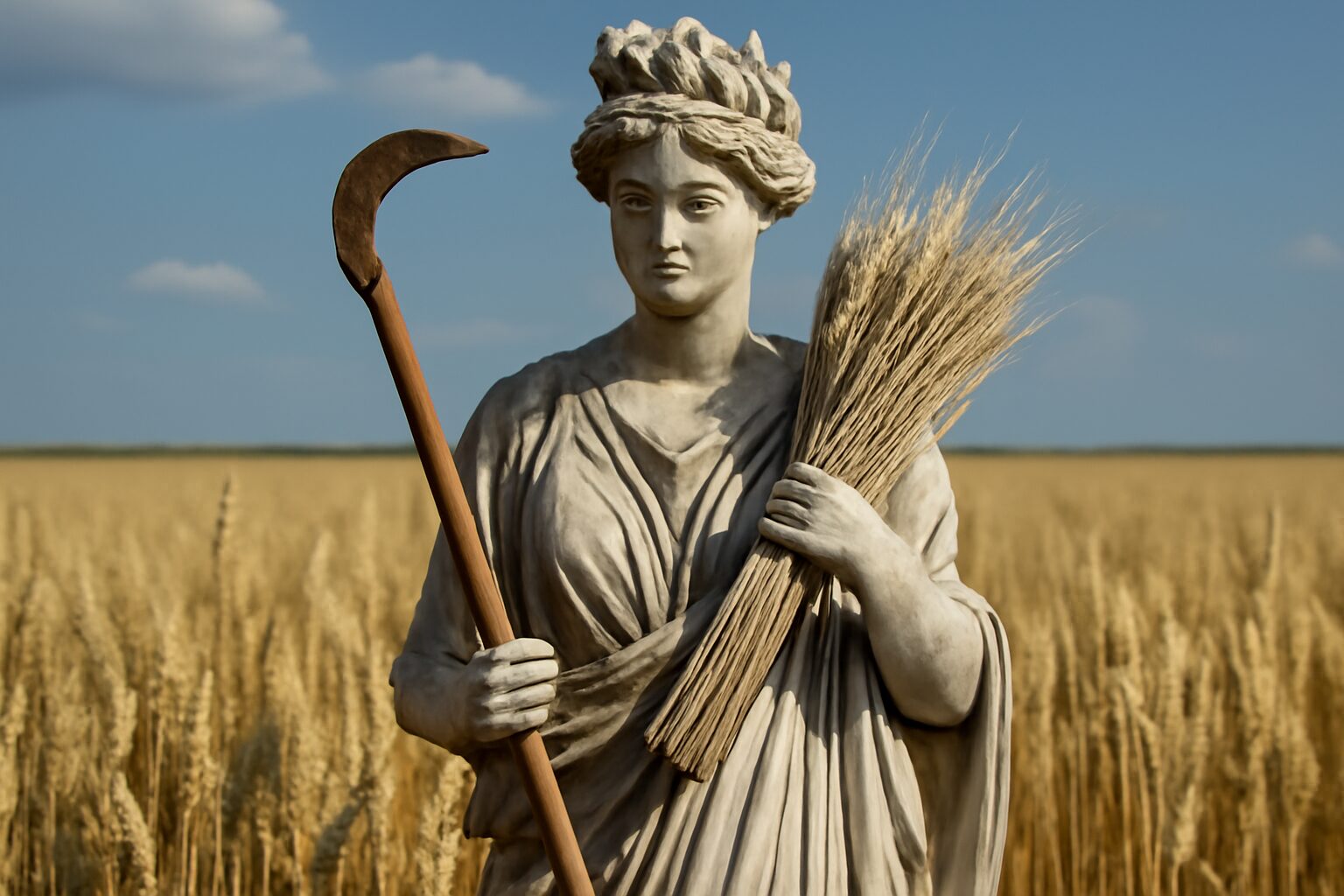
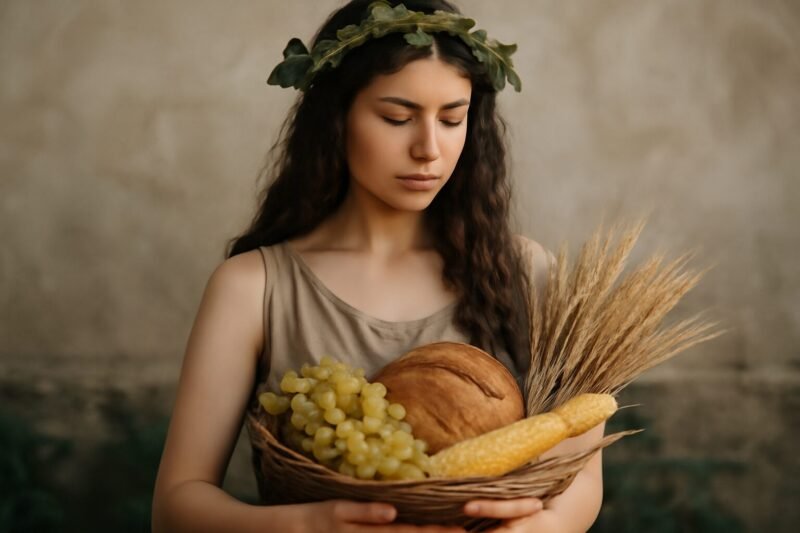
Karpo possessed the power to influence the growth and ripening of crops. Ancient Greeks believed she worked closely with Demeter, goddess of agriculture, to ensure successful harvests. Artistic depictions often show her carrying a cornucopia overflowing with autumn fruits or holding sheaves of wheat.
Her connection to the harvest made her an important figure in rural communities, where timely ripening of crops could mean the difference between survival and starvation. Some traditions associate her with the protection of stored food for winter.
Relationships and Worship
Karpo was typically portrayed as one of three daughters to Zeus and Themis (goddess of divine law). She formed part of the second generation of Horae, alongside her sisters. In some accounts, she was also associated with Dionysus, the god of wine, due to her connection with grape harvests.
While no major temples were dedicated solely to Karpo, she was honored during harvest festivals throughout Greece. Farmers would make offerings to ensure her favor for their crops. In Athens, she was sometimes included in ceremonies honoring all the Horae at their sanctuary near the Agora.
Karpo's legacy endures as a personification of nature's generosity and the importance of seasonal cycles in human life. Her mythology reminds us of the ancient Greeks' deep connection to the land and their dependence on nature's rhythms.
Alternative Names for Karpo
God Name: Carpus (Roman)
The Roman equivalent of the Greek god Karpo, representing the fruits of the earth and the harvest. The name 'Carpus' is derived from the Latin word 'carpus,' meaning 'fruit' or 'produce,' aligning with Karpo's role in Greek mythology.
God Name: Hora (Greek (alternative epithet))
An alternative name or epithet for Karpo, as she is one of the Horae (Seasons) in Greek mythology. The Horae were goddesses of the seasons and natural order, and Karpo specifically personified autumn and the harvest.
God Name: Karpho (Greek (variant))
A less common variant spelling of Karpo found in some ancient Greek texts. The meaning remains the same, referring to the goddess of fruits and harvest.
Tales about Karpo
The Gift of Abundance: Karpo and Demeter
In the golden age of humanity, when the earth was still young and the seasons were yet to be defined, Demeter, the goddess of the harvest, wandered the fertile plains of Greece. She observed the mortals toiling endlessly, their crops often failing due to unpredictable weather and poor soil. Moved by their plight, she sought the aid of Karpo, the goddess of the fruits of the earth.
A Divine Collaboration
Karpo, whose very essence was intertwined with the ripening of grains and fruits, answered Demeter's call. Together, they descended upon a struggling village. Demeter blessed the soil with her divine touch, making it rich and nurturing, while Karpo whispered to the seeds, encouraging them to swell with life and sweetness. The villagers watched in awe as their fields transformed overnight—barley grew tall and golden, vines heavy with grapes, and orchards bursting with figs and olives.
This partnership between Demeter and Karpo became the foundation of agriculture, teaching mortals the cycles of planting and reaping. To this day, farmers offer prayers to both goddesses, honoring Demeter for the soil's fertility and Karpo for the bountiful harvest.
The Dance of Seasons: Karpo and Persephone
When Persephone, daughter of Demeter, was destined to spend part of the year in the underworld, the world above mourned her absence with winter's chill. But upon her return each spring, the earth rejoiced, and it was Karpo who played a pivotal role in this annual rebirth.
Spring's Awakening
As Persephone emerged from the depths, Karpo would greet her with open arms, her presence coaxing the dormant plants back to life. Together, they wandered the meadows and forests; Persephone's light footsteps caused flowers to bloom in her wake, while Karpo ensured that each petal, each fruit, was perfect and plentiful. Their joyful dance symbolized renewal and hope, a testament to nature's resilience.
In some tales, it is said that Karpo gifted Persephone a pomegranate—a fruit of both life and death—to remind her of the balance between the world above and below. This act cemented their friendship, and Karpo's influence ensured that even in times of sorrow, the promise of abundance remained.
Frequently Asked Questions
Who is Karpo in Greek mythology?
Karpo is one of the Horae, the goddesses of the seasons and natural order in Greek mythology. She specifically represents the fruits of the earth and the harvest season.
What are rustic deities in Greek mythology?
Rustic deities in Greek mythology are gods and goddesses associated with nature, agriculture, and rural life. They include figures like Pan, the god of shepherds, and the nymphs who protect forests and rivers.
Why were deities like Karpo important in ancient Greece?
Deities like Karpo were important because they symbolized essential aspects of life, such as agriculture and the changing seasons. Ancient Greeks relied on their blessings for good harvests and natural harmony.
How does the concept of Karpo apply to modern life?
Karpo's connection to harvest and abundance reminds us of the importance of nature's cycles and sustainable living. Her symbolism can inspire gratitude for food and the environment.
What can we learn from rustic deities in Greek mythology?
Rustic deities teach us about humanity's deep connection to nature and the need to respect natural forces. They highlight themes of growth, renewal, and living in harmony with the earth.