Aura: The Breeze of Greek Mythology
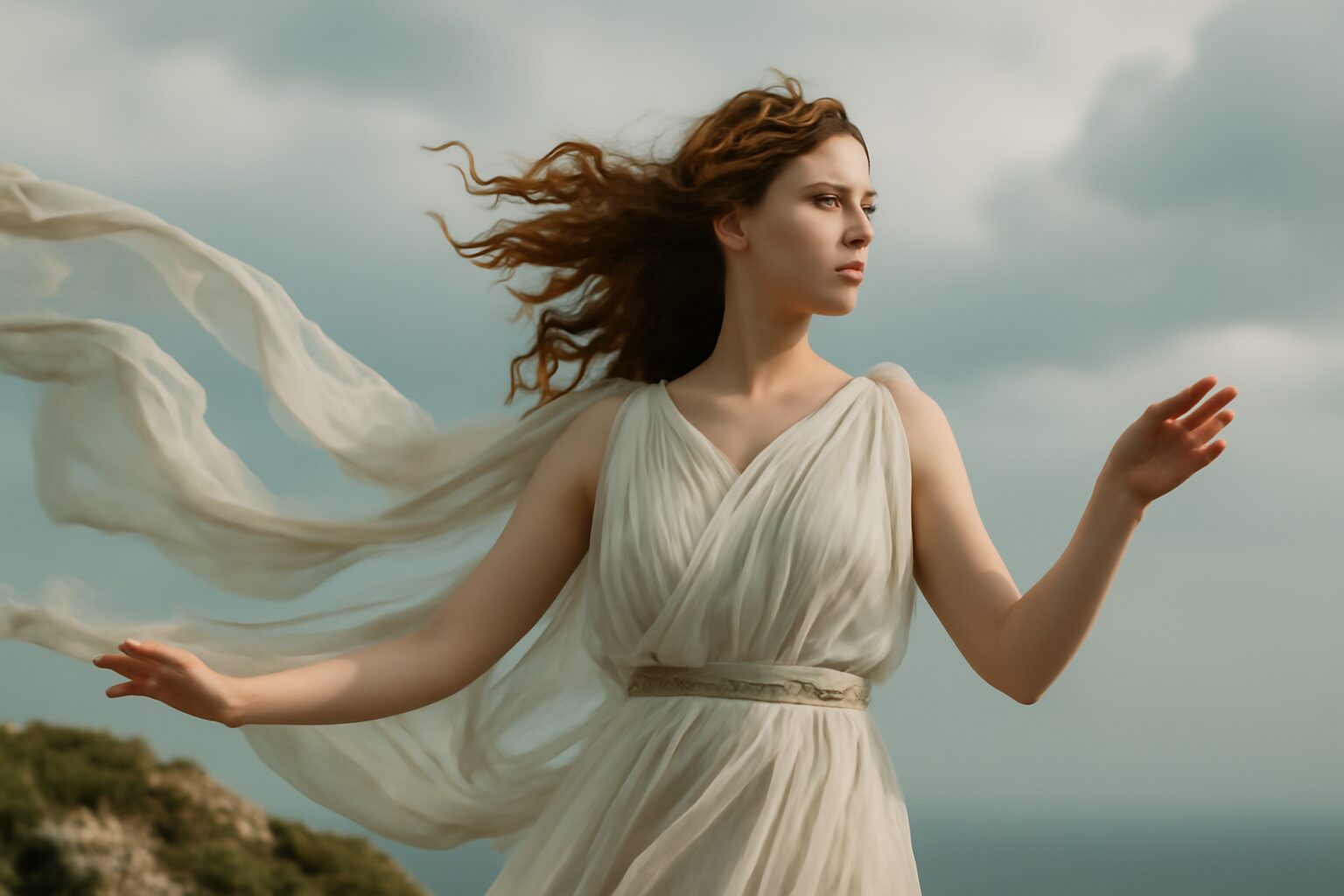
In Greek mythology, Aura was a minor goddess or nymph associated with the cool, fresh breeze of early morning. Her name literally means "breeze" or "air," and she was often depicted as a youthful, ethereal figure, embodying the gentle winds that swept across the land. Though not as widely known as major Olympian deities, Aura held a unique place in the natural world and was sometimes linked to Artemis, the goddess of the hunt.
Mythology and Origins
Aura was the daughter of the Titan Lelantos, whose name means "unseen" or "hidden," and the nymph Periboea. Some sources suggest she was one of the Okeanides, the daughters of Oceanus and Tethys, connecting her to the vast waters and winds of the world. She was often described as a swift and untouchable figure, much like the wind itself, and was sometimes portrayed as a huntress, running freely through the wilderness.
Powers and Role
As a personification of the breeze, Aura had the power to bring refreshing winds, particularly at dawn. She was associated with purity and the invigorating qualities of nature. In some myths, she was a companion of Artemis, joining her in the hunt and sharing her love for untouched wilderness. However, unlike Artemis, who was chaste, Aura's story took a darker turn when she was violated by Dionysus, leading to her eventual transformation into a stream or a vengeful spirit, depending on the version of the myth.
Significance in Greek Mythology
Though Aura was not a central figure in Greek religion, she represented the unseen but ever-present forces of nature. Her myth reflects the Greeks' understanding of the wind as both life-giving and unpredictable. In later traditions, she became a symbol of the fleeting and untamable aspects of the natural world. Her tragic story also served as a cautionary tale about hubris, as some versions claim her downfall came from boasting about her superiority over Artemis.
Today, Aura's legacy lives on in the modern word "aura," which still evokes an intangible, airy presence—much like the goddess herself.
Alternative Names for Aura
God Name: Aura (Roman)
In Roman mythology, Aura retains the same name as in Greek, representing the personification of the breeze or the cool morning air. She is often associated with the gentle winds and is considered a minor deity.
God Name: Aurai (Greek)
Aurai is the plural form of Aura in Greek mythology, referring to the nymphs of the breezes. They are often depicted as gentle and ethereal beings associated with the winds and fresh air.
God Name: Aurae (Greek)
Aurae is another plural form used in Greek mythology to describe the collective spirits or nymphs of the breezes. They are sometimes considered attendants to other wind gods or goddesses.
God Name: Aurae (Roman)
In Roman mythology, Aurae is the Latinized plural form of Aura, referring to the nymphs of the breezes. They are often associated with the gentle winds and are considered minor deities or spirits.
Tales about Aura
Aura and Dionysus: The Wild Hunt
In the untamed forests of Thrace, Aura, the swift and fierce Titaness of the breeze, often raced through the trees, her laughter echoing like the rustle of leaves. One day, she encountered Dionysus, the god of wine and ecstasy, who was leading a band of raucous Maenads in a frenzied dance. Intrigued by her wild spirit, Dionysus challenged Aura to a hunt—not for prey, but for the essence of joy itself.
The Chase of Ecstasy
Aura, confident in her speed, darted ahead, stirring whirlwinds and scattering petals. But Dionysus, with his intoxicating presence, turned the forest into a living celebration. Vines twisted into garlands, streams flowed with wine, and the very air hummed with music. Try as she might, Aura could not outpace the pervasive joy he spread. In the end, breathless and exhilarated, she joined his revelry, her winds now carrying the scent of grapes and the sound of laughter across the land.
In the aftermath, Aura's breezes mingled with the spirits of celebration, drawing the attention of Comus, god of revelry, who added his boisterous energy to the festivities. The winds also carried whispers to Hedone, the personification of pleasure, who blessed the gathering with sensations of delight. As the night deepened, Euthymia, spirit of contentment, settled over the forest, ensuring the joy lingered long after the revels ended.
Aura and Artemis: The Silent Pact
High on Mount Taygetus, where the air is crisp and thin, Aura often brushed past Artemis, the virgin goddess of the hunt, as she guarded her sacred groves. Aura admired Artemis’s independence and strength, and one evening, as the moon rose, she whispered a proposal: to combine their powers to protect the wild places from desecration.
Guardians of the Wilderness
Artemis, though wary of alliances, saw the sincerity in Aura’s offer. Together, they devised a pact: Aura would use her winds to carry warnings of approaching intruders, while Artemis’s arrows would stand ready to defend. To seal their bond, Aura swept away all traces of human scent from Artemis’s favorite hunting grounds, and in return, Artemis blessed the breezes with the purity of the wilderness. Their silent collaboration became legendary, ensuring that the forests remained sanctuaries of peace and natural order.
Their alliance inspired other nature spirits, including Epimeliades, nymphs of mountain pastures, who used Aura's winds to protect their flocks. Eusebeia, the spirit of piety, blessed their efforts, ensuring respect for sacred spaces. Even Ekecheiria, goddess of truce, was invoked to maintain harmony in these protected realms.
Frequently Asked Questions
What is Aura in Greek mythology?
In Greek mythology, Aura was a Titan goddess associated with the breeze and the fresh, cool air of early morning. She was often depicted as a nymph and symbolized the gentle wind.
Who were the Titans in Greek mythology?
The Titans were a race of powerful deities who ruled the cosmos before the Olympian gods. They were the children of Gaia (Earth) and Uranus (Sky) and included figures like Cronus, Rhea, and Oceanus.
Why are the Titans important in Greek mythology?
The Titans are important because they represent the first rulers of the universe in Greek myths. Their overthrow by the Olympian gods, led by Zeus, marks a key transition in Greek mythology and explains the origins of the gods' power.
What can we learn from the story of the Titans?
The story of the Titans teaches themes of power, rebellion, and generational conflict. It reflects ancient Greek beliefs about order, chaos, and the cyclical nature of leadership and change.
How does the concept of Aura apply today?
The concept of Aura as a personification of the breeze connects to modern ideas about nature's influence on human life. It reminds us of the ancient Greeks' practice of attributing natural phenomena to divine beings.