Eosphorus (Phosphorus): The Dawn-Bringer
In Greek mythology, Eosphorus (also known as Phosphorus) was the divine personification of the morning star, the planet Venus when it appears at dawn. His name means "Dawn-Bringer" or "Light-Bringer," derived from the Greek words eos (dawn) and phoros (bearer). As the herald of the sun, he was a symbol of hope and renewal, announcing the arrival of his mother, Eos, the goddess of dawn.
Mythology and Origins
Eosphorus was the son of Eos and the Titan Astraeus, making him a sibling to the other wind gods and stars. His Roman counterpart was Lucifer, which similarly means "Light-Bringer." Unlike his twin brother, Hesperus (the evening star), Eosphorus was associated with the rising of Venus in the morning sky, marking the transition from night to day.
In some myths, Eosphorus was also linked to the tragic story of Cephalus and Procris, where his appearance in the sky was seen as a harbinger of both love and misfortune. His role as a celestial guide made him a revered figure among sailors and travelers, who relied on the morning star for navigation.
Powers and Symbolism
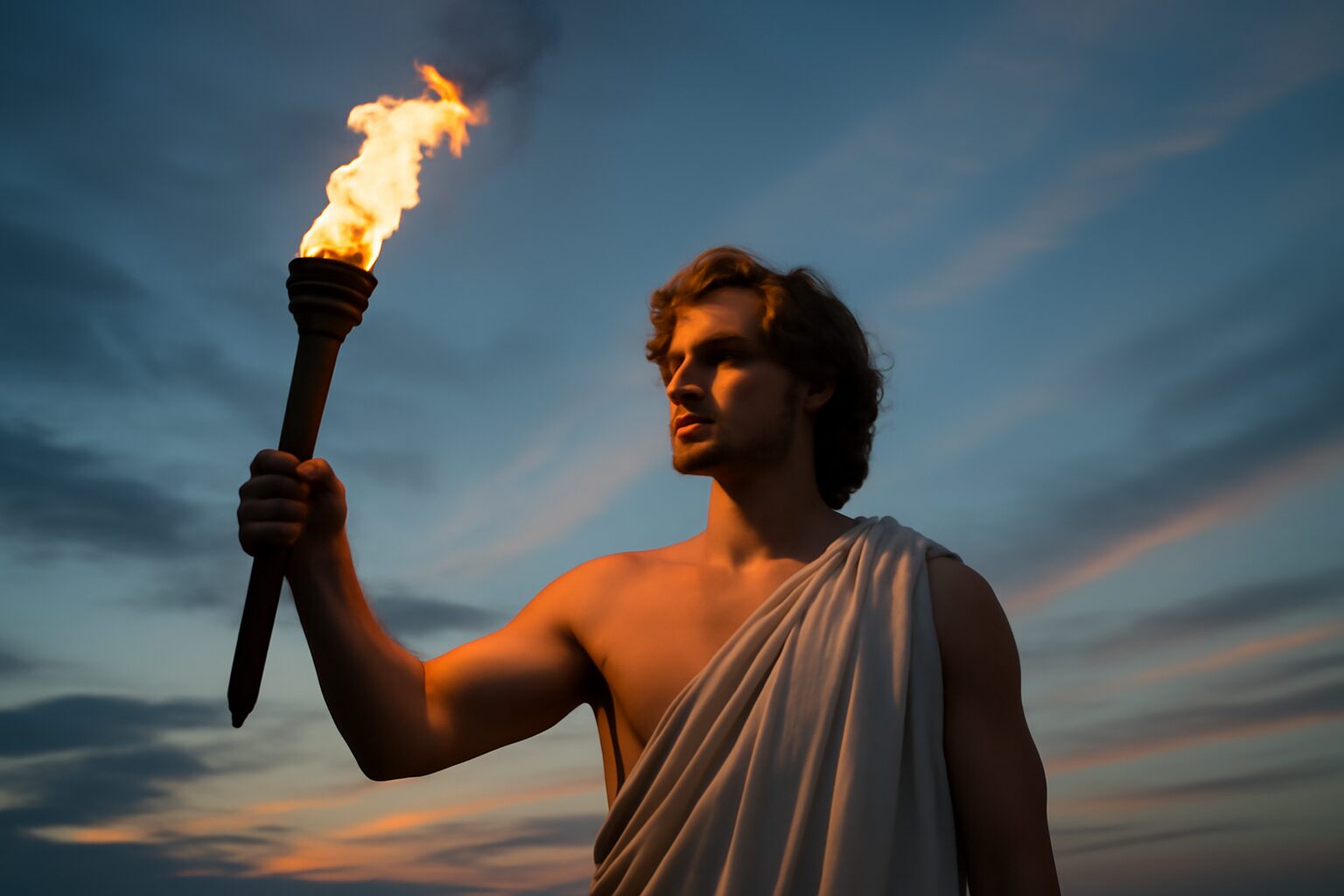
As a divine being, Eosphorus possessed the power to illuminate the sky before sunrise, bridging the gap between night and day. He was often depicted as a youthful, radiant figure with wings, carrying a torch to symbolize his role as the bringer of light. His presence was a daily reminder of the cyclical nature of time and the promise of a new beginning.
In later traditions, particularly in Roman and Christian contexts, the name Phosphorus (or Lucifer) took on darker connotations, but in Greek mythology, Eosphorus remained a benevolent and hopeful figure. He embodied the purity of dawn and the optimism that comes with each new day.
Significance in Greek Culture
Eosphorus played a subtle yet vital role in Greek cosmology. As the herald of dawn, he was a constant in the daily rhythm of life, a celestial marker of time. His connection to Venus also tied him to themes of love and beauty, as the planet was sacred to Aphrodite.
Though not as prominently worshiped as the Olympian gods, Eosphorus was honored in poetry and hymns, often invoked as a symbol of guidance and renewal. His legacy endures in astronomy, where the name Phosphorus is still used to describe the morning appearance of Venus.
Alternative Names for Eosphorus (Phosphorus)
God Name: Lucifer (Latin)
In Roman mythology, Eosphorus (Phosphorus) was known as Lucifer, which means 'light-bringer'. This name was later adopted into Christian theology with a different connotation.
God Name: Phosphorus (Greek)
An alternative Greek name for Eosphorus, meaning 'light-bringer' or 'morning star', often used interchangeably in Greek mythology.
God Name: Hesperus (Greek)
In Greek mythology, Hesperus is the evening star, often considered the counterpart to Eosphorus (the morning star). Some traditions conflate the two as aspects of the same deity.
God Name: Vesper (Roman)
The Roman equivalent of the Greek Hesperus, representing the evening star. Like Hesperus, it is sometimes linked to Eosphorus as part of a dual aspect of the same celestial body.
Tales about Eosphorus (Phosphorus)
The Dawn's Herald and the Wind of the West
In the quiet hours before dawn, Eosphorus would often find himself racing the gentle breezes that swept across the mortal world. One such evening, he encountered Zephyrus, the soft and warm West Wind, who was known to bring spring and early flowers. Zephyrus, in his playful nature, challenged Eosphorus to a contest: whoever could coax the first blossom to open would be declared the true herald of renewal.
Eosphorus, with his radiant light, gently touched the petals of a sleeping rose, while Zephyrus whispered sweet promises of warmth and growth. As the first golden rays of dawn broke, the rose unfurled, its crimson petals glistening with dew. It was impossible to say whose touch had been more persuasive, but from that day, they worked in harmony—Eosphorus lighting the way and Zephyrus carrying the fragrance of new beginnings across the land.
The Star-Crossed Lovers of the Sky
High above the clouds, Eosphorus once beheld the beauty of Hesperus, the Evening Star, and was captivated. Though one heralded the dawn and the other the dusk, they longed to meet in the fleeting moments of twilight. Each day, Eosphorus would hasten his ascent, hoping to catch a glimpse of Hesperus before the sun fully rose, while Hesperus lingered as long as possible before yielding to the night.
Their love was a dance of light and shadow, a celestial romance that played out in the purples and oranges of the sky. Though they could never truly be together, their brief encounters painted the heavens with a beauty that inspired poets and lovers for ages, a testament to the passion that even stars could hold.
Colors of Their Love
- Golden Dawn - Eosphorus' radiant light
- Twilight Purple - The meeting of dawn and dusk
- Crimson Longing - The passion they shared
Frequently Asked Questions
Who is Eosphorus (Phosphorus) in Greek mythology?
Eosphorus, also known as Phosphorus, is the Greek god of the morning star (Venus). He is the personification of the planet Venus when it appears in the morning sky, heralding the dawn.
What is the difference between Eosphorus and Hesperus?
Eosphorus represents the morning appearance of Venus (the morning star), while Hesperus represents its evening appearance (the evening star). Though they're the same astronomical object, Greeks saw them as separate deities.
Why was Eosphorus important in Greek mythology?
Eosphorus was important as the bringer of dawn, symbolizing new beginnings and hope. His appearance marked the start of each new day, making him a significant figure in daily Greek life and mythology.
How is Eosphorus related to other Greek gods?
Eosphorus is often considered the son of the dawn goddess Eos (Aurora) and the Titan Astraeus. He's brother to the winds and stars, connecting him to other celestial deities in Greek mythology.
What can we learn from the myth of Eosphorus today?
The myth of Eosphorus teaches us about ancient Greek understanding of astronomy and their tendency to personify natural phenomena. It also symbolizes the eternal cycle of day and night, and the hope that comes with each new dawn.