Thelxiope: The Enchanting Muse of Persuasive Speech
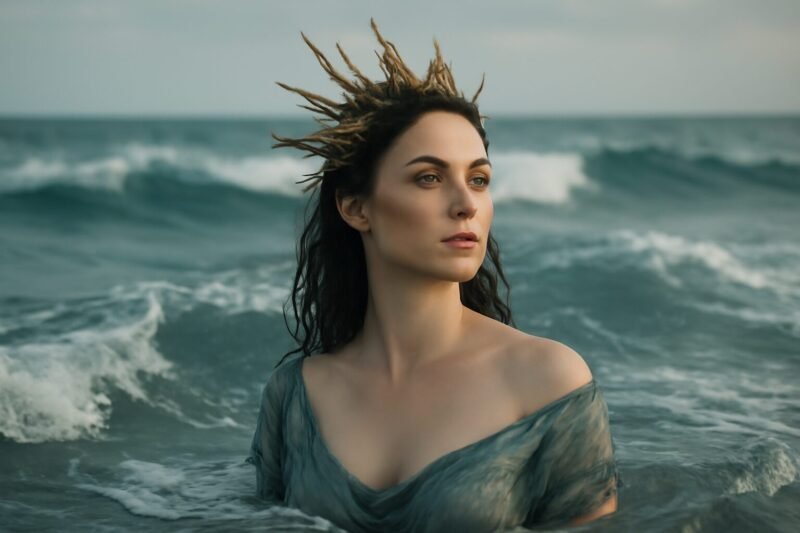
In Greek mythology, Thelxiope (also spelled Thelxiepeia or Thelxinoe) was one of the alluring Sirens, the dangerous yet captivating creatures who lured sailors to their doom with irresistible songs. Her name translates to "persuasive voice" or "enchanting words," perfectly capturing her mythical role as a bringer of beguiling melodies.
Mythology and Powers
Thelxiope and her sisters—typically two to five in number—were often depicted as bird-women with mesmerizing voices. According to legend, they inhabited rocky islands, where their songs caused passing sailors to wreck their ships in desperate attempts to reach them. Thelxiope's voice was said to be so enchanting that no mortal could resist it, making her a symbol of both artistic beauty and deadly temptation.
Some myths suggest the Sirens were originally handmaidens of Persephone, transformed into their avian forms as punishment for failing to protect her from Hades. Others claim they were daughters of the river god Achelous and a Muse, linking them to divine creativity.
Relationships and Significance
Thelxiope's most famous appearance is in Homer's Odyssey, where Odysseus famously escapes the Sirens by having his crew plug their ears with wax while he listens, tied to the mast. Another myth tells of the Argonauts, who survived the Sirens' call thanks to Orpheus drowning them out with his own music.
Though often grouped with her sisters, Thelxiope occasionally appears in myths as an individual figure. Some traditions name her as the mother of the Sirens' songs, emphasizing her role as the originator of their deadly melodies. Her legacy endures as a representation of the dual nature of art—capable of both profound beauty and destructive power.
Alternative Names for Thelxiope
God Name: Thelxiepeia (Greek)
An alternative name for Thelxiope, often used interchangeably in Greek mythology. Thelxiepeia is one of the Sirens, known for their enchanting voices that lured sailors to their doom.
God Name: Thelxinoe (Greek)
Another variant of Thelxiope's name found in some ancient Greek texts. Thelxinoe is also associated with the Sirens and their captivating songs.
God Name: Thelxiope (Roman)
The Roman adaptation of the Greek name, retaining the original form. The Romans often adopted Greek deities with minimal changes to their names.
Tales about Thelxiope
The Siren's Healing Song
On the rocky shores where the Thelxiope's voice wove enchantments, she once encountered Aceso, the goddess of healing. Aceso was tending to a wounded dolphin, its fin gashed by a ship's anchor. Thelxiope, moved by the creature's plight, sang a melody so pure it seemed to cleanse the air. Aceso, hearing the song, found her own healing powers amplified—the dolphin's wound closed seamlessly, and it leaped joyfully into the waves. From that day, Thelxiope's voice was said to carry a restorative quality, and sailors whispered that her harmonies could mend both body and spirit when Aceso's touch was near.
A Duet with the River God
One evening, as Thelxiope sang to the moonlit sea, her voice drifted inland to the riverbanks where Achelous, the shape-shifting river god, resided. Intrigued, Achelous transformed into a bull and approached, his horns glistening with dew. Thelxiope, unafraid, wove her song into the rhythm of his flowing waters, and Achelous responded with a deep, resonant hum that echoed through the valleys. Their duet created a cascade of harmonies that lulled the surrounding forests to sleep. It was said that whenever Thelxiope and Achelous sang together, the rivers and seas would harmonize, bringing peace to all who heard their intertwined melodies.
Frequently Asked Questions
Who is Thelxinoe in Greek mythology?
Thelxinoe is one of the Greek sea deities, specifically known as a Siren. She is often associated with enchanting music and songs that lure sailors.
What is the significance of Thelxinoe and other Sirens?
Thelxinoe and other Sirens symbolize the dangers of temptation and the allure of the unknown. Their stories warn against being seduced by deceptive appearances or promises.
How does Thelxinoe relate to modern storytelling?
Thelxinoe's character inspires modern tales about dangerous allure and temptation, often seen in literature and media where characters face morally ambiguous choices.
Are Thelxinoe and the Sirens considered evil in Greek mythology?
Thelxinoe and the Sirens are not purely evil but represent natural forces or warnings. Their role is more about testing human resolve and wisdom.
What can we learn from the myth of Thelxinoe?
The myth teaches the importance of self-control and critical thinking, as the Sirens' songs prey on weakness and curiosity.