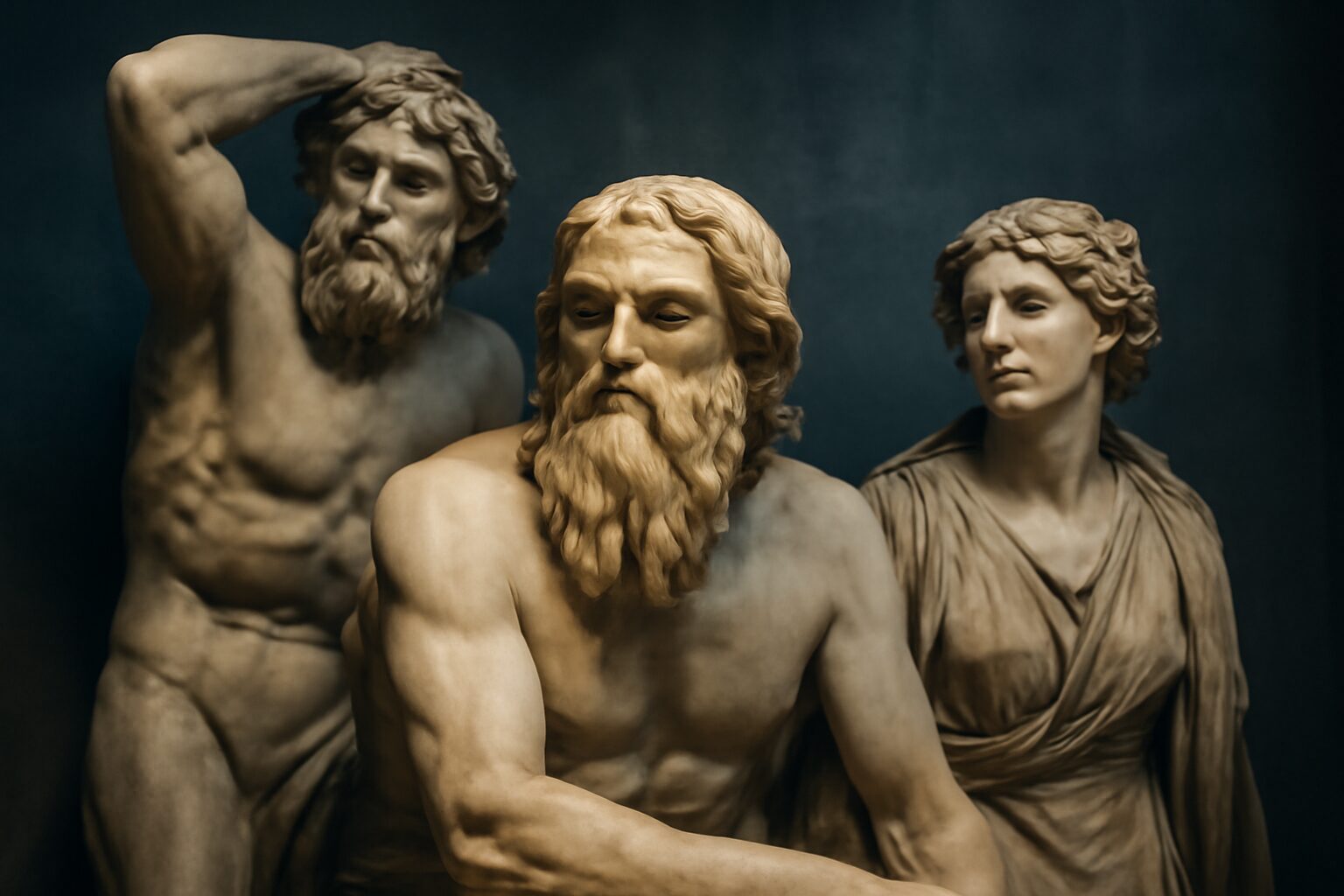

Ormenos: The Lesser-Known Deity of Greek Mythology
In the vast pantheon of Greek mythology, Ormenos is a relatively obscure figure, often overshadowed by more prominent gods and heroes. Though details about Ormenos are scarce in surviving ancient texts, his name appears in certain genealogies and regional myths, hinting at a once-recognized role in the mythological landscape.
Origins and Family
Ormenos is most commonly mentioned as the son of Cercaphus, a figure associated with the island of Rhodes, and a descendant of the sun god Helios. Some accounts link him to the lineage of the Heliadae, the radiant children of Helios who were known for their wisdom and skill. This connection places Ormenos within a family of solar deities and heroes, suggesting he may have been venerated in local Rhodian traditions.
Role and Significance
While Ormenos lacks the grand myths of Zeus or Apollo, his name—derived from the Greek word ormenos, meaning "swift" or "eager"—hints at possible associations with speed, movement, or even hunting. Some scholars speculate he may have been a minor deity or hero linked to athleticism, travel, or protection during journeys, though concrete evidence is limited.
In regional lore, Ormenos is occasionally tied to the founding of cities or sacred sites, a common theme for lesser-known mythological figures. His presence in genealogies also underscores the Greek tradition of tracing noble or divine ancestry to legitimize rulers and heroes.
Legacy and Modern Interest
Though Ormenos remains a shadowy figure, his inclusion in ancient texts reflects the richness of Greek mythology, where even minor deities played a role in the cultural and religious tapestry. For modern enthusiasts, figures like Ormenos offer a glimpse into the diverse and often localized nature of Greek myth, where every name carried meaning and every lineage told a story.
Alternative Names for Ormenos
God Name: Ormenos (Greek)
The primary name of the god in Greek mythology, possibly associated with specific local cults or lesser-known traditions.
God Name: Ormenus (Roman)
A Latinized version of the Greek name Ormenos, used in Roman contexts where Greek deities were assimilated or referenced.
God Name: Ormenides (Greek)
A patronymic or epithet form meaning 'son of Ormenos,' possibly used in poetic or genealogical contexts.
God Name: Ormenios (Greek)
An alternative epithet or variant form of Ormenos, found in some regional inscriptions or texts.
Tales about Ormenos
The Curse of the Sea Serpent
Ormenos, a lesser-known sea deity, once dwelled in the tranquil waters near the island of Seriphos. His peaceful existence was shattered when the monstrous sea serpent Ceto began terrorizing coastal villages. Ormenos, though not a warrior, possessed a unique ability to communicate with marine creatures. He learned that Ceto’s rage stemmed from a cursed amulet lost in a shipwreck, which amplified her destructive nature.
Determined to restore peace, Ormenos sought the wisdom of the prophetic sea god Proteus, who revealed the amulet’s location in a sunken temple. Ormenos braved treacherous currents and retrieved the artifact, but Ceto cornered him. Instead of fighting, Ormenos used his gift to soothe her, singing an ancient hymn that calmed her fury. The amulet’s curse lifted, and Ceto retreated to the depths, forever grateful. Ormenos became a guardian of sea harmony, his tale a reminder that empathy can tame even the fiercest beasts.
The Gift of the Healing Spring
In a time of plague, the coastal city of Hermione suffered greatly. Ormenos, moved by their plight, journeyed to seek aid from the healing goddess Hygieia. She instructed him to find a sacred conch shell hidden in a cave guarded by the sea nymph Leucothea. Ormenos faced swirling whirlpools and deceptive echoes, but his pure intent won Leucothea’s trust, and she gifted him the shell.
Returning to Hermione, Ormenos blew into the conch, and a miraculous spring bubbled forth, its waters imbued with Hygieia’s healing power. The plague receded, and the city flourished anew. Ormenos was celebrated as a savior, and the spring became a site of pilgrimage, symbolizing the union of sea and health. His partnership with Hygieia underscored that even minor deities could achieve greatness through compassion and courage.
Frequently Asked Questions
Who is Ormenos in Greek mythology?
Ormenos is a lesser-known sea deity in Greek mythology, often associated with the vast and mysterious aspects of the ocean. While not as prominent as Poseidon, Ormenos represents the deep and uncharted waters, embodying the sea's hidden dangers and wonders.
Why is Ormenos important in Greek mythology?
Ormenos is important because he adds depth to the Greek pantheon of sea deities, representing the more obscure and enigmatic parts of the ocean. His presence highlights the Greeks' reverence and fear of the sea's unpredictable nature, complementing the roles of more well-known gods like Poseidon and Oceanus.
What can we learn from the myth of Ormenos?
The myth of Ormenos teaches us about the ancient Greeks' understanding of the sea as both a source of life and a realm of mystery and danger. It reflects their respect for the ocean's power and their attempts to personify its many facets through lesser-known deities like Ormenos.
How does Ormenos compare to Poseidon?
While Poseidon is the chief god of the sea, storms, and earthquakes, Ormenos is a more obscure figure representing the deeper, less understood parts of the ocean. Poseidon is often depicted as powerful and tempestuous, whereas Ormenos symbolizes the quiet, hidden depths and their secrets.
Are there any myths or stories specifically about Ormenos?
There are no widely known myths specifically about Ormenos, as he is a minor deity in Greek mythology. His role is more symbolic, representing the uncharted and mysterious aspects of the sea, rather than being the central figure in any surviving tales.