Galene: The Serene Goddess of the Calm Seas
In Greek mythology, Galene (Γαλήνη) was a minor sea goddess personifying the calm and tranquility of the ocean. Her name literally means "calm seas" or "serenity", reflecting her domain over peaceful waters—a stark contrast to the turbulent storms caused by other sea deities.
Mythology and Origins
Galene was often considered one of the fifty Nereids, the sea nymph daughters of the ancient sea god Nereus and the Oceanid Doris. While not as prominent as her sisters Thetis or Amphitrite, Galene played a vital role in maritime lore as a benevolent force for sailors. Ancient Greeks invoked her name for safe voyages, hoping she would still the waves and grant smooth sailing.
Powers and Symbolism
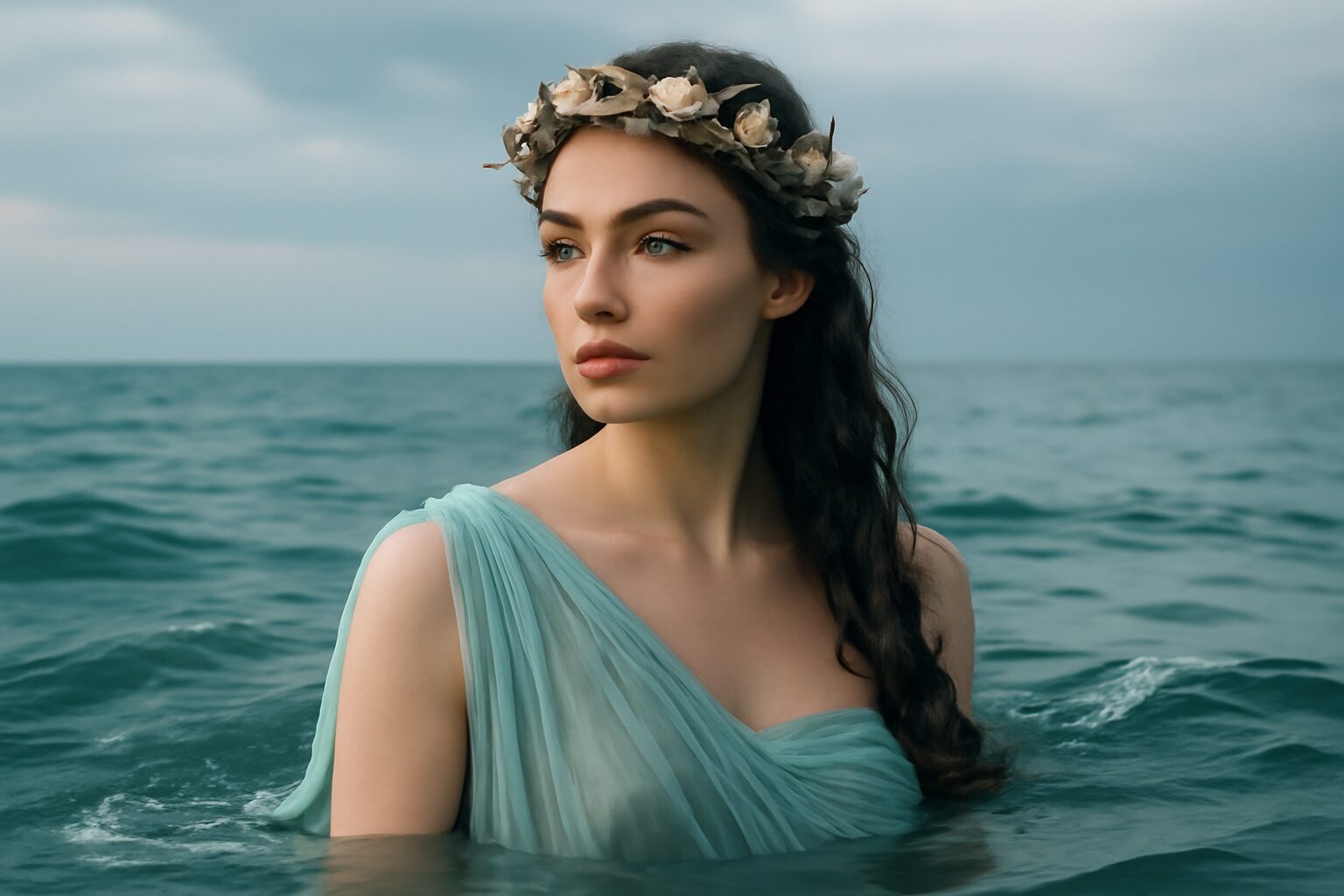
As the goddess of calm seas, Galene had the power to pacify turbulent waters and bring stillness to the ocean. She was often depicted as a beautiful maiden rising from the waves, sometimes accompanied by dolphins or sea birds—symbols of peace and safe passage. Unlike Poseidon, who could stir storms with his trident, Galene represented the sea's gentler, life-giving aspect.
Relationships and Worship
Galene was closely associated with other marine deities, particularly her Nereid sisters and Poseidon, the king of the sea. While no major temples were dedicated to her, sailors and fishermen made small offerings to her before journeys, especially in coastal communities. She occasionally appears in poetic works, such as Hesiod's Theogony, where she is listed among the Nereids.
Cultural Significance
Galene's presence in mythology highlights the Greeks' deep connection to the sea—both its dangers and its blessings. While gods like Poseidon embodied the ocean's fury, Galene reminded people of its peaceful, nurturing side. Her legacy endures in modern language; the word "galene" still refers to calm weather at sea in meteorological terms.
Alternative Names for Galene
God Name: Galene (Greek)
The primary Greek name for the goddess of calm seas, derived from the Greek word 'galu0113nu0113' meaning 'calm' or 'tranquility'.
God Name: Mare Tranquillitatis (Roman)
A Latin epithet meaning 'Tranquil Sea,' used in Roman contexts to refer to the goddess associated with calm waters, though not a direct counterpart.
God Name: Thalassa (Greek)
In some contexts, Galene is associated with Thalassa, the primordial Greek goddess of the sea, though Thalassa represents the sea itself rather than just calmness.
God Name: Eirene (Greek)
Sometimes linked to Eirene (Peace), as Galene's calm seas symbolize peace and serenity, though Eirene is a distinct goddess of peace.
Tales about Galene
The Calm After the Storm: Galene and Poseidon
In the tempestuous realm of the sea, Galene was the embodiment of tranquility, her presence a balm to the churning waters. One day, the mighty Poseidon, in a fit of rage, summoned a hurricane to punish a fleet of mortal ships that had defied him. The ocean roared, waves towering like mountains, and the sailors despaired.
Galene, watching from the depths, could not bear the chaos. She rose to the surface, her serene aura spreading like oil on troubled waters. As she approached Poseidon, the winds stilled and the waves softened into gentle swells. "Great Poseidon," she murmured, "your wrath is justified, but let mercy temper it. The calm reveals the sea's true majesty."
Poseidon, struck by her wisdom and the sudden peace, lowered his trident. The storm ceased, and the surviving ships sailed on under a clear sky. From that day, Galene became his trusted advisor, reminding him that even the god of the sea could find strength in stillness.
The Serene Alliance: Galene and Zephyrus
On the sun-kissed shores of the Aegean, Galene often danced with the gentle breezes, but it was the west wind, Zephyrus, who captured her heart. Each morning, he would sweep down from the skies, his breath coaxing the waves into a rhythmic lullaby, while Galene smoothed the sea into a glassy mirror.
One spring, the land suffered a drought, and the mortals prayed for relief. Zephyrus, moved by their plight, sought Galene's aid. "My winds can carry clouds," he said, "but only your calm can guide the rains gently to the earth."
Together, they wove a masterpiece: Zephyrus gathered moisture-laden clouds, and Galene stilled the sea below, preventing storms from breaking them apart. The clouds drifted inland, releasing soft showers that revived the crops. The alliance of Galene and Zephyrus became a legend, a symbol of how tranquility and gentle force could bring life to the world.
Frequently Asked Questions
Who is Galene in Greek mythology?
Galene is a minor sea goddess in Greek mythology, known as the personification of calm seas. She is often associated with tranquility and peaceful waters.
Why is Galene important among Greek sea deities?
Galene represents the calm and serene aspects of the sea, balancing the more turbulent and destructive forces represented by other sea deities like Poseidon or the storm gods.
What can we learn from the myth of Galene?
Galene's myth teaches the importance of balance and tranquility, reminding us that even powerful forces like the sea have moments of peace and stillness.
How does Galene's symbolism apply today?
Galene's symbolism of calm waters can be seen as a metaphor for inner peace and mindfulness, encouraging people to seek moments of tranquility in their busy lives.
Are there any stories or myths specifically about Galene?
Galene doesn't have many detailed myths, but she is sometimes mentioned alongside other sea deities as a bringer of calm seas, often invoked by sailors for safe voyages.