Pholus: The Wise Centaur of Greek Mythology
In the rich tapestry of Greek mythology, Pholus stands out as one of the most intriguing centaurs—half-man, half-horse creatures known for their wild and often violent nature. Unlike his unruly kin, Pholus was revered for his wisdom, hospitality, and connection to the divine.
The Noble Centaur
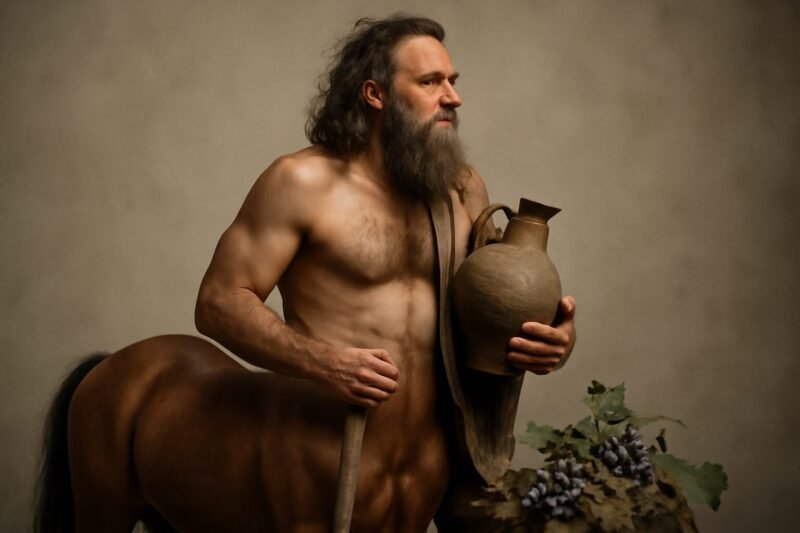
Pholus, whose name means "caveman" or "denizen of caves," was the son of Silenus and a nymph. He made his home in a cave on Mount Pelion in Thessaly, where he lived apart from other centaurs. Unlike the brutish and rowdy centaurs like Nessus, Pholus was known for his gentle demeanor and deep knowledge of prophecy and herbal lore.
Encounter with Heracles
Pholus plays a key role in the myth of Heracles' Fourth Labor—the capture of the Erymanthian Boar. When Heracles visited Pholus' cave, the centaur welcomed him with hospitality, offering roasted meat and opening a sacred jar of wine given to him by Dionysus. The intoxicating aroma of the wine attracted other centaurs, who became drunk and violent. In the ensuing battle, Heracles fought them off with poisoned arrows, but tragically, Pholus was accidentally wounded by one and died.
Symbolism and Legacy
Pholus represents the duality of wisdom and tragedy in Greek mythology. His death highlights the unintended consequences of divine gifts—his hospitality led to chaos, yet his noble nature set him apart from his kin. Some myths suggest he was placed among the stars as the constellation Centaurus or Sagittarius, immortalized for his virtue.
Though lesser-known than other mythological figures, Pholus remains a fascinating example of the nuanced portrayals of centaurs—beings caught between civilization and savagery, wisdom and instinct.
Alternative Names for Pholus
God Name: Pholos (Greek)
An alternative spelling or variation of the name Pholus found in some Greek texts, possibly reflecting regional dialects or transcription differences.
God Name: Pholus (Roman)
The Romans adopted the name Pholus directly from Greek mythology without significant alteration, as he was not a major figure in Roman religion.
God Name: Pholeus (Greek)
A rare variant found in certain ancient sources, possibly a poetic or localized form of the name Pholus.
Tales about Pholus
The Centaur's Healing Encounter with Aceso
Deep in the forests of Mount Pelion, Pholus tended to a wounded deer struck by a hunter's arrow. As he attempted to soothe the creature, a soft golden light enveloped the clearing. Aceso, goddess of the healing process, appeared with her hands glowing with restorative energy. "Your compassion calls to me, noble centaur," she whispered. Together, they worked through the night—Pholus providing herbs from his vast knowledge while Aceso guided the healing energy. By dawn, the deer stood whole again, nuzzling both their hands in gratitude before bounding into the forest.
The Lesson of Gradual Healing
Aceso smiled at Pholus. "You understand that healing is not merely mending wounds but nurturing the process itself." She gifted him a special herb that would bloom only under moonlight, saying, "May this remind all who seek your aid that true recovery requires patience and care." From that day forward, Pholus became known not just as a keeper of wine but as a healer who honored the gradual art of restoration.
Pholus and the River God Achelous
During a great drought that parched the land, Pholus journeyed to the riverbank where Achelous, the river god, flowed weakly. "Great Achelous," Pholus called out, "your waters fade, and the creatures suffer. I have brought the last of my sacred wine to offer you strength." The river god manifested as a mighty bull with a broken horn, his liquid form shimmering with fatigue. Moved by the centaur's sacrifice, Achelous drank the wine and felt his power surge. In gratitude, he struck his good horn against a rock, creating a new spring that would never run dry.
The Pact of Eternal Friendship
"Your generosity has saved my waters and your people," Achelous declared. "Henceforth, my rivers shall always flow to nourish your forests, and in times of need, call upon me." He gifted Pholus a horn that could summon clean water anywhere. This bond between centaur and river god became legendary, symbolizing how mutual aid between land and water sustains all life.
Frequently Asked Questions
Who is Pholus in Greek mythology?
Pholus is a lesser-known centaur in Greek mythology, often associated with rustic deities. Unlike most centaurs, he was wise and hospitable, known for his friendship with Heracles (Hercules) and his tragic death caused by a poisoned arrow.
What are rustic deities in Greek mythology?
Rustic deities in Greek mythology are minor gods and spirits associated with nature, rural life, and the wilderness. They include figures like Pan, nymphs, satyrs, and centaurs like Pholus, who embody the untamed and natural world.
Why is Pholus important in Greek myths?
Pholus is important because his story highlights themes of hospitality and unintended consequences. His death, caused by a simple accident with Heracles' poisoned arrow, shows how even minor figures can play significant roles in mythological tales.
What can we learn from the story of Pholus?
The story of Pholus teaches about the value of kindness and the unpredictability of fate. Despite his good intentions, his hospitality to Heracles led to his demise, reminding us that actions can have unforeseen outcomes.
How does the concept of rustic deities apply today?
Rustic deities like Pholus symbolize humanity's connection to nature and the respect for the wild. Today, they remind us of the importance of preserving natural environments and the balance between civilization and the untamed world.