Attis: The Tragic Lover of Cybele
In Greek and Phrygian mythology, Attis is a divine figure closely associated with the Great Mother goddess Cybele. His myth is one of passion, devotion, and tragic transformation, embodying themes of rebirth and the cycles of nature.
Origins and Mythology
Attis was originally a Phrygian deity whose worship spread to Greece and later Rome. The most famous myth tells of his love affair with Cybele, who chose him as her consort. In one version, Attis was a beautiful youth who pledged eternal fidelity to Cybele but later fell in love with a nymph. Enraged, Cybele drove him into madness, causing him to castrate himself beneath a pine tree and bleed to death. From his blood sprang violets, and Cybele, in her grief, resurrected him in an immortal form.
Powers and Symbolism
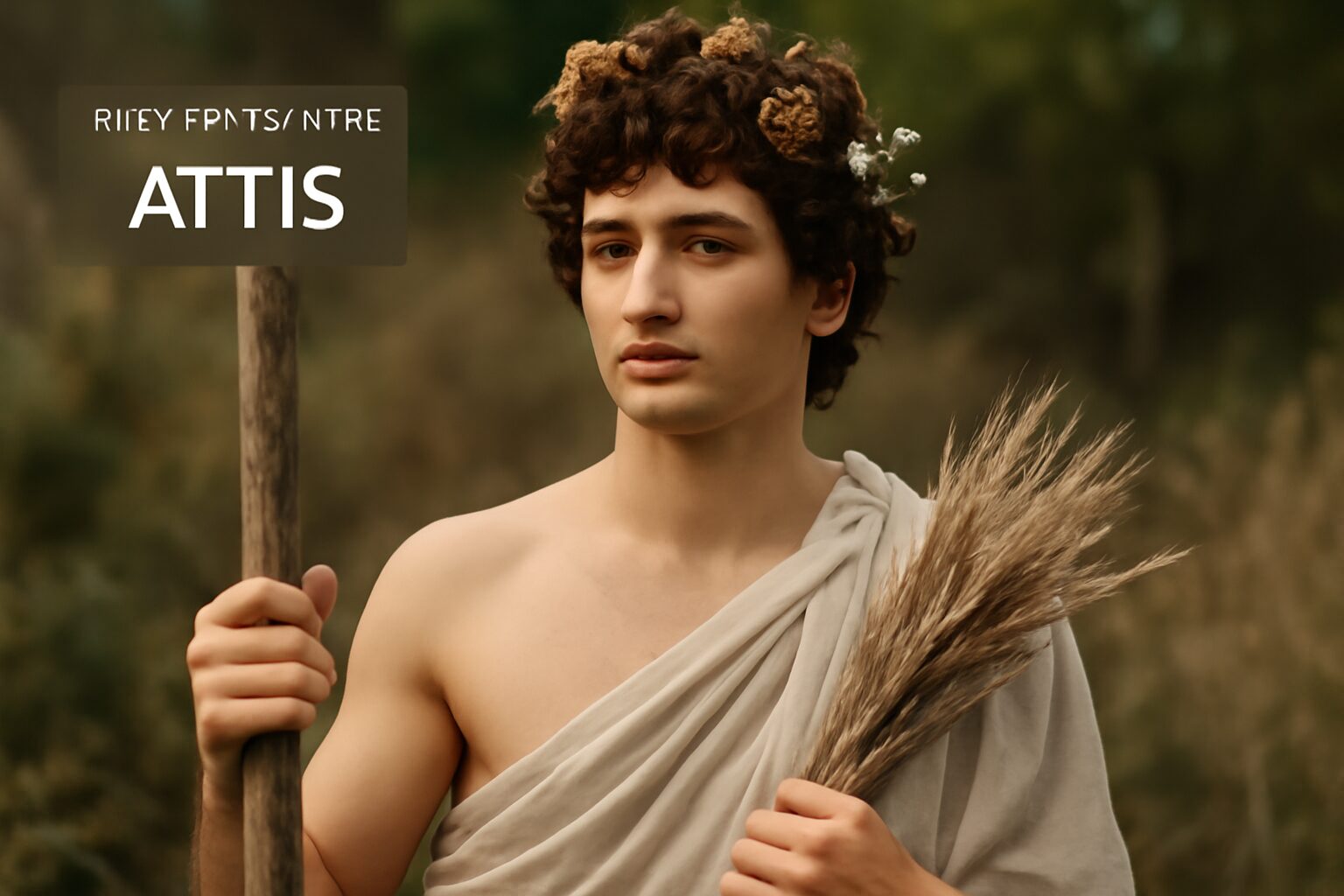
Attis represents the dying-and-rising god archetype, symbolizing the cycle of life, death, and rebirth—much like the changing seasons. He is often depicted as a youthful, androgynous figure, sometimes shown with a pine tree or a shepherd’s crook, reflecting his connection to nature and fertility. His self-castration myth also ties him to themes of sacrifice and spiritual devotion.
Relationship with Cybele
Attis is inseparable from Cybele, the Magna Mater (Great Mother). Their bond is both sacred and tragic, illustrating the destructive and regenerative power of divine love. Cybele’s priests, the Galli, emulated Attis’s devotion by ritually castrating themselves in his honor, symbolizing their complete surrender to the goddess.
Worship and Legacy
The cult of Attis and Cybele was celebrated with ecstatic rituals, including the Hilaria, a spring festival marking his resurrection. His myth influenced later mystery cults and even early Christian symbolism, where themes of death and rebirth found parallels. Though not as widely known as Olympian gods, Attis remains a poignant figure in mythology, embodying the eternal struggle between mortal passion and divine fate.
Alternative Names for Attis
God Name: Atys (Roman)
Atys is the Romanized version of the Greek name Attis, often used in Roman contexts to refer to the same deity associated with vegetation and resurrection.
God Name: Agdistis (Phrygian)
Agdistis is an alternative name for Attis in Phrygian mythology, representing a dual-gendered deity who was later transformed into Attis. The name is tied to the myth of Agdistis's violent birth and subsequent castration.
God Name: Papas (Greek)
In some Greek traditions, Attis was referred to as Papas, meaning 'father,' highlighting his role as a divine figure associated with fertility and the earth.
God Name: Deus Sol Invictus Attis (Roman)
In later Roman syncretism, Attis was sometimes identified with the sun god Sol Invictus, leading to the compound name Deus Sol Invictus Attis, emphasizing his solar and resurrection aspects.
God Name: Menotyrannus (Greek)
Menotyrannus is an epithet occasionally linked to Attis, meaning 'moon-tyrant,' possibly reflecting his connection to lunar cycles or celestial symbolism in certain cults.
Tales about Attis
The Passion of Attis and Cybele
In the wilds of Phrygia, the handsome youth Attis captured the heart of the great mother goddess Cybele. She made him her devoted priest and companion, swearing him to eternal chastity in her service. But when Attis broke his vow and fell in love with a nymph, Cybele's wrath was terrible to behold.
The Divine Punishment
Driven mad by Cybele's power, Attis fled to the mountains where in a frenzy of regret, he castrated himself beneath a pine tree. As his lifeblood soaked the earth, Thanatos approached to claim him. But Cybele, moved by pity and love, intervened before Death could take her beloved completely.
Miraculous Renewal: Where Attis's blood fell, violets sprang forth, and his spirit became one with the natural world. Cybele persuaded Zeus to grant Attis immortality, allowing his body to never decay while his spirit would return each spring with the rebirth of vegetation.
Attis and the Healing Arts
After his tragic self-mutilation, Attis lay dying when the healing god Asclepius came upon him. Though even the great physician could not reverse such a mortal wound, he used his arts to ease Attis's suffering and slow his passage to the underworld.
The Intervention of Nature Spirits
As Asclepius worked, the Dryades gathered around, their gentle presence bringing comfort to the dying youth. The nymph Echo repeated Asclepius's healing chants, amplifying their power, while Pan played soothing melodies on his pipes to calm Attis's tormented spirit.
Legacy of Healing: Though Attis could not be saved in body, the knowledge Asclepius gained from treating him contributed to his understanding of both physical and spiritual wounds. This experience helped shape the healing rituals that would later be practiced in Asclepius's temples throughout Greece.
Frequently Asked Questions
Who is Attis in Greek mythology?
Attis is a lesser-known deity in Greek mythology associated with vegetation, rebirth, and the Phrygian goddess Cybele. He is often depicted as a youthful shepherd and symbolizes the cycle of life, death, and renewal.
Why is Attis important in Greek mythology?
Attis is important because his myth represents themes of sacrifice, resurrection, and the connection between humans and nature. His story is tied to rituals celebrating the changing seasons and agricultural cycles.
What is the myth of Attis and Cybele?
The myth tells of Attis's tragic love for Cybele, a mother goddess. In some versions, he castrates himself in a fit of madness and dies, but is later reborn, symbolizing the eternal cycle of life and nature's renewal.
How does the story of Attis apply to modern life?
Attis's story reminds us of the importance of cycles in life, such as growth, loss, and renewal. It can inspire reflection on resilience, transformation, and our relationship with the natural world.
Are Attis and Dionysus the same god?
No, Attis and Dionysus are different deities, though both are associated with vegetation and rebirth. Dionysus is more prominent in Greek mythology as the god of wine and ecstasy, while Attis is closely linked to Cybele and Phrygian traditions.