Pandaisia: The Goddess of Banquets and Feasting
In the rich tapestry of Greek mythology, Pandaisia stands as a lesser-known but delightful deity associated with banquets, feasting, and communal joy. Her name, derived from the Greek words pan (all) and dais (feast), translates to "Banquet for All", reflecting her role as a divine hostess who presided over lavish gatherings and celebrations.
Role and Significance
Pandaisia was one of the Charites (Graces) or closely associated with them—a group of goddesses who personified charm, beauty, and festivity. While not as prominent as Aphrodite or Dionysus, Pandaisia embodied the spirit of abundance and hospitality, ensuring that feasts were plentiful and joyous. She was often invoked during symposia (drinking parties) and religious festivals to bless the occasion with merriment and generosity.
Her presence was believed to bring harmony to gatherings, preventing quarrels and encouraging camaraderie among guests. In a culture where feasting was central to social and religious life, Pandaisia played a subtle but vital role in maintaining the bonds of community.
Mythology and Relationships
Pandaisia's origins are somewhat obscure, but she is frequently linked to the Charites, daughters of Zeus and the Oceanid Eurynome. Alongside her sisters—Euphrosyne (Mirth), Thalia (Good Cheer), and Aglaea (Splendor)—she contributed to the pleasures of life. Some traditions place her among the retinue of Dionysus, the god of wine, further emphasizing her connection to revelry.
Unlike major Olympian deities, Pandaisia rarely appears in grand myths. Instead, her influence was felt in the everyday joys of Greek life—weddings, harvest festivals, and victory celebrations. She was a reminder that divinity could be found in shared meals and laughter.
Symbols and Worship
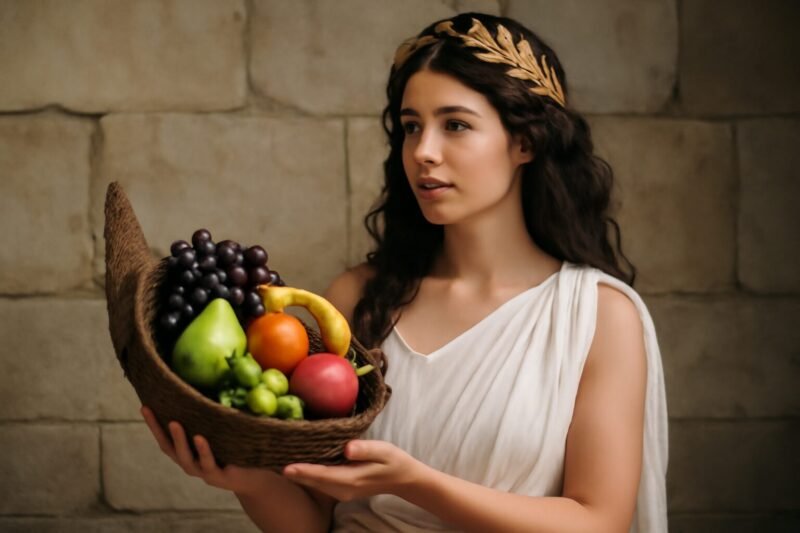
Though no major temples were dedicated to Pandaisia, she was honored in smaller household rituals and libations before feasts. Offerings of wine, honey, and fresh fruits were made in her name to ensure a successful gathering. Artists sometimes depicted her holding a cornucopia or a chalice, symbols of abundance and conviviality.
Her legacy endures as a testament to the Greek appreciation for life's simple pleasures. In a world where gods often represented power and strife, Pandaisia celebrated the unifying magic of a good meal among friends.
Alternative Names for Pandaisia
God Name: Pandaisios (Greek)
An alternative Greek spelling or variant of Pandaisia, possibly reflecting regional or dialectal differences in pronunciation or spelling.
God Name: Comissatio (Roman)
In Roman mythology, Comissatio was the god of feasting and banquets, closely associated with the Greek Pandaisia. The name reflects the Roman cultural equivalent of the Greek concept of communal feasting.
God Name: Daites (Greek)
A poetic or epithet name for Pandaisia, derived from the Greek word 'dais,' meaning feast or banquet. It emphasizes the god's role in presiding over feasts.
God Name: Epulum (Roman)
A Roman deity associated with feasting and banquets, similar to Pandaisia. The name comes from the Latin 'epulum,' meaning feast, highlighting the god's domain over communal meals.
Tales about Pandaisia
The Banquet of the Gods
When Zeus decreed a grand feast on Mount Olympus to celebrate the victory over the Titans, the gods worried about providing enough ambrosia and nectar for all. Pandaisia, the spirit of banquets and feasts, was summoned. She swept through the halls, her presence causing tables to groan under suddenly appearing platters of divine food and cups to overflow with sparkling nectar. Where her fingertips brushed marble, honeyed fruits and spiced wines materialized. The celebration lasted forty days, with Pandaisia ensuring no god's cup was ever empty, her laughter ringing through the golden halls as the Olympians toasted their eternal reign.
The Wedding of Harmony and Cadmus
At the legendary wedding of Harmonia and Cadmus, the first mortal-immortal union, the gods themselves served the feast. Pandaisia worked alongside Hebe, cupbearer of the gods, transforming simple mortal offerings into divine delicacies. She whispered to the bread baskets, making them endlessly replenish, and breathed upon the wine jars, turning them into fountains of the finest vintage. When Apollo played his lyre, Pandaisia made the very air taste of honeyed music, creating the first instance where celebration became sustenance itself.
Frequently Asked Questions
Who is Pandaisia in Greek mythology?
Pandaisia is a lesser-known Greek goddess or divine figure associated with banquets, feasting, and abundance. Her name means 'banquet for all' or 'feast for everyone,' reflecting her connection to communal celebrations and hospitality.
Why is Pandaisia important in Greek mythology?
Pandaisia represents the cultural importance of feasting and communal gatherings in ancient Greek society. She symbolizes generosity, joy, and the sharing of food, which were central to social and religious life in Greece.
What can we learn from Pandaisia today?
Pandaisia reminds us of the value of coming together, sharing meals, and celebrating abundance. Her themes of hospitality and community are still relevant in modern cultures that prioritize gatherings and feasts.
Are there any myths or stories about Pandaisia?
Unlike major Greek gods, Pandaisia doesn't appear in well-known myths. She is more of a symbolic figure, often mentioned in the context of banquets or alongside other minor deities of celebration and plenty.
How does Pandaisia compare to other Greek deities of abundance?
Pandaisia is similar to gods like Demeter (goddess of harvest) or Dionysus (god of wine and festivity), but she specifically embodies the act of feasting itself rather than the production of food or drink. She complements these deities by focusing on communal enjoyment.