Mese: The Muse of Middle Song
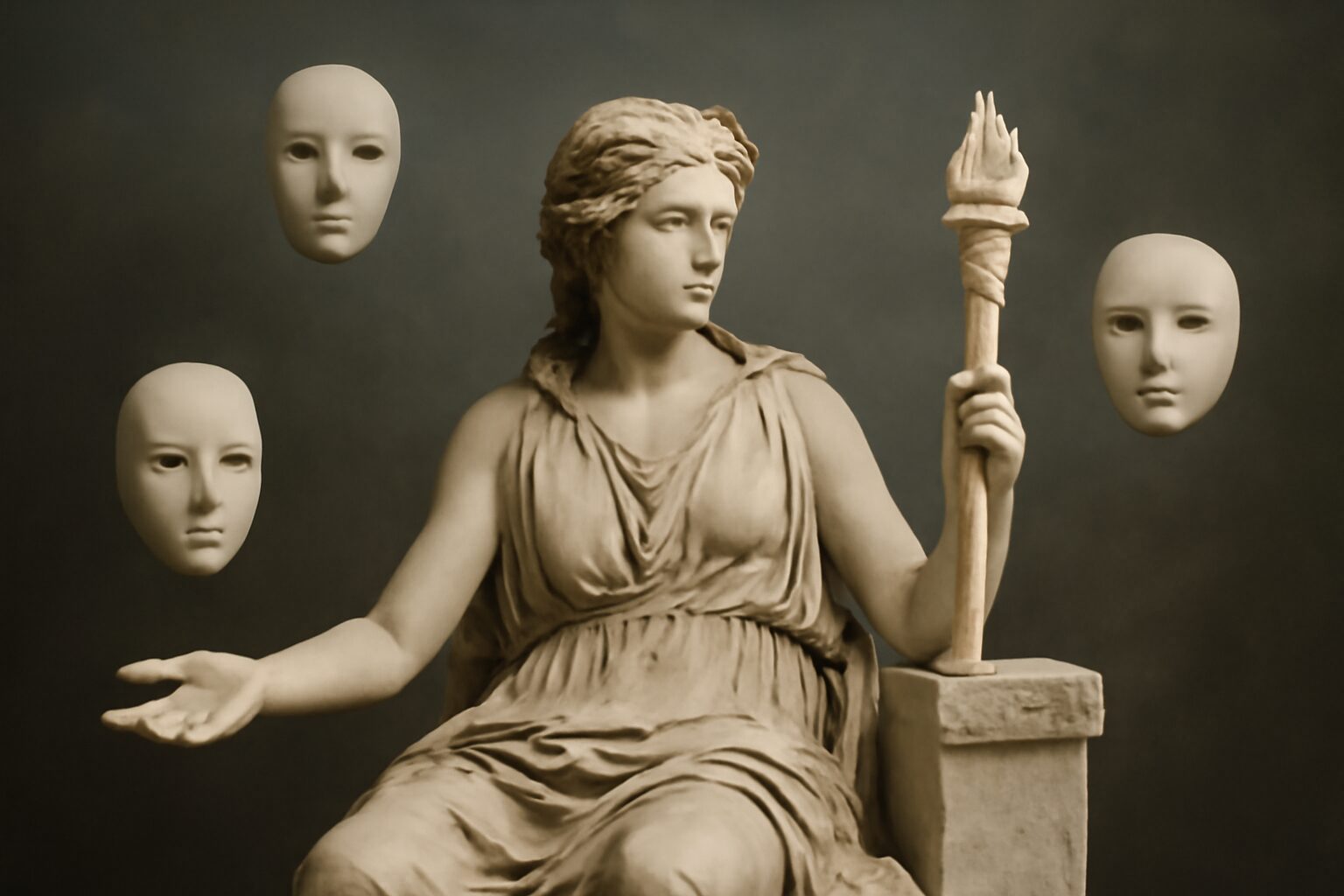
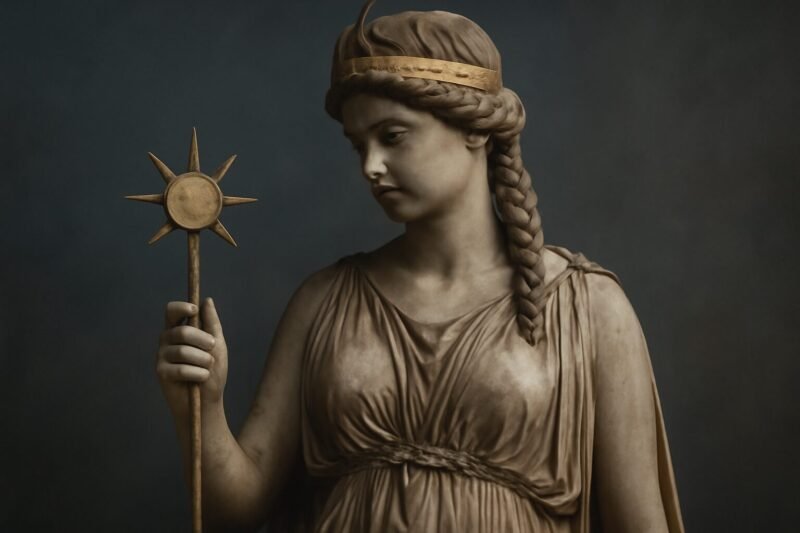
In Greek mythology, Mese (meaning "middle") was one of the three Musae (Muses) of music, specifically associated with the middle note in ancient Greek musical theory. Alongside her sisters Nete (the highest note) and Hypate (the lowest note), Mese represented the harmony and balance central to Greek musical tradition.
Role and Significance
Mese and her sisters were considered the personifications of musical intervals, governing the structure of ancient Greek music. As the middle note, Mese symbolized equilibrium—the crucial bridge between high and low pitches that created harmony. She was particularly revered by musicians, poets, and philosophers who studied the mathematical and spiritual aspects of music.
Mythology and Worship
Unlike the more famous nine Olympian Muses, Mese and her sisters belonged to an older tradition, possibly originating from Boeotian or Delphic cults. They were sometimes called the Delphic Muses, linked to Apollo's role as god of music. Their worship emphasized music's sacred power to connect humans with the divine.
Powers and Symbolism
Mese's domain extended beyond mere pitch—she embodied the golden mean, a concept celebrated in Greek philosophy. Her presence in music ensured order and proportion, reflecting the Greeks' belief that harmony mirrored cosmic balance. Instruments like the lyre were tuned according to her principles, making her essential to both artistic and ritual performances.
Legacy
Though lesser-known today, Mese's influence persisted in later musical theory. The idea of a central, unifying tone remains foundational in Western music, a testament to her ancient role. Her myth reminds us that for the Greeks, music was never just entertainment—it was a divine language, with Mese as its keystone.
Alternative Names for Mese
God Name: Medius (Roman)
In Roman mythology, Medius is considered an equivalent to the Greek god Mese, often associated with middle or central aspects in various contexts.
God Name: Mesites (Greek)
An alternative Greek name for Mese, meaning 'mediator' or 'middle one,' reflecting the god's role in balancing or intermediating forces.
God Name: Mesomaios (Greek)
Another Greek epithet for Mese, derived from 'mesos' (middle) and 'maios' (related to mediation), emphasizing the god's central or mediating function.
Tales about Mese
The Middle Note: Mese and Apollo's Lyre
In the golden halls of Apollo, god of music and prophecy, harmony reigned supreme. Yet one day, the divine melodies faltered. Apollo’s lyre, usually a cascade of perfect notes, sounded discordant—too sharp in the high registers, too dull in the low. The Muses fretted, for even their celestial choir could not find balance without the lyre’s guidance.
Desperate, Apollo sought Mese, the embodiment of the middle note. She dwelled in the heart of Mount Helicon, where sound itself took form. "Mese," Apollo pleaded, "my lyre lacks its soul. Without your equilibrium, music is chaos."
Mese, with hair the color of twilight and a voice that hummed with stability, smiled. She plucked a single string from her own essence and wove it into Apollo’s lyre. Instantly, the instrument resonated with newfound clarity—the high notes soared without shrillness, the low notes rumbled without muddiness. From that day, Mese’s middle note became the anchor of all harmony, a gift that let Apollo’s music inspire both gods and mortals alike.
The Gift of Balance
- Mese’s Role: She represents the median pitch in ancient Greek music theory, essential for tuning and scale structure.
- Apollo’s Lyre: Symbolizes artistic perfection, now inseparable from Mese’s influence.
The Whisper of Twilight: Mese and Hermes' Mischief
When Hermes, the swift-footed messenger of the gods, grew bored of his duties, he devised a prank to stir Olympus. He stole the echoes from the valleys, muffling the world in silence. Nymphs wept, for their songs vanished mid-refrain, and even Zeus’s thunder seemed hollow without reverberation.
The chaos drew Mese from her tranquil abode. She confronted Hermes as he lounged on a cloud, grinning. "Return the echoes, trickster," she demanded. "Without the middle resonance, sound has no journey—no beginning, no end."
Hermes, intrigued, challenged her: "Prove your worth, and I shall comply." Mese responded not with force, but with a single, sustained note that hung in the air—a perfect median tone that amplified softly, weaving through the stolen echoes. Hermes, mesmerized by the beauty of balanced sound, released the echoes at once. From then on, he honored Mese as the keeper of acoustic harmony, ensuring her note echoed in every corner of the mortal realm.
Echoes of Order
- Hermes’ Lesson: Mischief tempered by appreciation for balance.
- Mese’s Power: Her median tone restores natural order, proving that even chaos bows to structure.
Frequently Asked Questions
Who is Mese in Greek mythology?
Mese is one of the three Muses of the lyre, along with her sisters Hypate and Nete. They represent the three chords of the ancient Greek lyre and symbolize harmony in music and poetry.
Why are the Muses like Mese important in Greek mythology?
The Muses, including Mese, were considered sources of inspiration for arts, music, and literature. They were believed to inspire creativity and knowledge, making them central figures in Greek cultural and intellectual life.
What can we learn from the story of Mese and the Muses?
The Muses teach us about the value of inspiration and the arts in human culture. Their stories highlight how ancient Greeks viewed creativity as a divine gift and emphasized the importance of harmony and balance in artistic expression.
How does the concept of Mese apply to modern life?
The idea of Mese and the Muses reminds us of the timeless importance of creativity and inspiration. Today, they symbolize the pursuit of artistic excellence and the role of the arts in enriching human experience.
Are there any festivals or traditions associated with Mese?
While there are no specific festivals dedicated solely to Mese, the Muses as a group were celebrated in various ancient Greek festivals, particularly those involving music, poetry, and the arts, such as the Panathenaic Festival.