Euthymia: The Spirit of Joy and Good Cheer
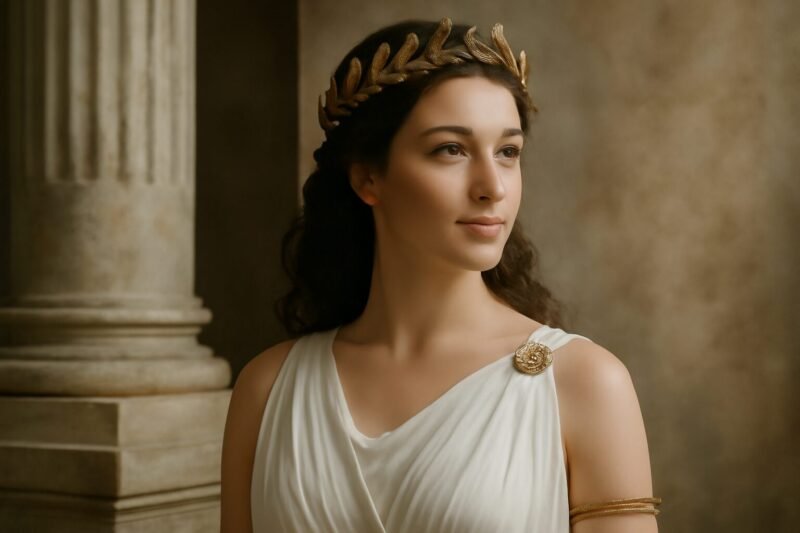
In Greek mythology, Euthymia (Εὐθυμία) was a lesser-known but significant deity personifying joy, good spirits, and contentment. Her name derives from the Greek words eu ("good") and thymos ("soul" or "spirit"), embodying the state of happiness and inner peace. Though not as prominent as Olympian gods, Euthymia played a subtle yet meaningful role in Greek thought, representing the ideal of a balanced, cheerful life.
Mythology and Significance
Euthymia was often associated with festivals, celebrations, and mental well-being. Unlike the chaotic revelry of Dionysus, her influence was more serene—encouraging harmony, gratitude, and emotional stability. Some traditions link her to the Charites (Graces), goddesses of charm and beauty, suggesting she was part of a divine network promoting positivity.
Philosophers like Democritus and later Stoics referenced euthymia as a state of mind—tranquility achieved through wisdom and moderation. This concept elevated her from a mere personification to a guiding principle in Greek ethics.
Relationships and Worship
Euthymia had no major myths of her own but appeared alongside deities like Apollo (god of light and reason) and Hygieia (goddess of health), reinforcing her connection to holistic well-being. She was sometimes invoked in rituals to ward off melancholy or to bless gatherings with goodwill.
Though no grand temples were dedicated to her, small offerings—libations, flowers, or songs—were made in her honor during joyful occasions. Her presence was felt in the quiet moments of happiness rather than grand divine dramas.
Legacy
Euthymia’s influence extended beyond mythology into philosophy and medicine. The Hippocratic school viewed euthymia as vital for health, while Stoics like Seneca praised it as the pinnacle of a virtuous life. Today, her name survives in the word euthymic, used in psychology to describe a stable, positive mood.
A gentle yet powerful force, Euthymia reminds us that true joy often lies not in excess, but in balance and mindful appreciation of life’s blessings.
Alternative Names for Euthymia
God Name: Euthymos (Greek)
An alternative masculine form of the name Euthymia, found in some ancient Greek texts, possibly used to denote a male aspect or variant of the deity.
God Name: Laetitia (Roman)
The Roman equivalent of Euthymia, representing joy, happiness, and good cheer, often associated with festivals and public celebrations.
God Name: Euthymius (Greek)
A variant form of Euthymia, used in certain Hellenistic religious contexts, sometimes linked to philosophical interpretations of the deity's role in mental serenity.
God Name: Euthymides (Greek)
A rare epithet or alternative name found in inscriptions, possibly denoting a familial or regional variation of the worship of Euthymia.
Tales about Euthymia
Euthymia and Hypnos: The Gift of Restful Slumber
In the quiet hours of twilight, when the world began to settle into stillness, Euthymia wandered the mortal realm, her presence a gentle balm to weary souls. One evening, she encountered a village plagued by relentless anxiety and unrest; no one could find peace, not even in sleep. Dreams were troubled, and days were spent in exhaustion.
Determined to help, Euthymia sought out Hypnos, the god of sleep, in his mist-shrouded cave. "Brother," she implored, "these mortals are trapped in cycles of worry. Their minds refuse the solace of rest. Lend me your power to grant them not just sleep, but tranquil sleep."
Hypnos, moved by her compassion, wove his magic into her aura. That night, Euthymia drifted through the village, and wherever she passed, a deep, serene slumber fell upon the people. Their dreams became sweet, their breaths even, and they awoke refreshed, their spirits lightened. From then on, Euthymia and Hypnos often worked together, blending rest with contentment to heal troubled hearts.
Euthymia and Ares: The Calm After Conflict
On the blood-soaked fields of a great battle, where the clang of swords and cries of the fallen filled the air, Ares, the god of war, reveled in the chaos. But as the fighting waned, a different energy began to emerge—one of profound relief and quiet among the survivors. This was the work of Euthymia, who moved unseen through the aftermath.
Ares, noticing the shift, confronted her. "Why do you dilute the glory of my domain with this… peace?" he growled, his armor still smeared with gore.
Euthymia met his gaze calmly. "Even war must end, Ares. Without relief, victory is hollow and defeat unbearable. I give soldiers the grace to lay down their arms without regret, to find solace in survival."
Intrigued, Ares watched as weary warriors embraced not jubilation or sorrow, but a quiet acceptance. He realized that Euthymia’s gift allowed them to heal and fight another day, strengthening his own legacy. From that day on, he never hindered her work, acknowledging that true strength includes the capacity for peace.
Frequently Asked Questions
What is Euthymia in Greek mythology?
Euthymia in Greek mythology refers to a state of happiness, contentment, and good spirits. It was often associated with the concept of emotional balance and well-being, sometimes personified as a minor deity or divine figure representing joy and tranquility.
Who were some lesser-known Greek deities related to emotions?
Aside from major gods like Zeus or Athena, Greek mythology included lesser-known deities tied to emotions. Examples include Euthymia (contentment), Euphrosyne (joy), and Eleos (mercy). These figures symbolized specific emotional states and were often invoked in prayers or rituals.
Why is Euthymia important in Greek mythology?
Euthymia represents the Greek ideal of emotional balance and happiness, which was highly valued in ancient Greek culture. It shows how the Greeks personified abstract concepts as deities, reflecting their philosophical focus on harmony and well-being in human life.
How does the concept of Euthymia apply today?
The idea of Euthymia as emotional balance remains relevant in modern psychology and wellness practices. It parallels contemporary concepts of mental health, mindfulness, and the pursuit of happiness, showing how ancient Greek ideas about well-being still influence us.
Were there any myths or stories about Euthymia?
Unlike major gods, Euthymia didn't feature prominently in myths. As a personification of contentment, she was more of an abstract concept worshiped in daily life. Some references connect her to the Charites (Graces) or other spirits of well-being in Greek tradition.