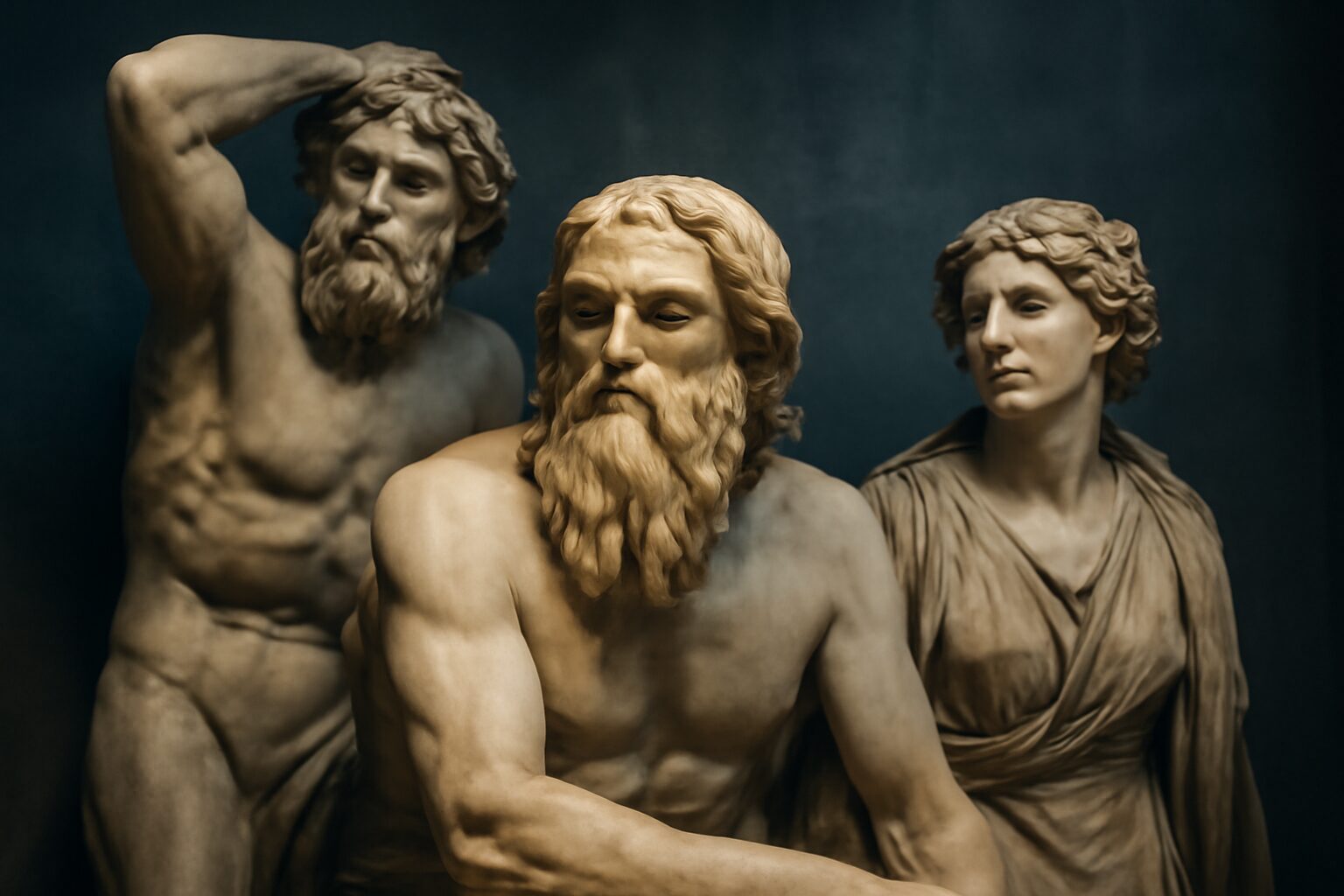

Daphne: The Nymph Who Became a Laurel Tree
In Greek mythology, Daphne is a captivating figure whose story intertwines love, transformation, and divine intervention. A beautiful nymph associated with rivers and nature, Daphne is best known for her dramatic escape from the amorous advances of Apollo, the god of the sun, music, and prophecy.
The Myth of Apollo and Daphne
The most famous tale of Daphne comes from Ovid's Metamorphoses. According to the myth, Apollo, struck by Eros' golden arrow, became infatuated with Daphne. However, Eros had also struck Daphne with a leaden arrow, making her despise Apollo's advances. As Apollo pursued her through the woods, Daphne, desperate to escape, prayed to her father, the river god Peneus, for help. In response, she was transformed into a laurel tree (Laurus nobilis). Apollo, heartbroken yet reverent, declared the laurel his sacred tree and wore its leaves as a crown—a symbol that later became associated with victory and poetic achievement.
Daphne's Origins and Significance
Daphne's origins vary in different versions of the myth. Some sources describe her as a daughter of Peneus, while others name Ladon, another river god, as her father. Regardless, her connection to water and nature underscores her role as a nymph, minor deities who personified natural elements like springs, trees, and mountains.
Daphne's transformation into the laurel tree carries deep symbolic meaning. The laurel became a sacred emblem of Apollo, used to crown victors in the Pythian Games and later in the Olympic Games. The myth also reflects themes of chastity, autonomy, and the power of nature to resist even the gods.
Relationships and Legacy
Though Daphne's story is primarily tied to Apollo, her myth resonates beyond their encounter. Her refusal of Apollo's love highlights the tension between divine desire and mortal (or nymph) will. Artists and writers, from the sculptor Bernini to poets like Ovid, have immortalized her tale, capturing the moment of her metamorphosis in breathtaking detail.
Today, Daphne's name lives on in botany (Daphne is a genus of flowering plants) and language (the word "daphne" itself means "laurel" in Greek). Her story remains a poignant reminder of the enduring power of myth to explore human—and divine—emotions.
Alternative Names for Daphne
God Name: Daphnaios (Greek)
An epithet used in some regions to refer to Daphne, emphasizing her connection to laurel trees (daphne in Greek).
God Name: Laurus (Roman)
In Roman mythology, Daphne is sometimes associated with Laurus, derived from 'laurus' (laurel), reflecting her transformation into a laurel tree.
God Name: Peneia (Greek)
An alternative name referencing Daphne's father, Peneus, the river god, often used to denote her lineage.
God Name: Phoibe (Greek)
In some traditions, Daphne is linked to Phoibe, a Titaness associated with prophecy, due to the laurel's connection to oracles.
Tales about Daphne
Daphne and Apollo: The Pursuit of a Nymph
Daphne, a beautiful Dryad nymph, was devoted to a life of chastity and the wild woods. Her father, the river god Peneus, often warned her of the dangers posed by gods, but Daphne paid little heed, preferring the solitude of nature.
The Wrath of Eros
One day, Apollo, the god of music and prophecy, boasted to Eros about his prowess with a bow. In retaliation, Eros shot Apollo with a golden arrow, igniting an uncontrollable passion for Daphne, while he struck her with a leaden arrow, filling her with an aversion to love.
The Chase and Transformation
Apollo, consumed by desire, pursued Daphne through the forest. As he closed in, Daphne cried out to her father for help. Peneus, heeding her plea, transformed her into a laurel tree. Apollo, heartbroken, embraced the tree and declared it sacred, vowing to wear its leaves as a crown forever.
Daphne and Artemis: A Bond of Chastity
Daphne, from a young age, felt a deep connection to the wilderness and vowed to remain chaste, much like the goddess Artemis. She often roamed the forests, hunting and honoring the natural world, earning the admiration of the goddess herself.
A Divine Encounter
One evening, as Daphne rested by a stream, Artemis appeared before her. Impressed by Daphne's dedication and purity, the goddess offered her a place among her Hamadryads, nymphs of the trees. Daphne accepted, and from that day, she served as a protector of the woods alongside Artemis.
Guardian of the Grove
Together, Daphne and Artemis patrolled the forests, ensuring no harm came to the sacred groves. Daphne's loyalty and bravery in defending nature solidified her role as a cherished companion of the goddess, and her story became a testament to the power of devotion and chastity.
Frequently Asked Questions
Who is Daphne in Greek mythology?
Daphne is a nymph from Greek mythology, known for her beauty and her connection to the god Apollo. She is most famous for her transformation into a laurel tree to escape Apollo's pursuit, symbolizing purity and resistance.
Why is Daphne important in Greek mythology?
Daphne's story is important because it explains the origin of the laurel tree, which became sacred to Apollo. It also highlights themes of unrequited love, divine intervention, and the power of nature in Greek myths.
What can we learn from the myth of Daphne and Apollo?
The myth teaches lessons about respect for personal boundaries and the consequences of unchecked desire. Daphne's transformation into a laurel tree also symbolizes the enduring connection between humans and nature.
How does the story of Daphne apply today?
Daphne's story remains relevant as it explores themes of consent, autonomy, and the natural world. It serves as a metaphor for modern discussions about personal freedom and environmental reverence.
What are rustic deities in Greek mythology?
Rustic deities in Greek mythology are gods and nymphs associated with nature, rural life, and the wilderness. Examples include Pan, the god of shepherds, and dryads, tree nymphs like Daphne. They represent the untamed and sacred aspects of the natural world.