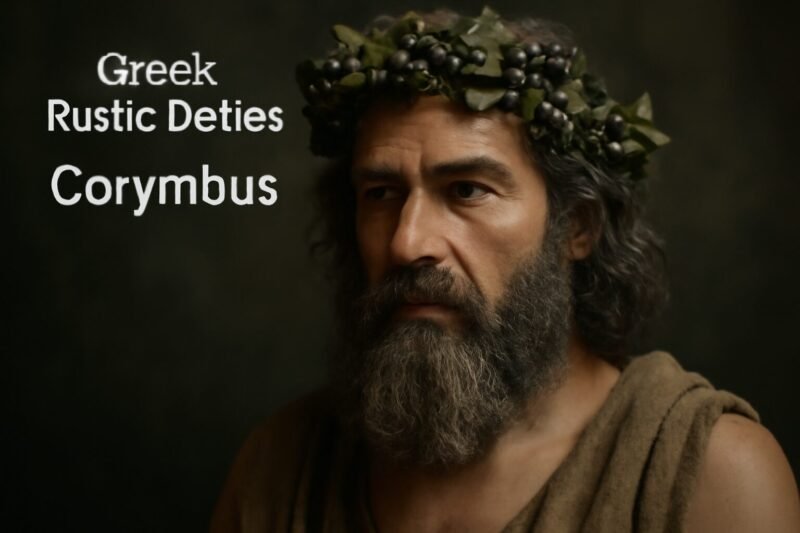
Corymbus: The Lesser-Known God of the Ivy-Clad Revelry
In the rich tapestry of Greek mythology, Corymbus stands as a lesser-known but fascinating deity associated with ivy, revelry, and the intoxicating joys of Dionysian worship. Often overshadowed by the more prominent gods of the pantheon, Corymbus played a unique role in the ecstatic rites of Dionysus, the god of wine and festivity.
Mythology and Role
Corymbus is primarily linked to the corymb, the cluster of ivy berries sacred to Dionysus. In myth, he is sometimes depicted as a youthful companion or attendant of Dionysus, embodying the wild, untamed spirit of nature that ivy symbolizes. Unlike the major Olympians, Corymbus was more of a personification of the ivy plant itself, which was integral to Dionysian rituals. The ivy’s evergreen nature represented eternal life and the cyclical rebirth central to Dionysian mysteries.
Powers and Symbolism
Though not a major god, Corymbus wielded symbolic power. Ivy (kissos in Greek) was believed to counteract the effects of wine, allowing Dionysus’ followers to revel without losing control entirely. Corymbus, therefore, became a guardian of balance in the frenzied celebrations. His presence was invoked to moderate excess while still honoring the chaotic joy of Dionysus’ rites.
Ivy wreaths, associated with Corymbus, were worn by maenads (Dionysus’ female devotees) and satyrs during their ecstatic dances. The plant’s clinging vines also symbolized unbreakable bonds—between mortals and the divine, as well as between participants in the sacred rites.
Relationships and Worship
Corymbus’ connection to Dionysus was his most defining relationship. He was often seen as a minor deity or spirit within Dionysus’ retinue, alongside figures like Silenus and the satyrs. Some myths suggest he was born from the earth itself, a natural companion to the god of fertility and wine.
Worship of Corymbus was not widespread, but he was honored in local cults, particularly in regions where ivy grew abundantly. His presence was felt most strongly during the Anthesteria and other Dionysian festivals, where ivy played a ceremonial role.
Legacy and Significance
While Corymbus may not have temples or grand myths dedicated to him, his role underscores the Greeks’ deep connection to nature and its divine manifestations. He represents the harmony between wild abandon and restraint, a theme central to Dionysian worship. Today, his legacy endures in the enduring symbolism of ivy—still a plant of celebration, resilience, and eternal life.
Alternative Names for Corymbus
God Name: Liber (Roman)
In Roman mythology, Liber was a god of viticulture and wine, fertility, and freedom. Some scholars suggest that Corymbus might have been associated with similar attributes, leading to a possible identification or syncretism with Liber.
God Name: Dionysus (Greek)
Corymbus is sometimes considered an epithet or aspect of Dionysus, the Greek god of wine, fertility, and ecstasy. The name Corymbus might refer to the ivy crown (corymb) associated with Dionysian rites.
God Name: Iacchus (Greek)
Iacchus was a minor deity associated with the Eleusinian Mysteries and sometimes linked to Dionysus. Corymbus might be an alternative name or epithet for Iacchus, particularly in contexts involving ritualistic revelry.
Tales about Corymbus
The Gift of Dionysus
In the verdant valleys of ancient Greece, Corymbus was a humble shepherd who tended his flock with devotion. One day, the god Dionysus, the deity of wine and ecstasy, passed through the valley, his presence causing vines to sprout and grapes to ripen instantly. Corymbus, awestruck, offered the god a simple cup of fresh spring water. Touched by the shepherd's sincerity, Dionysus dipped his thyrsus into the cup, transforming the water into the first sweet wine. He bestowed upon Corymbus the knowledge of viticulture, teaching him to cultivate grapes and ferment their juice. From that day, Corymbus became the patron of the grape harvest, and his name was invoked during festivals honoring Dionysus, symbolizing the joy and abundance brought by the god's gift.
The Contest with Apollo
Another tale tells of a musical contest between Corymbus and the great Apollo, god of music and arts. Corymbus, known for his skill with the syrinx (panpipes), once played a melody so enchanting that it caught the attention of Apollo himself. Intrigued and perhaps a bit challenged, Apollo descended from Olympus to confront the rustic deity. They agreed to a contest judged by the Dryades (tree nymphs). Apollo played his golden lyre, producing harmonies that stirred the very soul of nature. Corymbus responded with a simpler, earthy tune that made the forests sway and the rivers hum. The nymphs, torn between divine perfection and mortal charm, declared Apollo the victor but granted Corymbus an eternal place in the groves where his music would forever echo, a tribute to the beauty found in humility and nature's raw voice.
Frequently Asked Questions
Who are the Corymbus in Greek mythology?
The Corymbus were rustic deities or spirits in Greek mythology, often associated with rural life, nature, and agriculture. They were lesser-known figures compared to major gods like Zeus or Athena, but played a role in local folklore and traditions.
Why are rustic deities like the Corymbus important in Greek mythology?
Rustic deities like the Corymbus were important because they represented the connection between ancient Greeks and their natural environment. They symbolized fertility, harvests, and the cycles of nature, which were vital to daily life in agricultural societies.
What can we learn from the Corymbus and other rustic deities?
The Corymbus and other rustic deities teach us about the values and priorities of ancient Greek rural communities. They highlight the importance of nature, hard work, and the dependence on natural forces for survival, offering insight into the spiritual and practical lives of the people.
How do rustic deities like the Corymbus apply to modern life?
While not worshiped today, rustic deities like the Corymbus remind us of humanity's historical connection to nature and agriculture. They inspire modern discussions about sustainability, environmental respect, and the cultural roots of rural traditions.
Are the Corymbus mentioned in any famous Greek myths?
The Corymbus are not prominently featured in major Greek myths like the Olympian gods. They appear more in local folklore and lesser-known stories, often as background figures representing the spirit of the countryside or specific natural elements.