Thallo: The Blooming Goddess of Spring
In Greek mythology, Thallo (Θαλλώ) is one of the Horae, the goddesses of the seasons and natural order. Her name means "the one who brings blossoms", and she personifies the rejuvenating power of spring. Alongside her sisters Auxo (growth) and Carpo (fruit), Thallo oversees the cycle of plant life, ensuring the earth awakens in vibrant bloom after winter's slumber.
Role and Powers
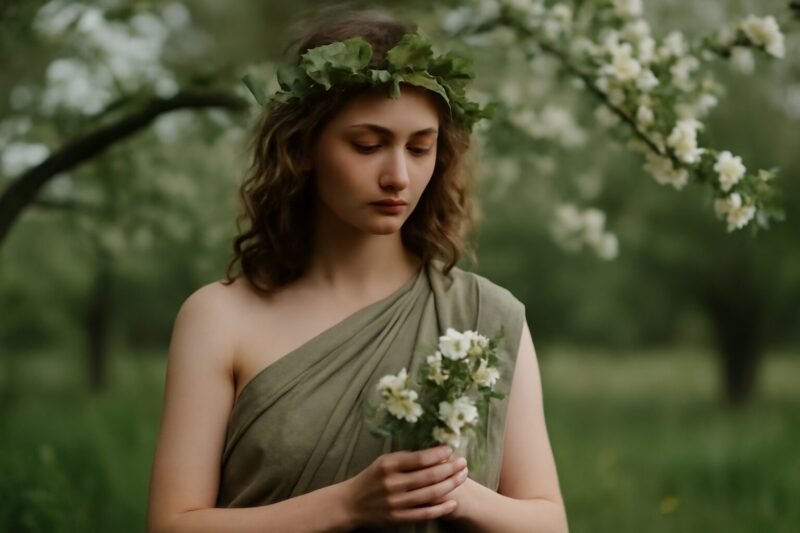
Thallo's domain is the rebirth of nature. She is closely associated with budding flowers, fresh greenery, and the gentle warmth that coaxes life from the soil. Ancient Greeks invoked her for fertile harvests and healthy crops, as her presence signaled the return of abundance. Artists often depicted her adorned with garlands or holding a bouquet of spring flowers, symbolizing her connection to growth and renewal.
Mythology and Worship
Though not as prominent as Olympian deities, Thallo and her sisters were revered in rural communities dependent on agriculture. They were sometimes linked to Demeter, the goddess of the harvest, and Persephone, whose annual return from the Underworld marked the start of spring. In Athens, Thallo was honored alongside Dionysus during the Anthesteria, a festival celebrating flowers and new wine.
Symbolism and Legacy
Thallo embodies the cyclical beauty of nature—a reminder of life's resilience. Unlike gods of war or thunder, her influence is subtle yet vital, nurturing the world with quiet persistence. Today, her spirit lives on in springtime traditions and the universal joy of blossoms pushing through frost. She remains a timeless symbol of hope, renewal, and the earth's endless capacity for rebirth.
Alternative Names for Thallo
God Name: Thalu00eda (Greek)
An alternative Greek name for Thallo, sometimes used interchangeably, emphasizing her role in blooming and flourishing.
God Name: Flora (Roman)
The Roman equivalent of Thallo, goddess of flowers and spring, often associated with blooming and fertility.
God Name: Auxo (Greek)
Another Horae (seasonal goddess) closely associated with Thallo, representing growth and increase in plants.
God Name: Karpo (Greek)
Sometimes linked with Thallo as part of the Horae, representing the fruits of the earth and harvest.
Tales about Thallo
Thallo and the Blossoming of Spring
In the heart of a long, harsh winter, the earth lay barren and cold. Thallo, the goddess of spring buds and green shoots, felt the land’s sorrow and knew it was time to awaken life. She traveled to the realm of Gaia, the primordial earth mother, and knelt upon the frozen ground.
"Great Gaia," Thallo whispered, "your children slumber too deeply. Grant me the warmth to coax them forth." Gaia, feeling Thallo’s pure intention, breathed a gentle heat into the soil. Thallo scattered seeds of hope, and where they fell, the first crocuses and snowdrops pushed through the frost, their colors a promise of renewal.
The Dance of Renewal
With Gaia’s blessing, Thallo danced across the meadows, her touch turning brown fields to emerald green. She wove garlands of ivy and blossoms, and the Anthousai, the flower nymphs, joined her, their laughter like chimes on the breeze. Together, they painted the world in hues of yellow, pink, and violet, ensuring that life always returns after the cold.
Thallo and the Healing Touch of Asclepius
One summer, a blight struck the sacred groves of Asclepius, the god of medicine. The plants he relied on for healing remedies withered, and even his serpent staff seemed listless. Desperate, Asclepius sought out Thallo, whose power over growth was renowned.
"Thallo," he implored, "without these herbs, I cannot mend the ills of mortals. Lend me your vitality." Thallo, moved by his dedication, placed her hands upon the soil. She sang an ancient melody, and as her voice rose, the plants stirred—their leaves unfurling, their stems strengthening, their flowers bursting with renewed potency.
A Partnership of Life and Health
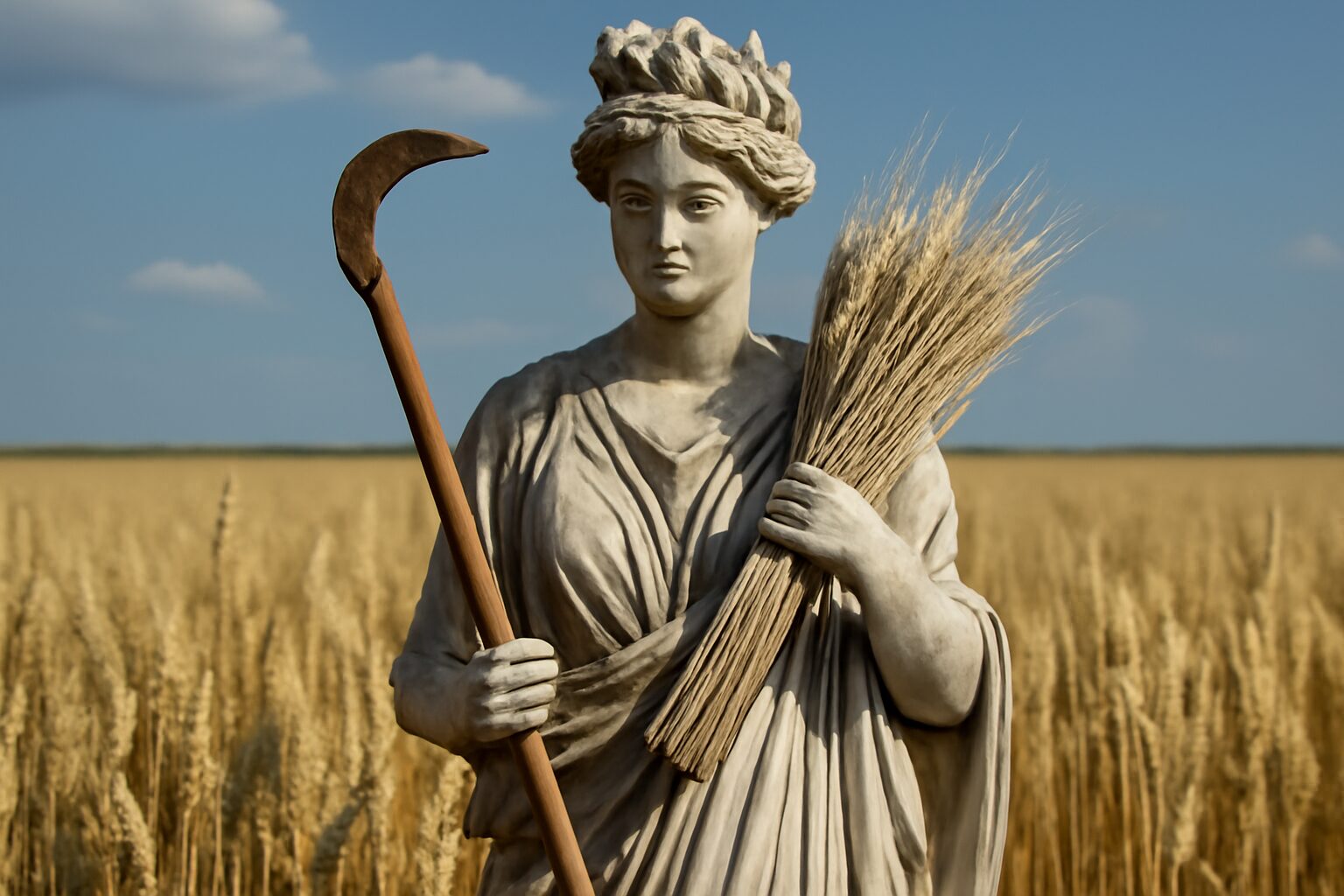
In gratitude, Asclepius gifted Thallo a golden sickle, engraved with serpents and blossoms—a symbol of their alliance. From that day forward, Thallo ensured that the healing gardens of Asclepius remained ever-verdant, and the god’s work flourished, intertwining the power of growth with the art of medicine.
Frequently Asked Questions
Who is Thallo in Greek mythology?
Thallo is one of the Horae, the Greek goddesses of the seasons and natural order. She specifically represents the season of spring and the blooming of plants, symbolizing growth and renewal.
What are rustic deities in Greek mythology?
Rustic deities in Greek mythology are gods and goddesses associated with nature, agriculture, and rural life. Examples include Pan (god of shepherds), Demeter (goddess of harvest), and the nymphs (spirits of nature). They were often worshiped by farmers and rural communities.
Why were deities like Thallo important in ancient Greece?
Deities like Thallo were important because they represented vital aspects of life and nature that affected survival. Thallo's association with spring and growth was crucial for agriculture, which was the foundation of ancient Greek society and economy.
How do Thallo and the rustic deities relate to modern life?
While not worshiped today, Thallo and rustic deities symbolize timeless concepts like the changing seasons, respect for nature, and agricultural cycles. They remind us of humanity's connection to the environment and the importance of sustainable living.
What can we learn from Thallo and the rustic deities?
These deities teach us about the ancient Greeks' reverence for nature and their understanding of seasonal cycles. They highlight how cultures personify natural forces to explain and celebrate the world around them, a practice seen in many belief systems.