Pherousa: The Nymph of the Sea
Pherousa, whose name means "the bringer" or "the carrier," is one of the fifty Nereids, the sea nymphs of Greek mythology. As daughters of the ancient sea god Nereus and the Oceanid Doris, the Nereids were known for their beauty, grace, and close association with the Mediterranean Sea. Pherousa, like her sisters, played a role in the lives of sailors and the natural rhythms of the ocean.
Role and Powers
Pherousa was revered as a benevolent figure who aided sailors and fishermen, guiding them safely through treacherous waters. Unlike some of the more tempestuous sea deities, Pherousa was often depicted as calm and nurturing, embodying the gentler aspects of the sea. Her name suggests her role in carrying or bringing forth the bounty of the ocean—whether it was fish for sustenance or smooth waves for safe passage.
Mythological Significance
Though Pherousa does not feature prominently in major myths, she is mentioned in Hesiod's Theogony as one of the Nereids, highlighting her place among the divine sea nymphs. The Nereids were often invoked in maritime rituals, and Pherousa, alongside her sisters, was believed to dance in the waves, riding dolphins and other sea creatures. Their presence was a sign of good fortune for those at sea.
Relationships and Worship
As a Nereid, Pherousa was part of a close-knit family of sea deities. Her father, Nereus, was known as the "Old Man of the Sea," a wise and prophetic figure, while her mother, Doris, represented the ocean's richness. Among her most famous sisters were Thetis (mother of Achilles) and Amphitrite (wife of Poseidon). Though Pherousa did not have a central cult of worship, she was honored alongside her sisters in coastal communities, where fishermen and sailors would offer prayers for safe voyages.
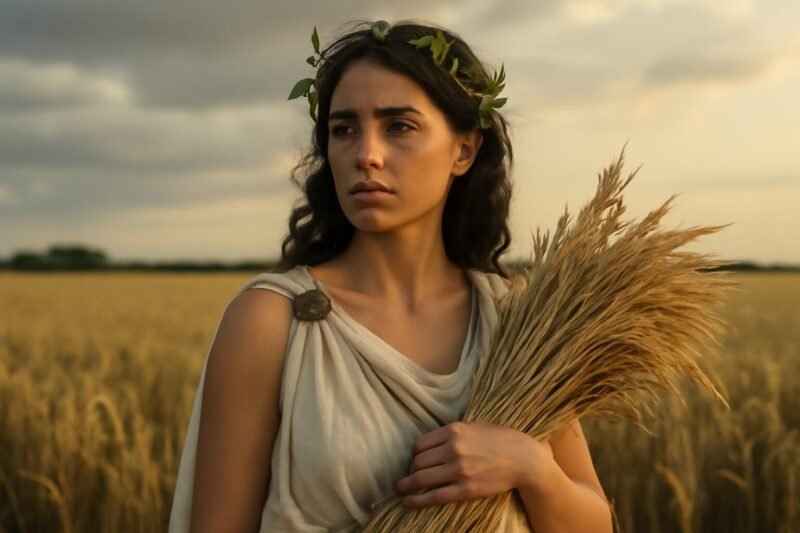
In art, Pherousa was often depicted with flowing hair and a serene expression, sometimes holding a fish or riding a sea creature. Her image served as a reminder of the sea's dual nature—both life-giving and unpredictable—and the need for divine favor when venturing into its depths.
Alternative Names for Pherousa
God Name: Feronia (Roman)
Feronia is the Roman equivalent of Pherousa, associated with wildlife, fertility, and abundance. She was worshiped in central Italy, particularly by freedmen and plebeians, and her cult was linked to the granting of freedom and prosperity.
God Name: Pherousa Euthenia (Greek (Epithet))
An epithet meaning 'Pherousa of Abundance,' highlighting her role in providing prosperity and nourishment. This name emphasizes her connection to agricultural bounty and the well-being of communities.
God Name: Pherousa Agrotera (Greek (Regional))
A regional variant from Arcadia, meaning 'Pherousa the Huntress.' This name reflects her association with wilderness and hunting, often depicted alongside Artemis in local myths.
Tales about Pherousa
Pherousa and the Healing Touch of Asclepius
In the sacred groves of Pherousa, where the nymph nurtured the wild flora, a plague began to wither the vibrant life. Desperate, she sought the aid of Asclepius, the god of medicine. Asclepius, moved by her devotion, descended with his serpent-entwined staff. Together, they brewed remedies from Pherousa’s herbs, and his healing magic flowed through the roots, revitalizing the land. The grove bloomed anew, a testament to their alliance—nature’s resilience paired with divine cure.
The Blossom of Renewal
From their collaboration sprang a unique flower, its petals shimmering with hues of emerald and gold, known as the "Asclepiad Blossom." It became a symbol of hope, forever linking Pherousa’s nurturing essence with Asclepius’s restorative power.
Pherousa’s Dance with Dionysus
During a festival in honor of Dionysus, Pherousa joined the ecstatic revelry, her presence causing vines to twist into intricate patterns and flowers to burst into riotous color. Dionysus, enthralled, invited her to lead a dance through the forests. As they moved, the very earth responded: grapes swelled on vines, and ivy coiled around trees in joyful spirals. Their union celebrated the wild, untamed beauty of nature, merging Pherousa’s growth with Dionysus’s fervor.
The Eternal Vine
Where their footsteps fell, a perpetual vine arose, bearing fruit that fermented into the sweetest wine, a reminder of the night when fertility and frenzy danced as one under the moonlit sky.
Frequently Asked Questions
Who is Pherousa in Greek mythology?
Pherousa is one of the rustic deities in Greek mythology, often associated with nature and the wild. She is considered a nymph or minor goddess connected to the natural world, though details about her are scarce compared to major Olympian gods.
What does the name Pherousa mean?
The name Pherousa (also spelled Pherusa) is derived from the Greek word 'phero,' meaning 'to bring' or 'to carry.' It suggests a connection to fertility, abundance, or the bearing of natural gifts, fitting her role as a rustic deity.
Why are rustic deities like Pherousa important in Greek mythology?
Rustic deities like Pherousa represent the untamed aspects of nature, such as forests, rivers, and wildlife. They were important to ancient Greeks because they symbolized the forces that influenced daily survival, agriculture, and the balance between humans and the natural world.
How does Pherousa's role apply to modern understanding of nature?
Pherousa and other rustic deities remind us of humanity's deep connection to nature. Today, they can inspire environmental awareness by representing the sacredness of natural spaces and the need to protect them, much as they were revered in ancient times.
Are there any myths or stories about Pherousa?
Pherousa is not prominently featured in major Greek myths, as rustic deities were often local or minor figures. However, she might appear in regional tales or hymns celebrating nature's bounty, alongside other nymphs and nature spirits.