Ceto: The Ancient Sea Goddess of Monsters
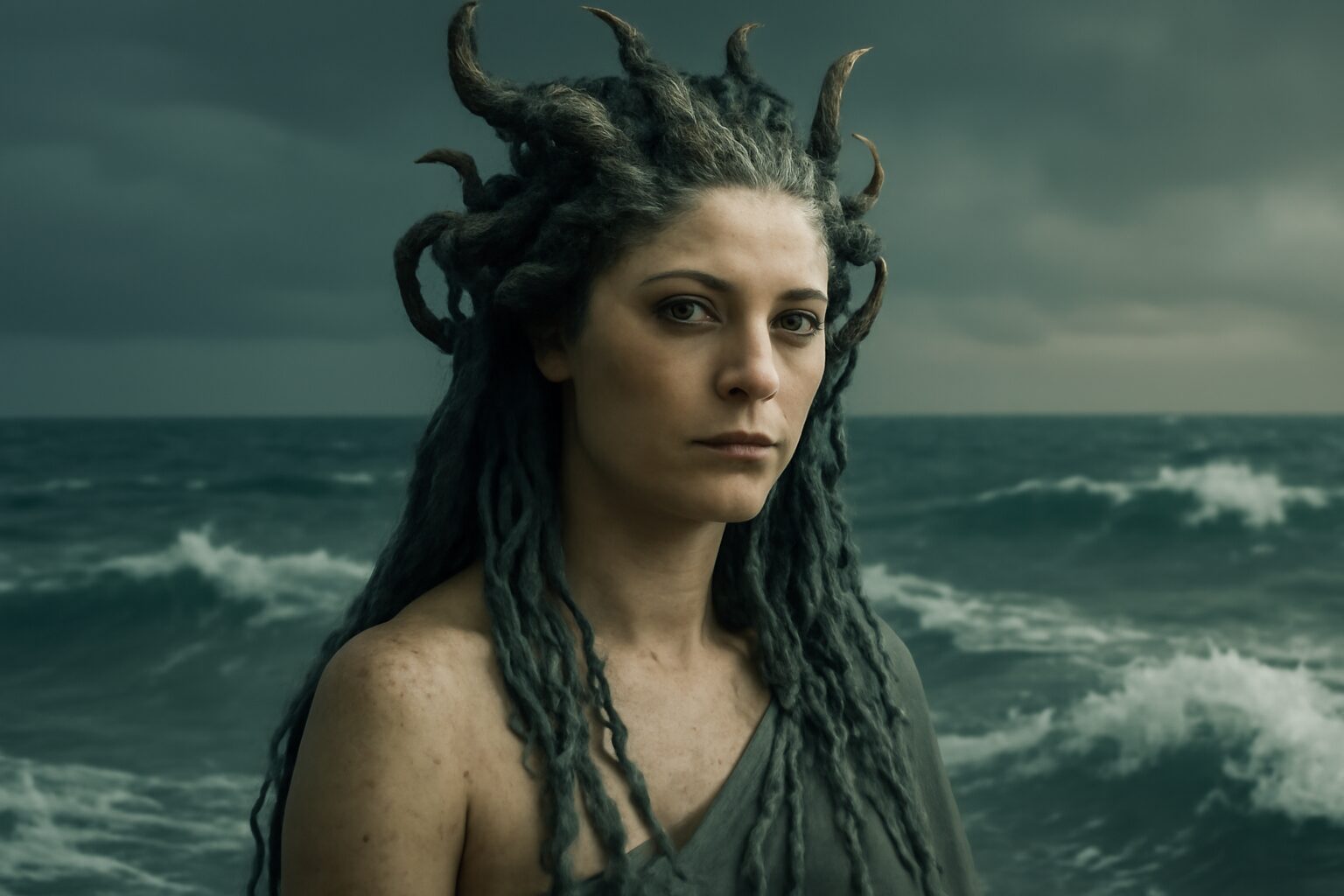
In Greek mythology, Ceto (also spelled Keto) was a primordial sea goddess whose name meant "sea monster" or "whale." As the daughter of Pontus (the sea) and Gaia (the earth), she embodied the terrifying and mysterious dangers lurking in the ocean's depths. Unlike the more benevolent sea deities, Ceto represented the monstrous and chaotic aspects of the sea.
Powers and Domain
Ceto ruled over the creatures of the deep—particularly those that inspired fear in sailors and coastal dwellers. She was closely associated with large sea creatures, sharks, and whales, but also with mythical monsters. Her domain extended beyond the physical sea to include the unknown horrors of the abyss, making her a figure of both awe and dread.
Mother of Monsters
Ceto's most famous role was as the "mother of monsters." With her brother-husband Phorcys, another sea deity, she gave birth to some of the most fearsome creatures in Greek mythology. Among her offspring were:
- The Gorgons (including Medusa)
- The Graeae (three ancient witches who shared one eye)
- Echidna (the half-woman, half-serpent mother of many monsters)
- Ladon (the dragon guarding the Golden Apples)
- Scylla (the six-headed sea monster)
Significance in Greek Mythology
Ceto symbolized the untamed, destructive power of nature—particularly the sea's capacity for chaos. While gods like Poseidon represented the sea's majesty, Ceto embodied its darker, more unpredictable side. She was rarely worshiped, as sailors and fishermen sought to avoid her wrath rather than invoke her favor.
Her legacy lived on through her monstrous descendants, who often appeared in heroic myths as challenges for figures like Perseus, Heracles, and Odysseus. In this way, Ceto's influence persisted as a reminder of the primal dangers lurking beyond the edges of the civilized world.
Alternative Names for Ceto
God Name: Keto (Greek)
An alternative spelling of Ceto, used in some Greek texts to refer to the same sea goddess.
God Name: Cetus (Roman)
In Roman mythology, Cetus is sometimes used as a counterpart or alternative name for Ceto, though it more commonly refers to a sea monster.
God Name: Krataiis (Greek)
An epithet for Ceto, meaning 'the mighty one,' highlighting her power as a primordial sea goddess.
God Name: Eurybia (Greek)
Sometimes conflated with Ceto, Eurybia is another primordial sea goddess representing mastery of the sea, though they are distinct in some myths.
Tales about Ceto
The Sea's Wrath and the Sky's Messenger
In the tempestuous depths where Ceto reigned, a violent storm brewed, churning the seas into a frenzy. The monstrous children of the deep stirred, and the primordial goddess of sea dangers found her domain in chaos. High above, Iris, the rainbow messenger, descended on a shimmering arc, sent by Zeus to calm the tumult. With hues of violet and gold trailing behind her, she approached Ceto, whose wrath was as vast as the ocean.
"Great Ceto," Iris spoke, her voice a harmonious blend of wind and light, "the skies weep with your fury, and the lands tremble. Zeus bids you to still your children, lest the world drown in your anger."
Ceto, her form a terrifying blend of beauty and monstrosity, eyed the messenger. "The sea answers to no one, not even the king of gods. Why should I heed his command?"
Iris, undaunted, replied, "For balance. Your power is immense, but unchecked, it destroys all—even the wonders of the deep you cherish." A spectrum of colors danced around them as the storm began to wane, soothed by Iris's presence. Moved by the messenger's words and the reminder of cosmic harmony, Ceto called her monstrous offspring to order, and the seas grew calm once more. From that day, a silent respect grew between the goddess of sea dangers and the goddess of the rainbow, a testament to the delicate balance of nature's forces.
The Guardian of the Deep and the Healer's Quest
When a mysterious plague afflicted the creatures of the ocean, leaving them weak and dying, Ceto watched in despair. Her domain, usually a place of fearsome vitality, was succumbing to an unknown malady. Desperate, she sought aid from the divine healer, Asclepius, whose skills were renowned across land and sea.
Asclepius journeyed to the deepest trenches, guided by Ceto's luminous sea creatures. "The water is poisoned," Ceto explained, her voice echoing through the dark currents. "My children suffer, and I cannot save them."
The healer, staff in hand, examined the afflicted beings. "This is no ordinary sickness. It stems from a rift in the ocean floor, releasing toxins from the underworld." With Ceto's help, he brewed a potent remedy from rare corals and bioluminescent algae, ingredients only she could provide.
Together, they sealed the rift with ancient incantations and administered the cure. As health returned to the sea, Ceto acknowledged Asclepius's prowess. "Your compassion heals where my power only intimidates," she admitted. Asclepius smiled. "Even the most formidable forces need balance. Strength to protect, and wisdom to heal." Their alliance became a legend, a story of how even the goddess of monsters embraced aid to preserve her terrifying, beautiful world.
Frequently Asked Questions
Who is Ceto in Greek mythology?
Ceto is a primordial sea goddess in Greek mythology, often associated with the dangers of the sea. She is the daughter of Gaia (Earth) and Pontus (Sea), and is known as the mother of many sea monsters, including the famous Gorgons and the sea serpent Scylla.
What does the name 'Ceto' mean?
The name 'Ceto' (also spelled 'Keto') comes from the ancient Greek word 'ku0113tos,' which means 'sea monster' or 'large fish.' This reflects her role as a goddess linked to the terrifying and mysterious creatures of the ocean.
Why is Ceto important in Greek mythology?
Ceto is important because she represents the unpredictable and dangerous aspects of the sea. In Greek mythology, she symbolizes the fears and challenges sailors faced, and her offspring, like the Gorgons, play key roles in many myths, such as the story of Perseus and Medusa.
What can we learn from the myths about Ceto?
The myths about Ceto teach us about how ancient Greeks viewed the seau2014both as a source of life and a place of danger. They also highlight the importance of respecting nature's power, as the sea and its creatures were often seen as forces beyond human control.
How does Ceto's mythology apply today?
Ceto's mythology reminds us of humanity's long-standing fascination with the ocean's mysteries and dangers. Today, she can symbolize environmental themes, such as the need to protect marine life and respect the ocean's power, much like the ancient Greeks did.