
Prophasis: The Greek Personification of Excuses
In the rich tapestry of Greek mythology, Prophasis (Πρόφασις) stands as a lesser-known but fascinating deity who personifies excuses, pretense, or plausible denials. While not as prominent as the Olympian gods, Prophasis played a subtle yet significant role in Greek thought, representing the human tendency to justify actions or evade responsibility.
Mythology and Role
Prophasis was often depicted as a shadowy figure, weaving intricate webs of justification. Unlike gods associated with virtue or power, Prophasis embodied the darker side of rhetoric—how language could be twisted to conceal truth. In some traditions, Prophasis was considered a child of Eris (Strife) or Apate (Deception), linking her to discord and trickery.
Her influence was felt in both mortal and divine affairs. Myths suggest she whispered in the ears of kings and heroes, offering them plausible reasons for questionable deeds. For example, she might inspire a warrior to claim necessity in breaking an oath or a ruler to justify war under false pretenses.
Powers and Symbolism
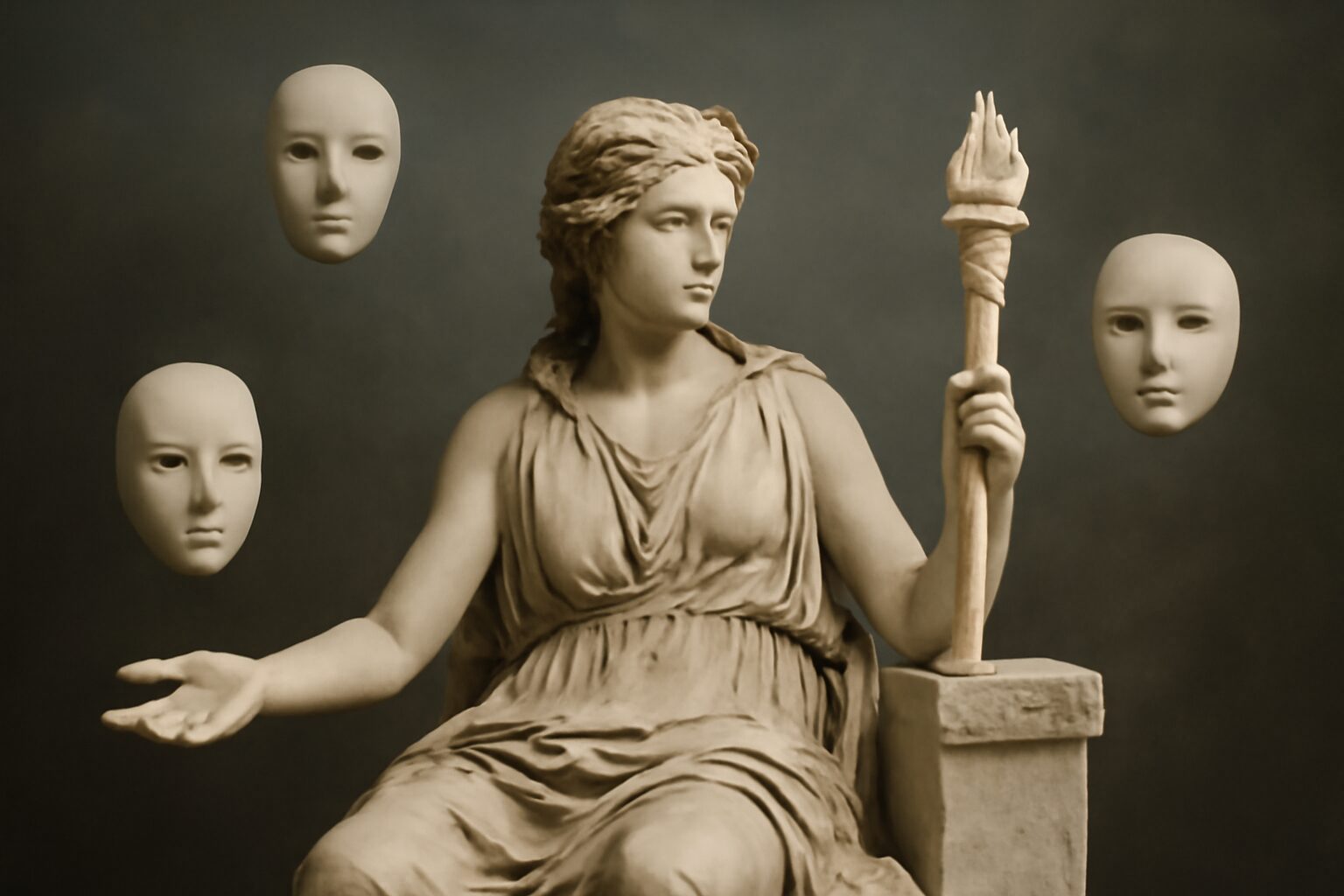
Prophasis had no temples or formal cults, but her power lay in persuasion. She could make weak arguments seem strong, selfish acts appear noble, and lies sound like truth. Artists sometimes depicted her with a veiled face, symbolizing how excuses obscure reality, or holding a scale that tipped unfairly in favor of deception.
Philosophers like Aristotle later used the term prophasis to describe the stated (but often untrue) reasons behind actions, contrasting it with the real causes. This duality made her a potent symbol in Greek ethics and rhetoric.
Relationships and Significance
Prophasis often worked alongside deities like Pseudologos (Falsehood) and Dolos (Trickery). She was both feared and relied upon—mortals might curse her when deceived by others yet invoke her when needing their own justifications.
Her presence in myths served as a cautionary reminder of how easily truth could be bent. In a culture that valued honor and accountability, Prophasis represented the slippery slope between reason and self-deception. Even today, her legacy endures whenever excuses take the place of honesty.
Alternative Names for Prophasis
God Name: Apate (Greek)
In some contexts, Prophasis is associated with Apate, the goddess of deceit, as both deal with deception and false pretenses.
God Name: Fraus (Roman)
The Roman equivalent related to deception and trickery, often linked to Prophasis due to similar domains.
God Name: Dolos (Greek)
Another Greek deity associated with trickery and guile, sometimes conflated with Prophasis in mythological texts.
Tales about Prophasis
The Justification of Healing
In the golden halls of Aceso, goddess of the healing process, a mortal named Lycus lay suffering from a festering wound. Despite Aceso’s divine skill, the wound refused to mend, for Lycus’s spirit was burdened with guilt over a past betrayal. Sensing this, Prophasis, the spirit of excuse and pretext, appeared beside the healer’s altar.
“His body rejects your care,” Prophasis whispered, her voice like silk. “He believes he deserves this pain.”
Aceso, puzzled, asked, “How can I heal one who will not forgive himself?”
Prophasis smiled gently. “Allow me to offer him a narrative—a reason to release his guilt.” She approached Lycus and spun a tale: his betrayal, she explained, was not born of malice but of necessity to save his family from a tyrant’s wrath. It was a justification wrapped in half-truths, yet it carried the weight of plausibility.
Lycus’s eyes cleared as he absorbed the story. The burden lifted, and his body began to respond to Aceso’s remedies. The wound closed within hours, and Lycus rose, reborn in spirit. Aceso nodded to Prophasis, acknowledging that sometimes, healing requires not just medicine, but the balm of a well-crafted excuse.
The Storm of Deceit
On the stormy coast where Proteus, the shapeshifting sea god, guarded his seals, a fleet of sailors sought shelter from a hurricane. Their captain, desperate, begged Proteus for calm waters, but the god, wary of mortals, demanded honesty: “Why do you truly sail these seas?”
The captain faltered, knowing their mission was to plunder a sacred temple. Before he could speak, Prophasis emerged from the mist, her form shifting like the god himself. “They are on a pilgrimage,” she declared, “to honor the sea with offerings stolen from no one, but earned through trade.”
Proteus narrowed his eyes, sensing the lie, yet intrigued by its elegance. “A clever tale,” he rumbled. “But deceit rides the waves alongside you.”
Prophasis leaned close, her voice a conspiratorial whisper. “Is it deceit, or a necessary veil for survival? They mean no harm—only to return home.”
Moved by the artistry of the excuse, Proteus relented. The storm subsided, and the sailors sailed on, their true intentions hidden behind a facade of piety. Prophasis watched them go, a smirk on her lips, for she had proven that even to a god of truth, a plausible pretext could be the key to mercy.
Frequently Asked Questions
What is Prophasis in Greek mythology?
Prophasis is a Greek term meaning 'pretext' or 'excuse,' often personified as a spirit or minor deity in mythology. It represents the concept of justification or deceptive reasoning, showing how ancient Greeks understood human tendencies to make excuses.
Who are the Daimones in Greek mythology?
Daimones (or Daemones) are lesser spirits or personifications in Greek mythology, often representing abstract concepts, emotions, or natural forces. Unlike major gods, they embody specific aspects of life, such as love, strife, or in Prophasis's case, excuses.
Why are personifications like Prophasis important in Greek myths?
Personifications like Prophasis helped ancient Greeks explain human behavior and natural phenomena through storytelling. They made abstract ideas relatable and taught moral lessons about virtues, vices, and the consequences of actions.
How does the concept of Prophasis apply today?
Prophasis reflects timeless human behavioru2014making excuses or justifications for actions. Understanding this concept reminds us to examine our motives and avoid self-deception, a lesson still relevant in modern psychology and ethics.
What can we learn from Greek personifications and spirits?
These myths teach us about ancient Greek values, human nature, and how cultures personify abstract ideas. They show how people historically explained emotions, social dynamics, and moral dilemmas through storytelling.