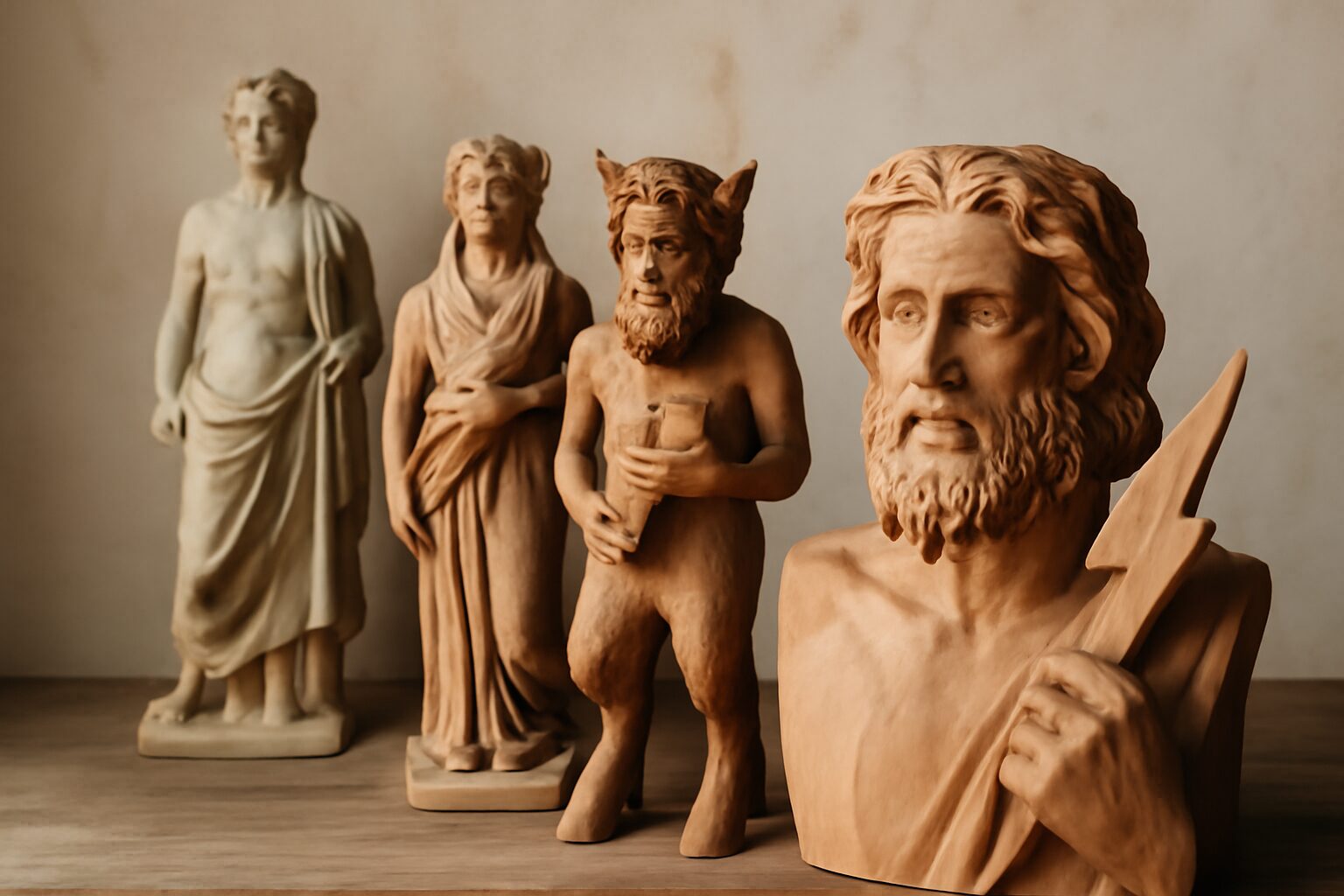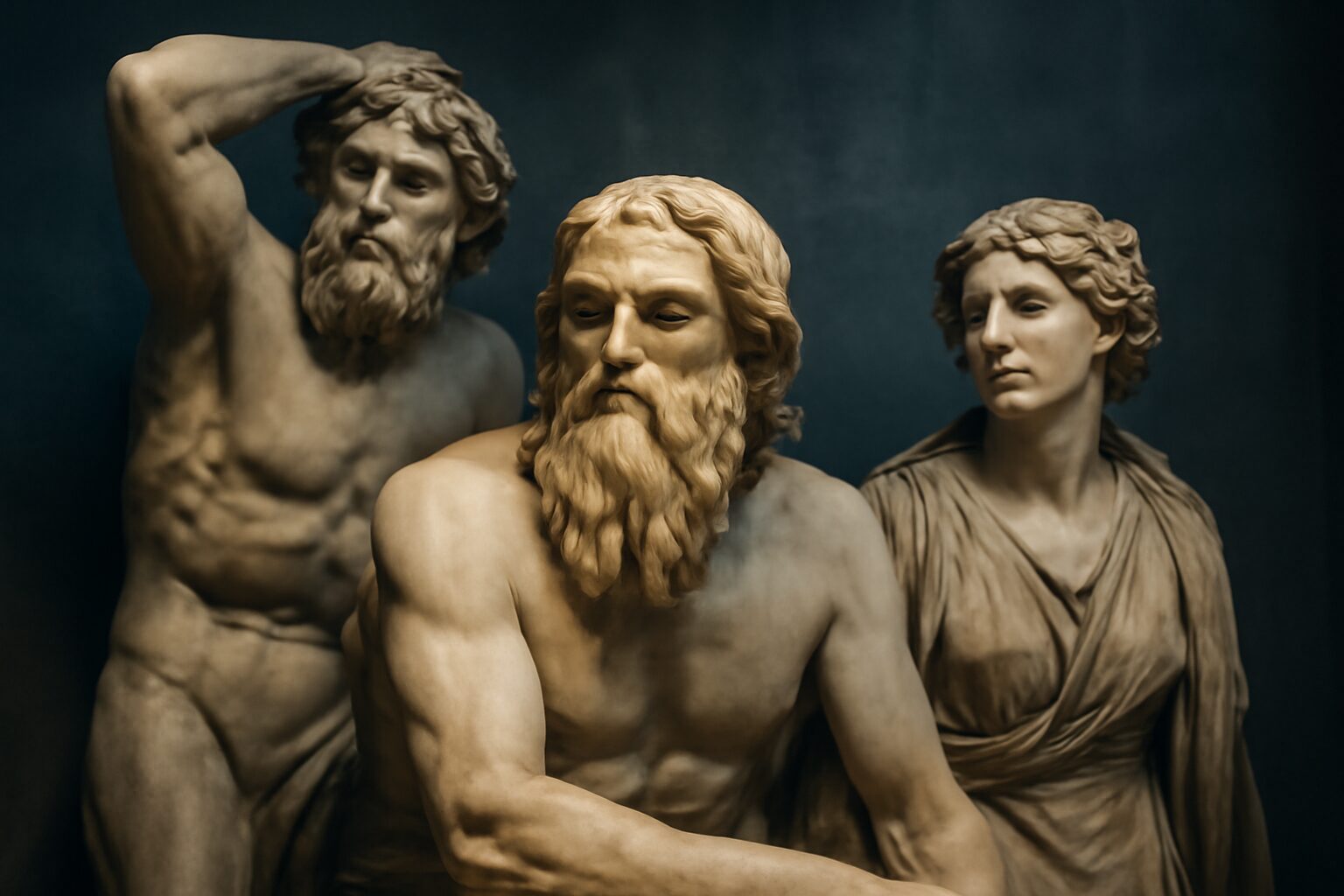

Phthonos: The Greek Personification of Envy
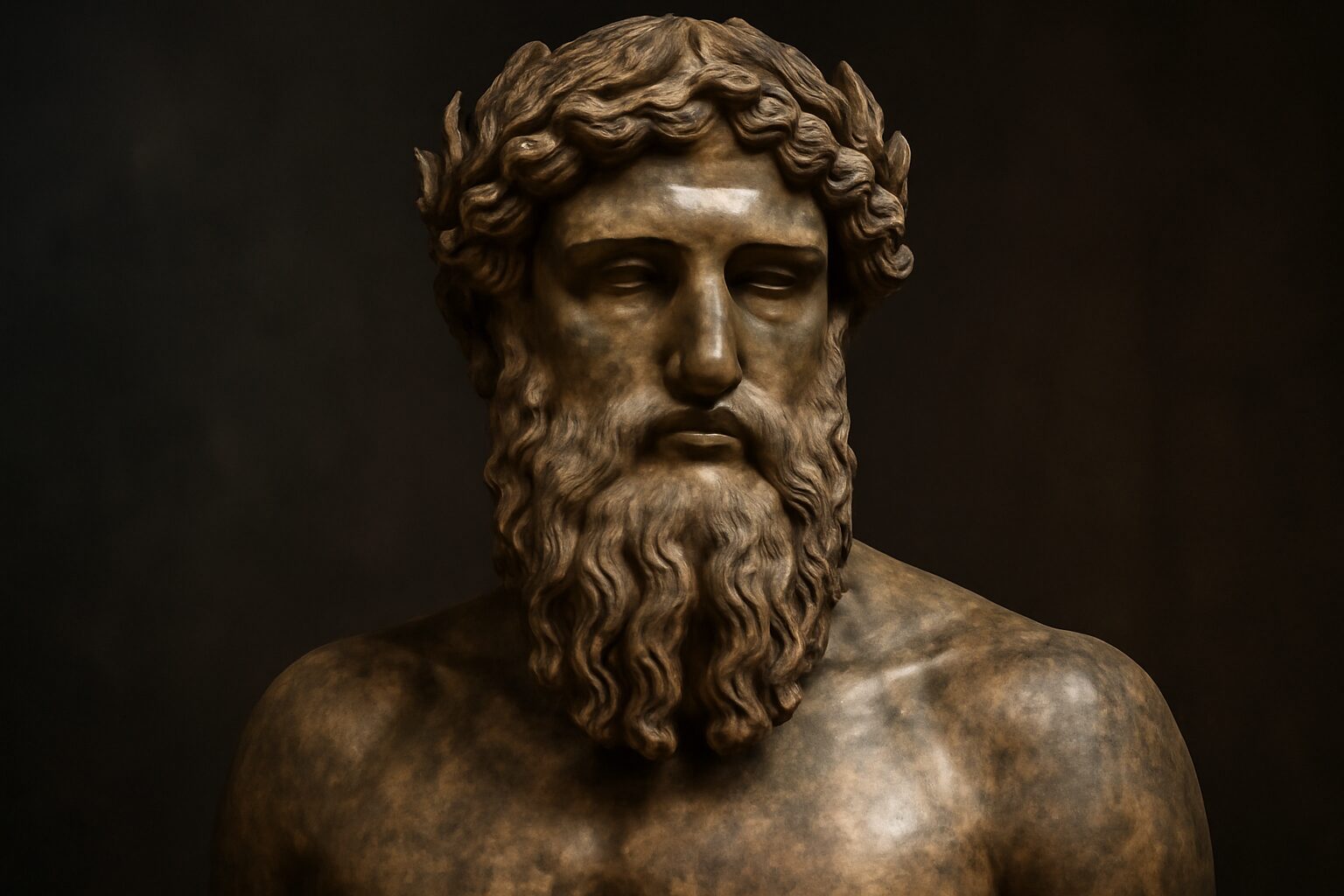
In Greek mythology, Phthonos (Φθόνος) was the personification of envy, jealousy, and spite. Unlike many Olympian gods, Phthonos was not worshiped but rather feared as a destructive force that poisoned hearts and minds. He embodied the dark emotions that could drive mortals—and even gods—to ruin.
Origins and Role
Phthonos was often considered a daimon (spirit) rather than a full-fledged deity. He was closely associated with Nemesis, the goddess of retribution, and sometimes depicted as her companion. While Nemesis dealt with divine justice, Phthonos represented the corrosive, irrational resentment that festers in those who covet what others possess.
Ancient Greeks believed Phthonos lurked in the shadows, whispering malicious thoughts to those who witnessed others' success. His influence was blamed for feuds, betrayals, and even acts of violence born from envy.
Mythological Significance
Phthonos played a subtle but powerful role in myths. In one story, he was said to have inspired Hera's relentless persecution of Heracles, as she envied Zeus's favor toward his illegitimate son. Similarly, the goddess Aphrodite was sometimes said to be accompanied by Phthonos, as love and jealousy often intertwined.
The poet Pindar described Phthonos as a force that "gnaws at the hearts of men," emphasizing how envy could consume even the noblest individuals. Greek tragedies frequently explored this theme, showing how Phthonos's influence led to downfall.
Cultural Impact
Unlike gods who received temples and offerings, Phthonos was never worshiped—instead, Greeks sought protection from him. Amulets and prayers were used to ward off his influence, particularly in competitive environments like athletic games or artistic contests.
Phthonos's legacy endures in modern language: the word phthonos directly translates to "envy" in Greek, and his mythological role reflects timeless truths about human nature. Even today, the destructive power of envy remains a potent theme in literature and psychology.
Alternative Names for Phthonos
God Name: Invidia (Roman)
In Roman mythology, Invidia is the personification of envy and jealousy, equivalent to the Greek god Phthonos. The name Invidia comes from the Latin word 'invidere', meaning 'to look against' or 'to look with enmity'.
God Name: Zelos (Greek)
In some Greek contexts, Zelos (meaning 'zeal' or 'rivalry') is associated with envy and competition, overlapping with the domain of Phthonos. However, Zelos is more broadly related to emulation rather than purely malicious envy.
God Name: Nemesis (Greek)
While Nemesis is primarily the goddess of retribution, she is sometimes linked to Phthonos in contexts where envy leads to divine punishment. The connection arises from the moral and punitive aspects of envy in Greek thought.
Tales about Phthonos
Phthonos and the Envy of Asclepius
In the golden age of healing, Asclepius was revered by mortals for his miraculous ability to cure any ailment and even restore life to the dead. His fame spread across the lands, and temples were erected in his honor. Phthonos, the spirit of envy and jealousy, watched from the shadows, seething as mortals praised Asclepius above all others. Phthonos could not bear the adoration heaped upon the healer, and his green-eyed gaze fell upon the temples, poisoning the hearts of those who served there.
The Poisoned Praise
Whispering through the dreams of priests and supplicants, Phthonos stirred doubts and rivalries. He made them question Asclepius's motives, suggesting the healer sought to rival the gods themselves. This envy grew so potent that it reached the ears of Zeus, who, already wary of mortals challenging divine order, was swayed by the whispers Phthonos had sown. In a fit of rage, Zeus struck down Asclepius with a thunderbolt, ending his life and with it, an era of unparalleled healing. Phthonos, satisfied, faded back into the shadows, having proven that even the greatest of talents could fall to the blight of envy.
Phthonos and the Jealousy of Nemesis
Nemesis, the goddess of retribution, was tasked with maintaining balance and ensuring that no mortal or god grew too arrogant or prosperous without facing consequences. She was steadfast and impartial, until Phthonos, envious of her unwavering purpose and respect among the divine, decided to turn her own power against her. He observed her for centuries, waiting for the perfect moment to strike.
A Twist of Fate
When a beloved queen boasted that her beauty rivaled that of Aphrodite, Nemesis prepared to enact her divine punishment. Phthonos saw his chance and whispered into Nemesis's ear, twisting her sense of justice into petty jealousy. He convinced her that the queen's punishment should not just restore balance, but utterly destroy her out of spite. Nemesis, infected with this envy, devised a cruel fate that went beyond retribution into malice. However, as the queen suffered, Nemesis realized the imbalance within herself and purified her intent, but not before Phthonos had enjoyed the chaos he sown, proving that even the enforcer of justice could fall prey to envy's corrupting touch.
Frequently Asked Questions
What is Phthonos in Greek mythology?
Phthonos is the personification of envy and jealousy in Greek mythology. He is considered one of the malevolent spirits (daimones) who embodies the destructive feelings of resentment towards others' success or happiness.
Why is Phthonos important in Greek mythology?
Phthonos is important because he represents a universal human emotionu2014envyu2014that the ancient Greeks sought to understand and personify. His presence in myths often serves as a cautionary tale about the dangers of jealousy and its consequences.
What can we learn from the concept of Phthonos?
Phthonos teaches us about the negative impact of envy on both individuals and society. The Greeks used such personifications to highlight moral lessons, showing how envy can lead to conflict, suffering, and self-destruction.
How does the idea of Phthonos apply today?
The concept of Phthonos is still relevant today as envy remains a common human emotion. Understanding this ancient personification can help people recognize and manage feelings of jealousy in modern life, promoting healthier relationships and self-awareness.
Are there any myths or stories about Phthonos?
While Phthonos isn't the central figure in many major myths, he often appears as a background force influencing characters' actions. For example, he might be invoked to explain why a god or mortal acts out of jealousy, leading to tragic outcomes in stories.