The Keres: Spirits of Violent Death
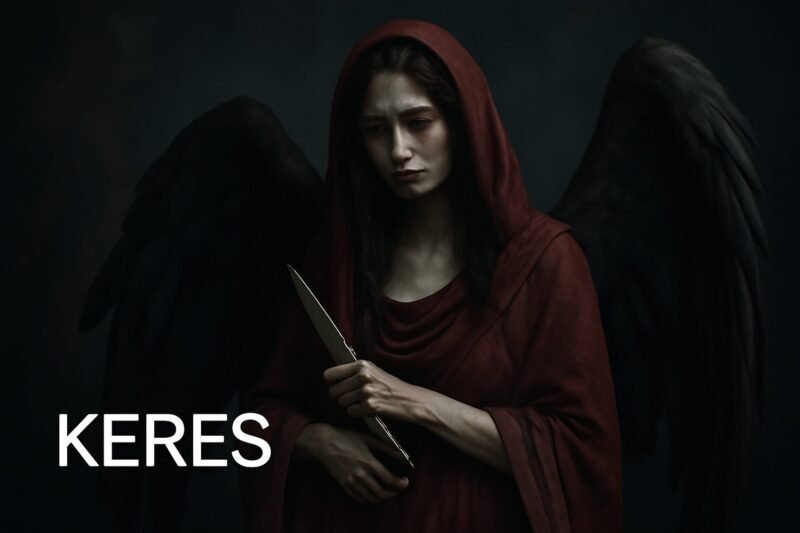
In Greek mythology, the Keres (singular: Ker) were fearsome female spirits associated with violent death, particularly on the battlefield. These dark deities personified the cruel and inevitable fate of mortals who met brutal ends, often depicted as winged creatures with gnashing teeth and claws stained with blood.
Origins and Nature
The Keres were born from Nyx, the primordial goddess of night, and Erebus, the god of darkness. They belonged to a class of underworld spirits called daimones—personifications of abstract concepts. Unlike the gentle Thanatos (god of peaceful death), the Keres represented death in its most violent forms: war, murder, accidents, and disease.
Hesiod describes them in Theogony as "clothed in garments red with human blood, who fought over the bodies of dying warriors." They were believed to hover over battlefields, waiting to claim souls with their sharp claws.
Powers and Role
The Keres had terrifying abilities:
- They could hasten death by tearing a warrior's life-force from his body
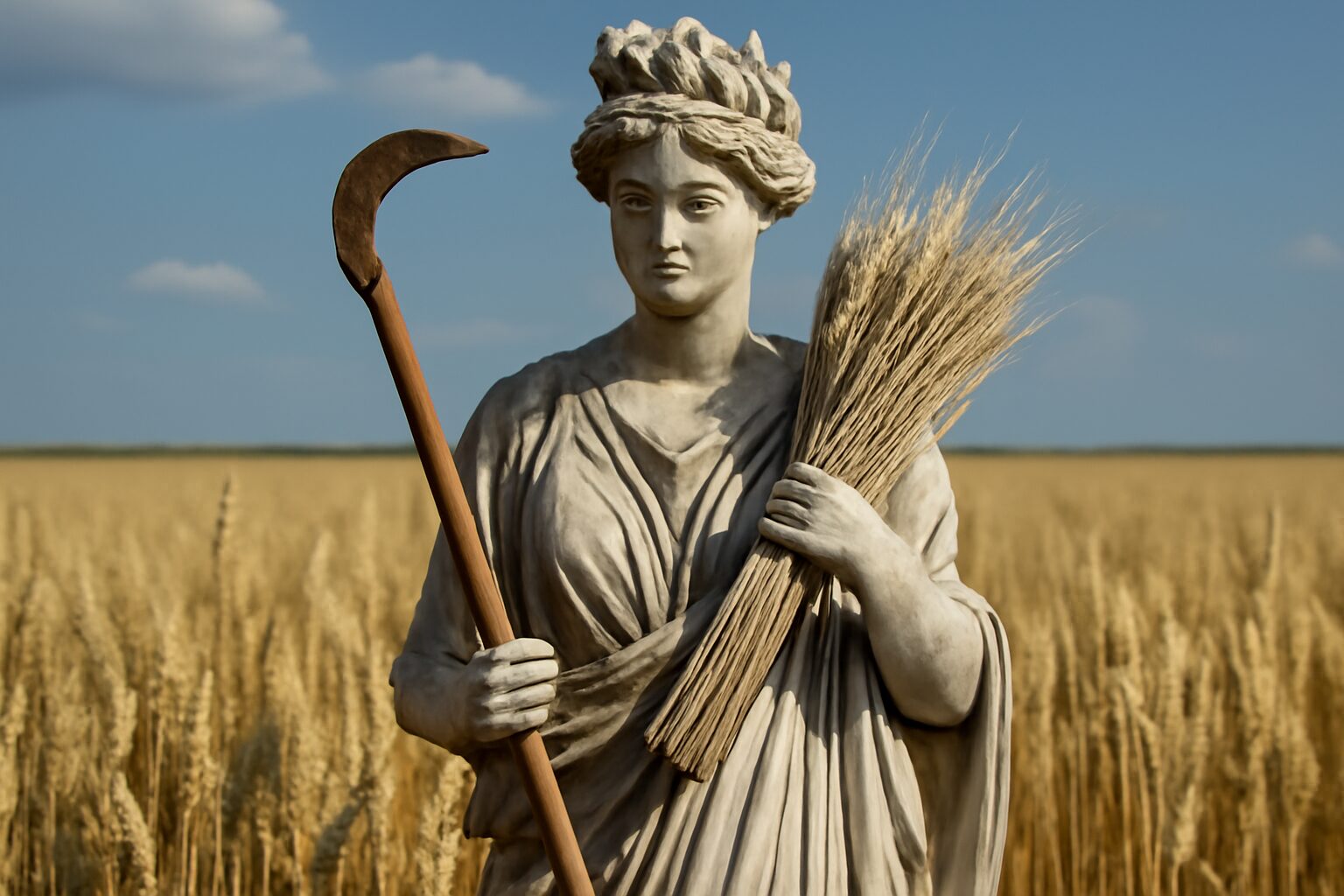
- They carried bronze sickles to harvest souls
- Their very presence brought disease and decay
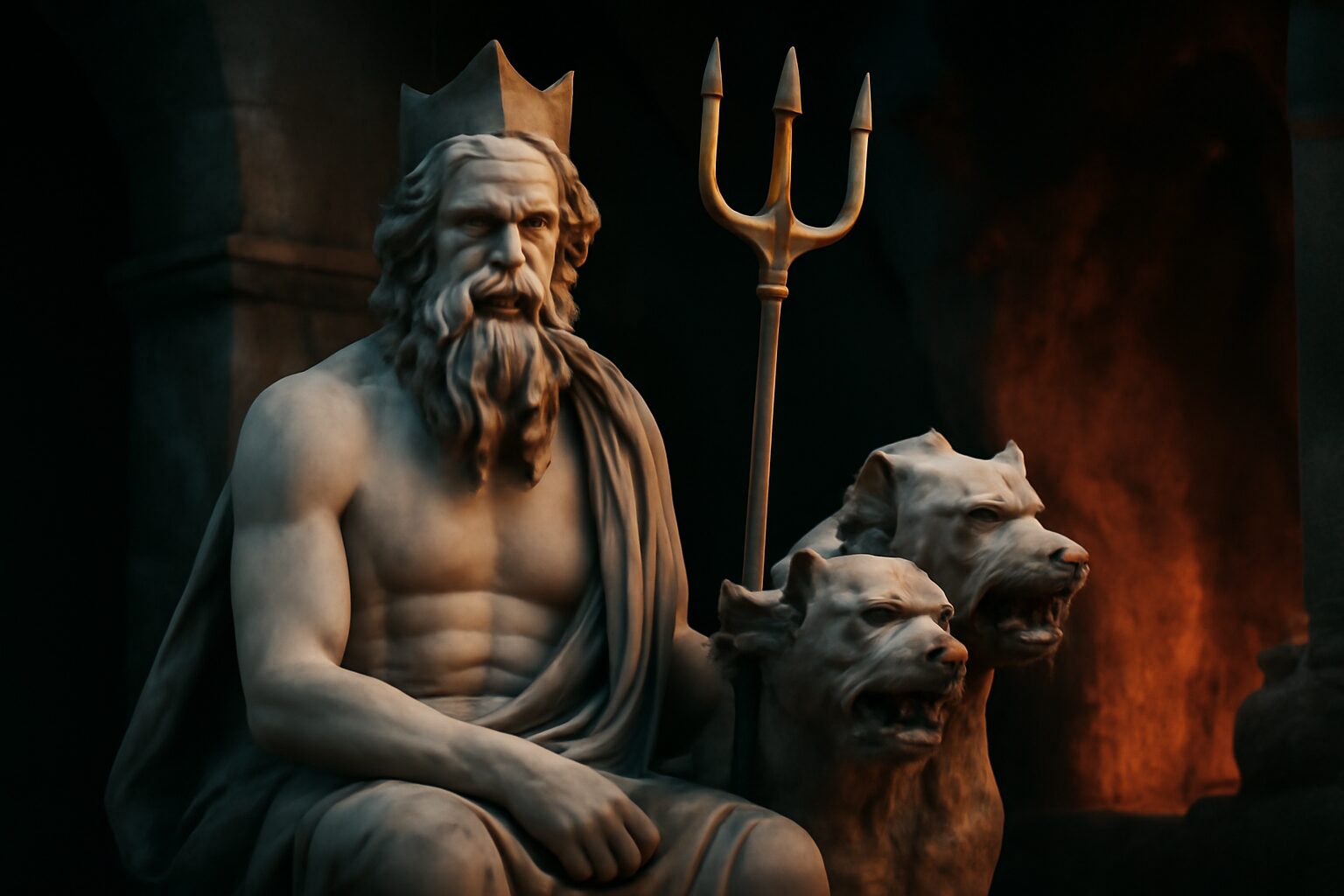
- They served as Hades' agents, escorting violent deaths to the Underworld
Unlike the Fates who determined lifespan, the Keres simply executed death when its time came. Ancient Greeks sometimes made offerings to ward them off during battles.
Relationships and Cultural Significance
The Keres were closely associated with:
- Thanatos (their gentler counterpart)
- Morpheus (god of dreams, as violent deaths often came in sleep)
- Ares, whom they frequently accompanied to war
Their depiction in art—often on vases and shields—served as both a warning and a recognition of war's brutality. The Roman equivalent were the Tenebrae or Letum.
While not major deities, the Keres represented the Greeks' profound understanding of death's many forms—especially the violent ends that awaited warriors in their conflict-ridden world.
Alternative Names for Keres
God Name: Ker (Greek)
Ker is a singular form of Keres, referring to an individual spirit of violent death or doom in Greek mythology.
God Name: Letum (Roman)
Letum is the Roman equivalent of the Keres, representing death and destruction, often associated with violent ends.
God Name: Moirai (sometimes associated) (Greek)
While the Moirai (Fates) are distinct entities, they are sometimes linked to the Keres as all are involved in determining destiny, particularly death.
God Name: Thanatos (related figure) (Greek)
Thanatos is the personification of peaceful death, contrasting with the Keres, but they are sometimes grouped together as deities of death.
Tales about Keres
The Keres and Thanatos: A Dance of Fate
In the shadowy realms of the underworld, the Keres were often seen as the relentless spirits of violent death, swarming battlefields to claim the souls of the fallen. One tale tells of a great war where their numbers swelled beyond measure, and Thanatos, the god of peaceful death, grew concerned. He approached the swarm of Keres, his presence calming the chaos.
A Pact Forged in Shadow
Thanatos, with his solemn grace, proposed a balance: the Keres would continue to harvest those who fell by the sword, but he would gently guide those who passed from age or illness. The Keres, though fierce, acknowledged the wisdom in his words. From that day, a silent understanding existed between them—a dance of fates where violence and peace each had their domain, ensuring order even in death's embrace.
The Keres and Zeus: A Test of Will
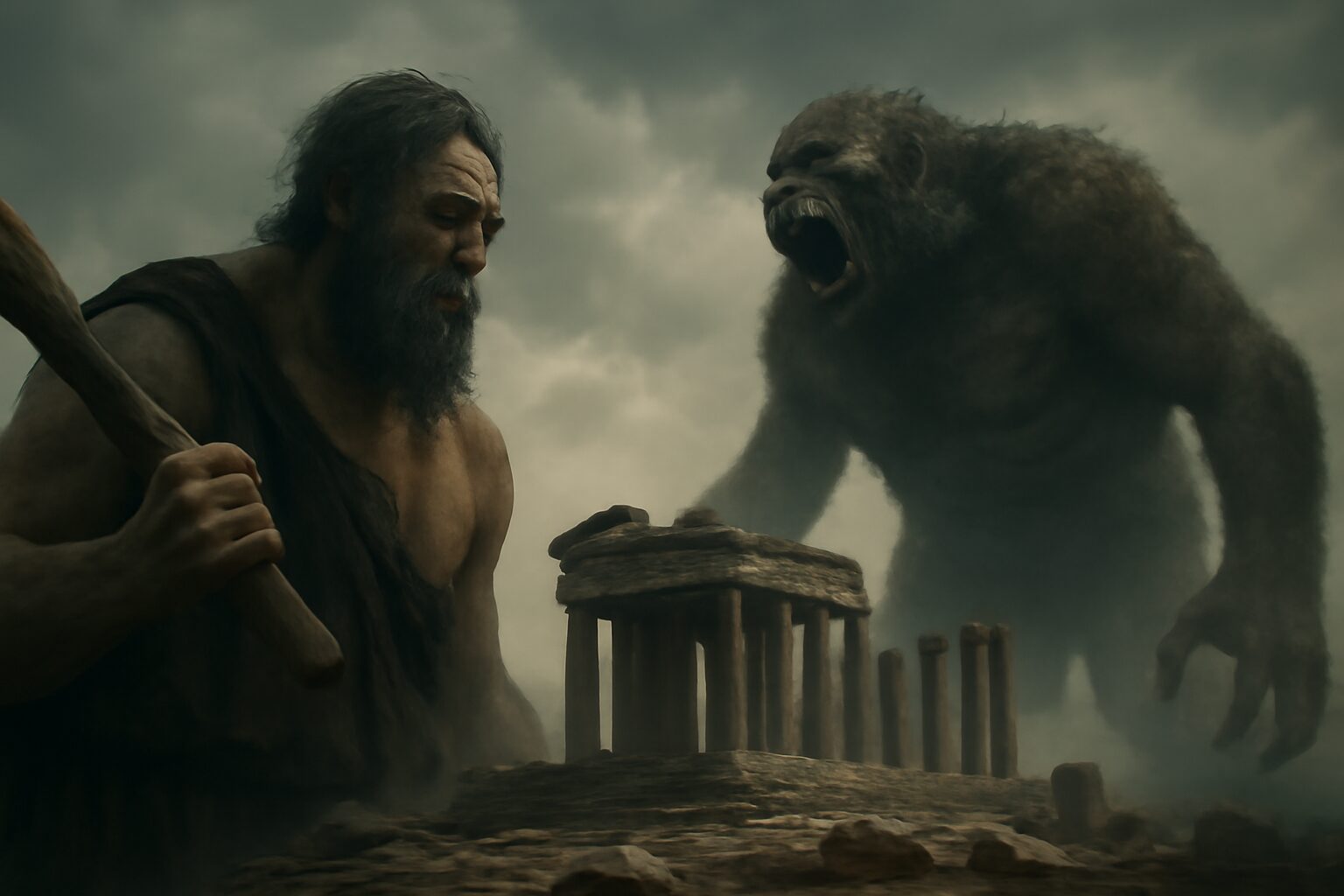
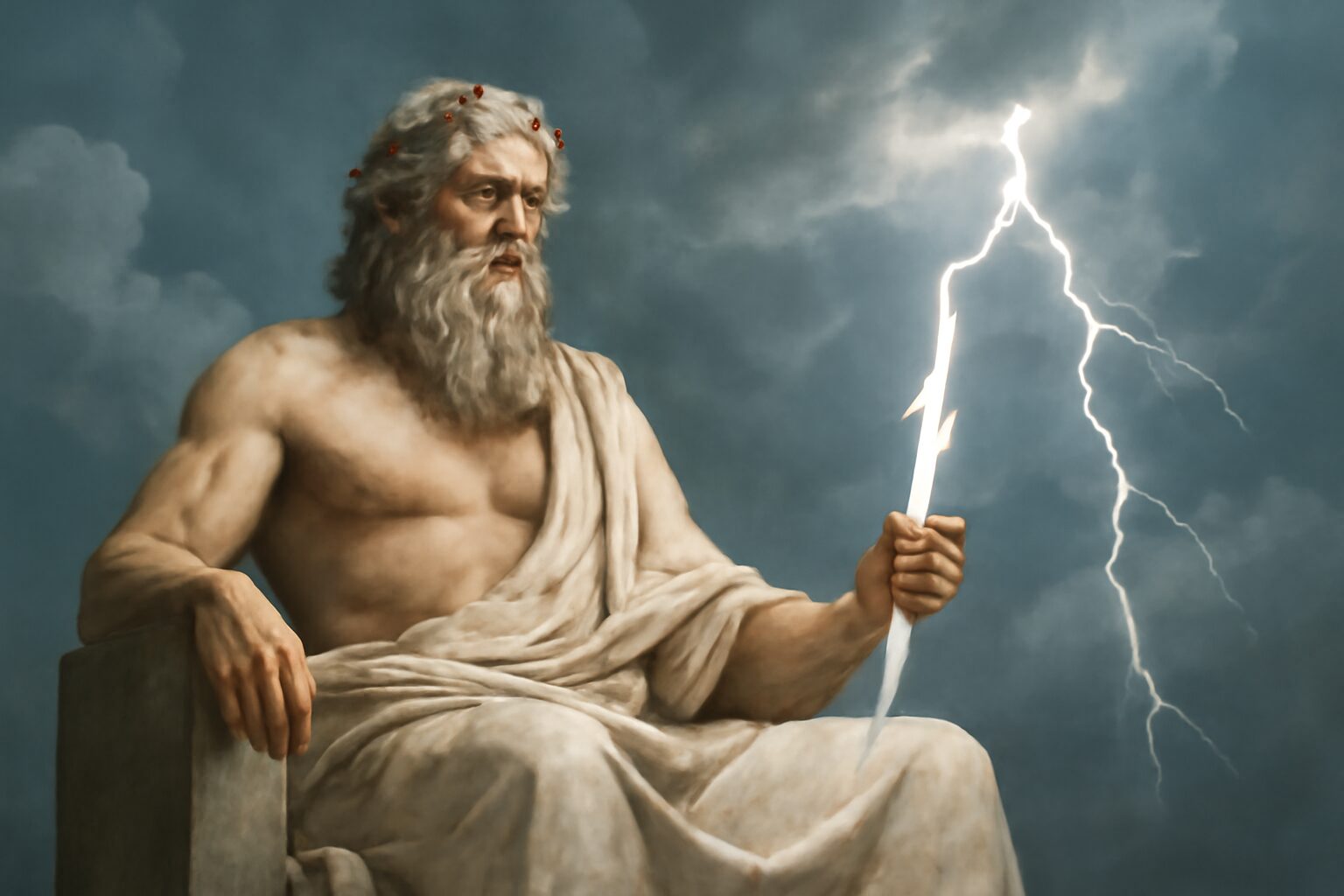
During the Titanomachy, the great war between the Titans and Olympians, Zeus wielded his thunderbolts with fury, and the Keres feasted on the carnage. Yet Zeus, in his foresight, worried their influence might grow too powerful, spilling beyond the battlefield into eras of peace.
The Thunderer's Decree
Summoning the Keres to Mount Olympus, Zeus laid down a law: they were to confine their harvest to times of conflict and never transgress into the domains of natural death or divine order. The Keres, though daunted by the king of gods, bowed to his authority. This decree carved their role in the cosmos—a necessary, grim force kept in check by the might of Olympus, a testament to Zeus's overarching command over all aspects of existence, even the most dire.
Frequently Asked Questions
Who are the Keres in Greek mythology?
The Keres are female spirits (daimones) in Greek mythology associated with violent death, particularly in battle. They are often depicted as dark, winged creatures who feed on the blood of the dead and dying.
What is the difference between gods and daimones in Greek mythology?
In Greek mythology, gods (theoi) are powerful immortal deities who control major aspects of the world, while daimones are lesser spirits or personifications of concepts, emotions, or natural phenomena. Daimones are more specialized and often represent specific forces or ideas.
Why were personifications like the Keres important in Greek religion?
Personifications like the Keres helped ancient Greeks explain and give form to abstract concepts like death, fate, and natural forces. They made these ideas more understandable and provided a way to interact with them through rituals and stories.
How do Greek personification spirits relate to modern concepts?
Many Greek personification spirits represent universal human experiences that we still recognize today, such as death (Keres), love (Eros), or victory (Nike). While we may not worship them as deities, these concepts remain important in psychology, literature, and popular culture.
Are the Keres the same as the Fates in Greek mythology?
No, the Keres and the Fates (Moirai) are different. The Keres are spirits of violent death, while the Fates control the thread of life for every mortal from birth to death. Both are daimones, but they have distinct roles in Greek mythology.