Dyssebeia: The Greek Spirit of Impiety
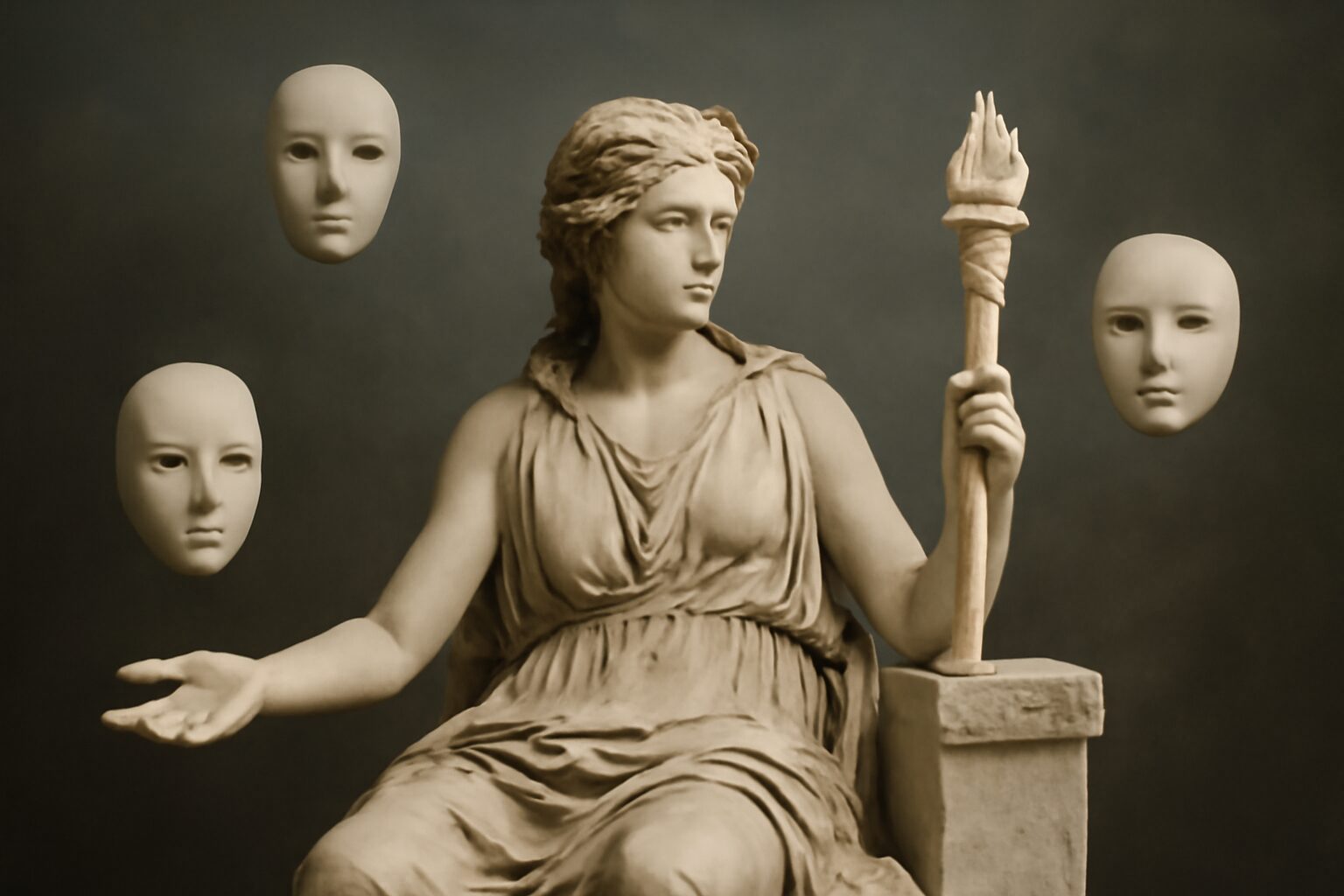
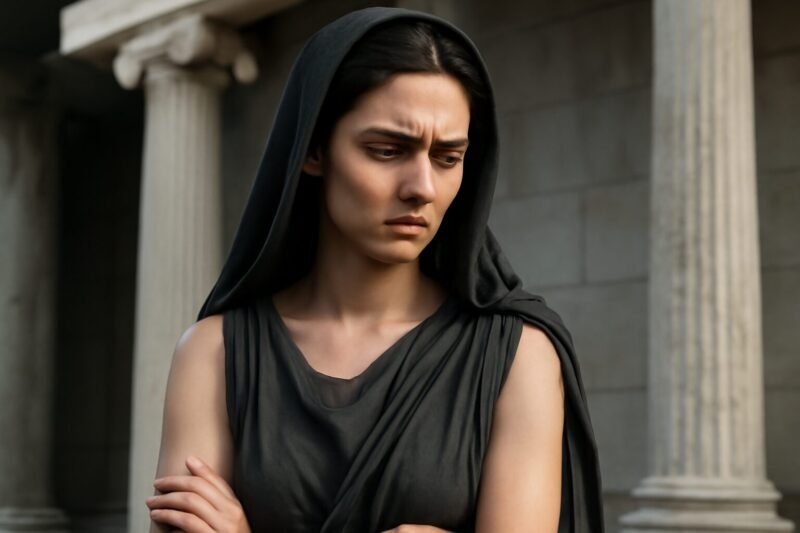
In Greek mythology, Dyssebeia (Δυσσέβεια) was the personification of impiety—the opposite of reverence for the gods. As a minor deity or daimon (spirit), she represented acts of disrespect, sacrilege, and the violation of divine laws. Unlike major Olympian gods, Dyssebeia was more of an abstract force, embodying the moral and religious failings that the ancient Greeks feared.
Role and Significance
Dyssebeia was often invoked in discussions of morality and piety, serving as a warning against hubris (excessive pride) and neglect of the gods. The Greeks believed that dishonoring the divine would bring misfortune, and Dyssebeia symbolized the consequences of such behavior. She was closely associated with Hybris (arrogance) and Ate (ruin), forming a trio of destructive forces that led mortals to their downfall.
Her presence in myths was subtle but impactful—wherever mortals defied the gods, mocked sacred rituals, or broke oaths, Dyssebeia's influence was at work. She was not worshiped but rather feared, as her essence represented the corruption of religious duty.
Mythological Connections
Dyssebeia rarely appeared as a character in myths but was often referenced in tragedies and philosophical texts. Playwrights like Aeschylus and Sophocles used her concept to highlight the dangers of impiety. In The Oresteia, for example, the curse upon the House of Atreus stems from acts of sacrilege and disrespect toward the gods—echoing Dyssebeia’s influence.
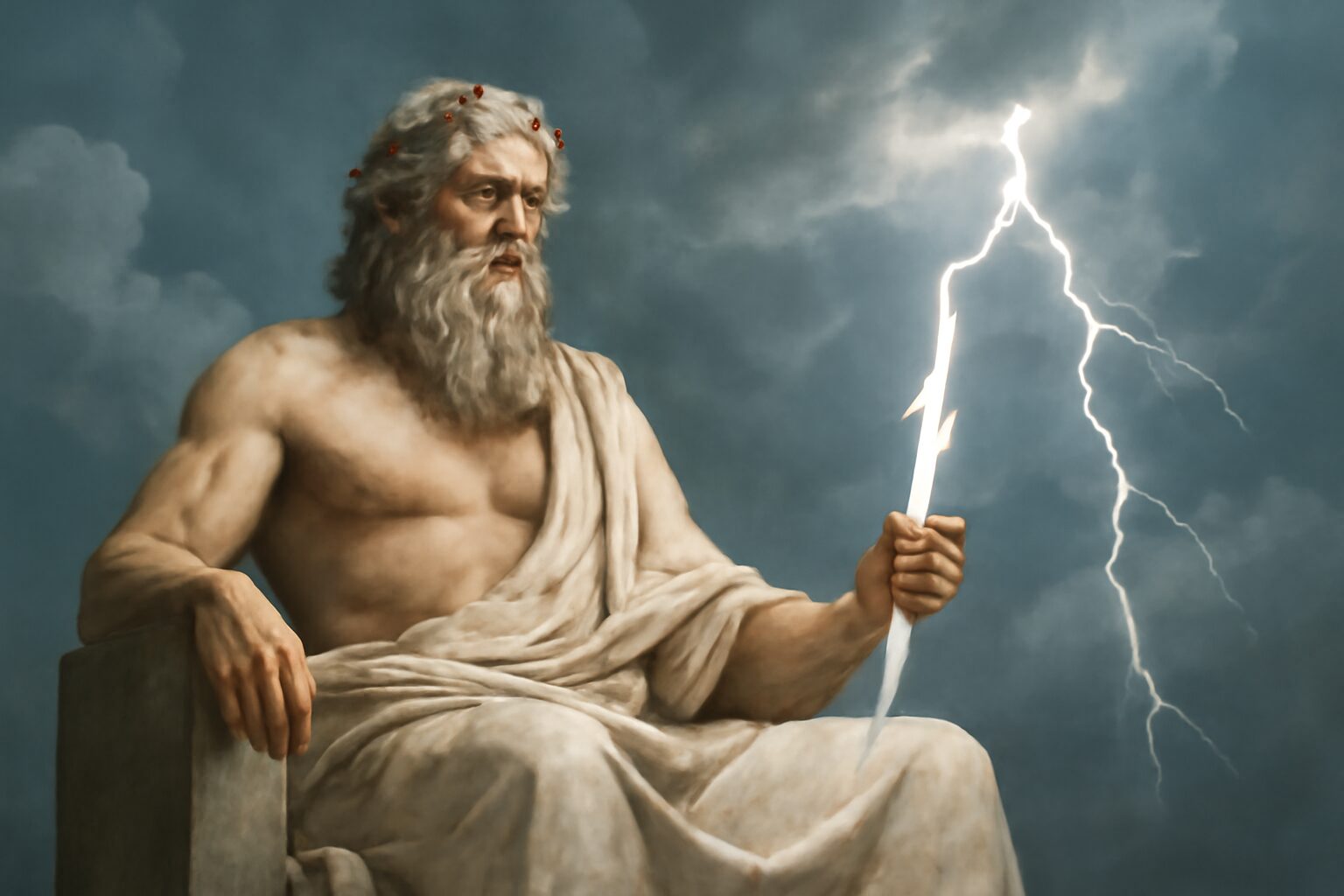
She was sometimes considered a child or companion of Eris (Strife), reinforcing her role in discord and moral decay. Unlike vengeful gods who punished impiety directly (such as Zeus or Nemesis), Dyssebeia was the embodiment of the sin itself.
Legacy and Symbolism
While not as well-known as other deities, Dyssebeia’s concept was crucial in Greek ethics. She served as a reminder that piety (eusebeia) was essential for harmony between mortals and gods. Philosophers like Plato discussed impiety as a societal ill, reflecting Dyssebeia’s enduring symbolic role.
Today, Dyssebeia remains a fascinating figure representing the ancient Greek belief that disrespect toward the divine inevitably led to chaos and punishment—a timeless lesson on the consequences of arrogance and irreverence.
Alternative Names for Dyssebeia
God Name: Asebeia (Greek)
Asebeia is an alternative name for Dyssebeia, both representing the concept of impiety or disrespect towards the gods in Greek mythology. The term is often used interchangeably to denote the personification of such irreverent behavior.
God Name: Impietas (Roman)
In Roman mythology, Impietas is the counterpart to the Greek Dyssebeia, embodying the same concept of impiety and lack of reverence towards the gods. The Romans adopted and adapted many Greek deities and concepts, with Impietas being the Roman equivalent.
Tales about Dyssebeia
The Corruption of Piety
In the shadowed halls of Olympus, Dyssebeia once sought to taint the purest of hearts. She turned her gaze upon Eusebeia, the embodiment of piety and reverence. With whispers as subtle as twilight, Dyssebeia insinuated doubts into Eusebeia's mind, suggesting that the gods cared little for mortal devotion. Eusebeia, troubled, began to neglect her duties, and temples fell into disrepair as her influence waned.
The Divine Intervention
Noticing the decline in mortal reverence, Zeus dispatched Dike, goddess of justice, to investigate. Dike uncovered Dyssebeia's machinations and confronted her. A fierce debate ensued, with Dyssebeia arguing that blind faith was folly, while Dike upheld the necessity of respect and order. In the end, Zeus decreed that piety must be a choice, not a compulsion, but Dyssebeia was forbidden from directly influencing Eusebeia again. This tale reminds us that impiety often wears the mask of reason, but true reverence withstands doubt.
The Feast of Discord
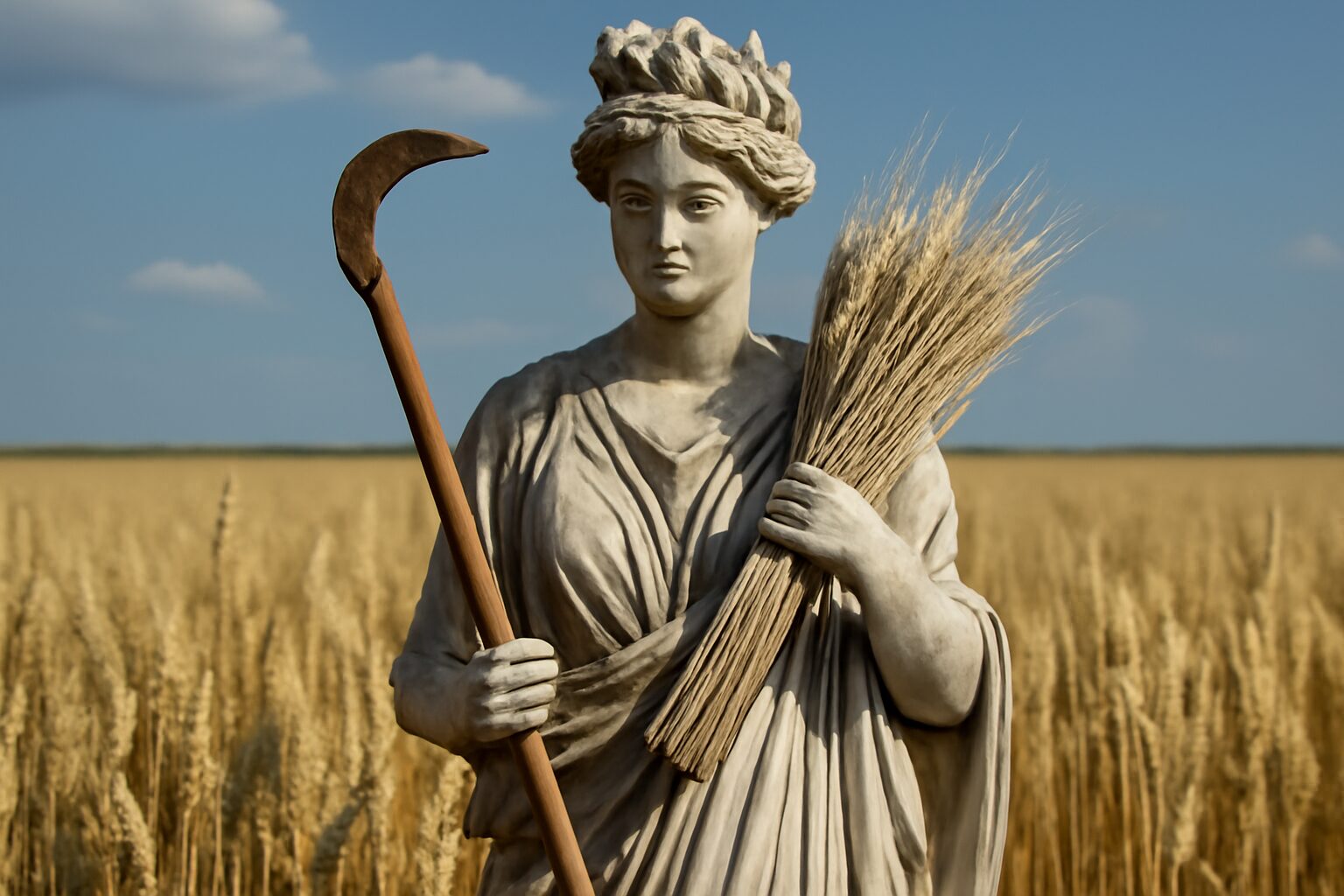
During a grand feast hosted by Demeter to celebrate the harvest, Dyssebeia slipped in uninvited. She spotted Eirene, the personification of peace, radiating calm among the guests. Dyssebeia, envious of such tranquility, began to sow seeds of discord. She whispered lies to the attendees, suggesting that the offerings were unequal and that some were being favored over others.
The Unraveling Harmony
Soon, arguments broke out, and the festive atmosphere turned tense. Eirene felt her influence weakening as distrust spread. Noticing the chaos, Apollo intervened with a melody from his lyre, soothing tempers and exposing Dyssebeia's deceit. Ashamed, the gods reaffirmed their commitment to harmony, and Dyssebeia was cast out from the celebration. This story illustrates how impiety can disrupt even the most sacred gatherings, but truth and art can restore peace.
Frequently Asked Questions
Who is Dyssebeia in Greek mythology?
Dyssebeia is the Greek daimona (spirit) personifying impiety, disrespect, and the violation of sacred customs. She represents the opposite of religious devotion and proper reverence for the gods.
Why is Dyssebeia important in Greek mythology?
Dyssebeia serves as a cautionary figure, highlighting the consequences of disrespecting the gods or neglecting religious duties. Her presence emphasizes the importance of piety in ancient Greek culture.
What can we learn from the concept of Dyssebeia?
Dyssebeia teaches us about the ancient Greek values of religious observance and respect for divine order. She reminds us how seriously the Greeks took matters of faith and proper conduct toward the gods.
How does Dyssebeia relate to modern concepts?
While not worshiped today, Dyssebeia's concept remains relevant as a symbolic representation of irreverence or sacrilege. She embodies universal themes about the dangers of disrespecting sacred traditions.
Are there any myths or stories about Dyssebeia?
Unlike major gods, Dyssebeia doesn't feature in prominent myths. She appears more as an abstract personification in Greek thought, often mentioned in contrast to Eusebeia (Piety) to illustrate moral lessons.