Agon: The Spirit of Competition in Greek Mythology
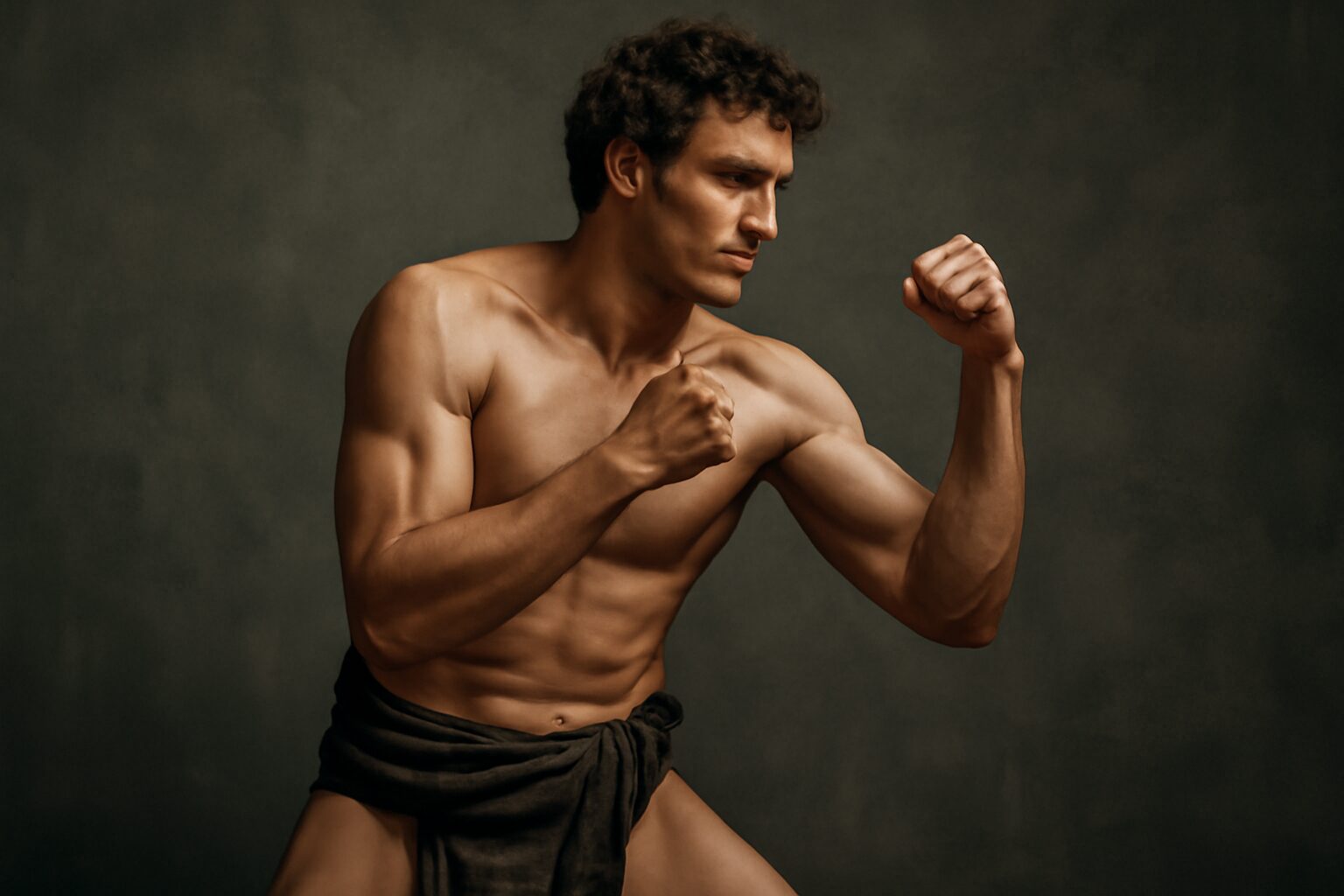
In Greek mythology, Agon (Ἀγών) personifies the concept of competition, struggle, and athletic contests. Though not as widely known as the Olympian gods, Agon played a significant role in Greek culture, particularly in the context of sports, warfare, and artistic rivalries. His name literally means "contest" or "struggle," reflecting the Greeks' deep appreciation for competition as a driving force in human achievement.
Mythology and Role
Agon was often depicted as a minor deity or daimon (spirit) who presided over athletic games, including the ancient Olympic Games. He embodied the spirit of fair play and the pursuit of excellence, encouraging athletes to push their limits. Unlike the war god Ares, Agon represented honorable competition rather than violent conflict.
In some traditions, Agon was considered a companion of Nike, the goddess of victory, and Zelos, the personification of rivalry. Together, they symbolized the interconnected forces that drove Greek athletes, warriors, and artists to greatness.
Powers and Influence
Agon's influence extended beyond physical contests. He was also associated with intellectual and artistic competitions, such as poetry recitals, musical performances, and theatrical contests. The Greeks believed that his presence elevated these events, ensuring that participants gave their best efforts.
Unlike gods with tangible powers over nature or human affairs, Agon's strength lay in inspiration. He was the unseen force that stirred ambition, fueled rivalries, and rewarded perseverance. His essence was woven into Greek festivals, where competitions were held in his honor.
Significance in Greek Culture
The concept of agon was central to Greek society, shaping everything from politics to philosophy. The Greeks viewed competition as a noble pursuit, essential for personal growth and communal progress. Agon's presence was felt in the gymnasium, the battlefield, and even the symposium, where debates and games of skill were common.
Today, Agon's legacy lives on in modern sports and competitive events, reminding us of the ancient Greek belief that struggle and rivalry are not just challenges but opportunities for greatness.
Alternative Names for Agon
God Name: Contestus (Roman)
In Roman mythology, Agon was sometimes referred to as Contestus, emphasizing his association with competition and contests. This name highlights the Roman adaptation of the Greek concept of agonistic spirit.
God Name: Agonios (Greek)
An alternative Greek epithet for Agon, 'Agonios' underscores his role as the personification of contests, struggles, and athletic competitions. It was used in certain regional cults or poetic contexts.
God Name: Enagonios (Greek)
This name, meaning 'in the contest,' was occasionally used to invoke Agon in the context of athletic or artistic competitions, reflecting his presence within the arena of struggle.
Tales about Agon
The Contest of Healing: Agon and Aceso
In the golden age of mortals, a plague swept through the lands, testing the resolve of both gods and humans. Agon, the spirit of contest, saw an opportunity to inspire greatness through struggle. He approached Aceso, the goddess of the healing process, and proposed a challenge: who could better aid the suffering—Agon through fostering resilience, or Aceso through her gentle mending?
The Wager and the Test
They chose a village ravaged by illness. Aceso worked tirelessly, applying poultices and chanting soothing hymns, easing pain and closing wounds with divine care. Meanwhile, Agon stirred the hearts of the villagers, igniting their will to fight, to support one another, and to find strength in adversity. Days turned, and where Aceso’s touch brought immediate relief, Agon’s influence built enduring fortitude.
The Outcome
In the end, the village not only recovered but emerged stronger, their bonds deepened by shared struggle. Aceso acknowledged that healing was not just the absence of illness, but the presence of spirit. Agon, in turn, praised her compassion. They agreed that true wellness was a blend of both—contest and care—and from that day, they often worked in tandem, reminding all that struggle and solace are two sides of the same coin.
Their collaboration drew the attention of other deities. Horme, the spirit of effort, lent her energy to the villagers' endeavors, while Euthenia ensured their prosperity flourished post-recovery. Sophrosyne brought moderation to their newfound strength, and Homonoia fostered harmony among them, sealing their unity.
The River’s Challenge: Agon and Achelous
Along the banks of the greatest river in Greece, Achelous, the river god, often boasted of his power, claiming none could match his strength or the bounty of his waters. Agon, ever eager to stir competition, appeared to him in the form of a mighty bull, challenging Achelous to a test of force.
The Clash of Titans
"Prove your dominance," Agon roared, his voice like thunder. Achelous, confident and proud, accepted, transforming into a raging torrent, then a serpent, and finally a bull himself, locking horns with Agon in a spectacular struggle. The earth shook, and the waters churned as they wrestled, each displaying immense power and skill.
A Lesson in Humility
Though neither emerged the clear victor, the contest drained Achelous of his arrogance. He learned that true strength lies not in unchallenged supremacy, but in the respect earned through worthy opposition. Agon, pleased with the river god’s newfound humility, blessed his waters with renewed vitality, ensuring they would forever be a source of life and a symbol of respectful rivalry.
Witnesses to this epic confrontation included Kydoimos, the personification of the din of battle, who reveled in the clash, and Palioxis, the spirit of retreat, who noted the resilience in their struggle. Thrasos embodied the boldness they displayed, while Eusebeia observed the piety in their eventual mutual respect.
Frequently Asked Questions
What is Agon in Greek mythology?
Agon refers to the personification of competition, struggle, or contest in Greek mythology. It represents the spirit of rivalry, particularly in athletic, artistic, or intellectual competitions, which were highly valued in ancient Greek culture.
Who were the Daimones in Greek mythology?
Daimones were minor deities or spirits in Greek mythology, often representing abstract concepts, emotions, or natural forces. They were considered intermediaries between gods and humans, and could be either benevolent or malevolent.
Why were personifications important in Greek mythology?
Personifications were important because they helped the ancient Greeks explain and understand abstract concepts, emotions, and natural phenomena by giving them human-like forms and characteristics. This made complex ideas more relatable and easier to comprehend.
How does the concept of Agon apply to modern life?
The concept of Agon applies today in our continued emphasis on competition in sports, academics, and professional life. Like the ancient Greeks, we still value the spirit of competition as a way to achieve excellence and personal growth.
What can we learn from Greek personifications and spirits?
We can learn how ancient Greeks viewed and categorized human experiences and the natural world. Their personifications show us how they made sense of abstract concepts, and many of these ideas still influence our language and culture today.