Hypate: The Muse of the Highest Chord
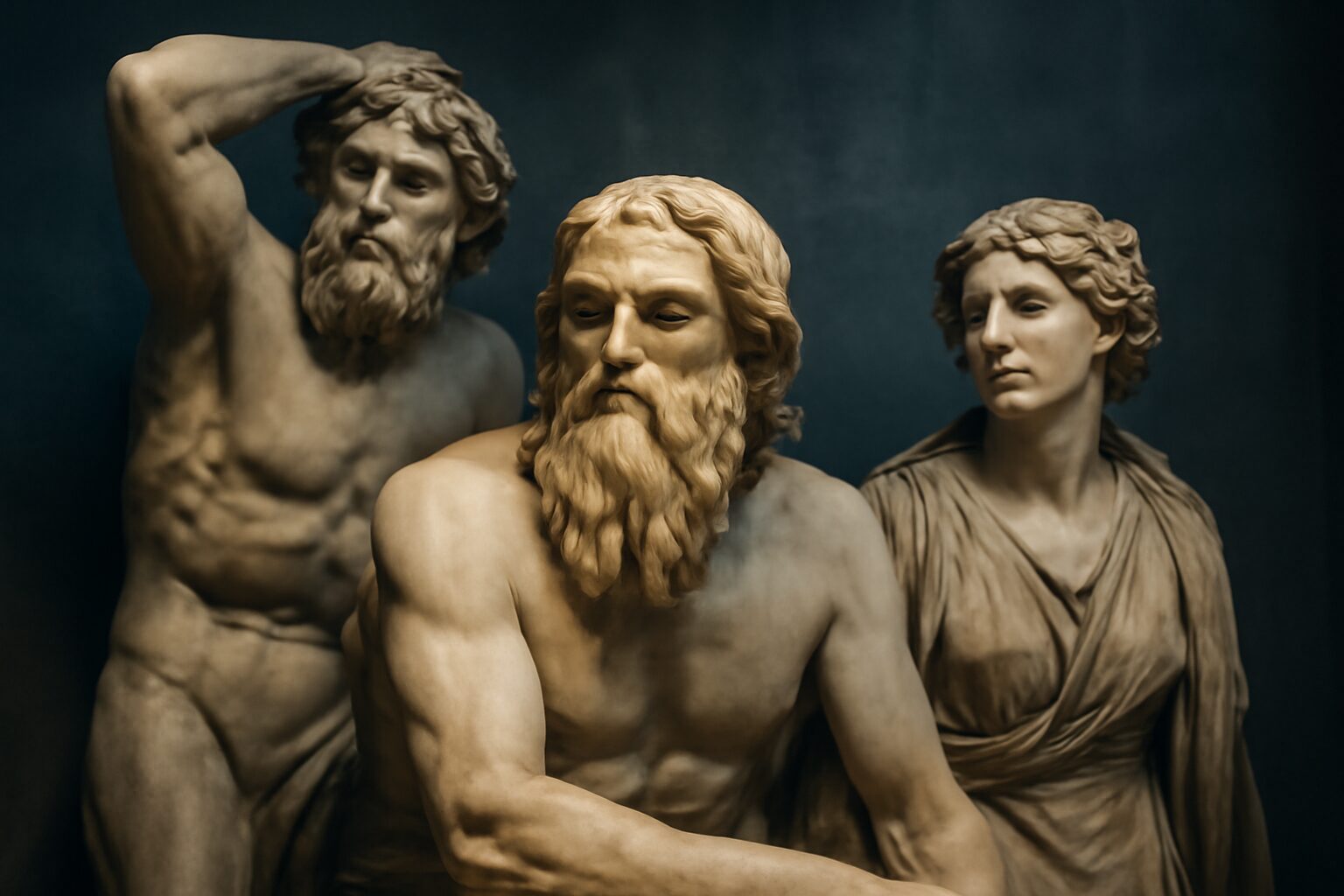
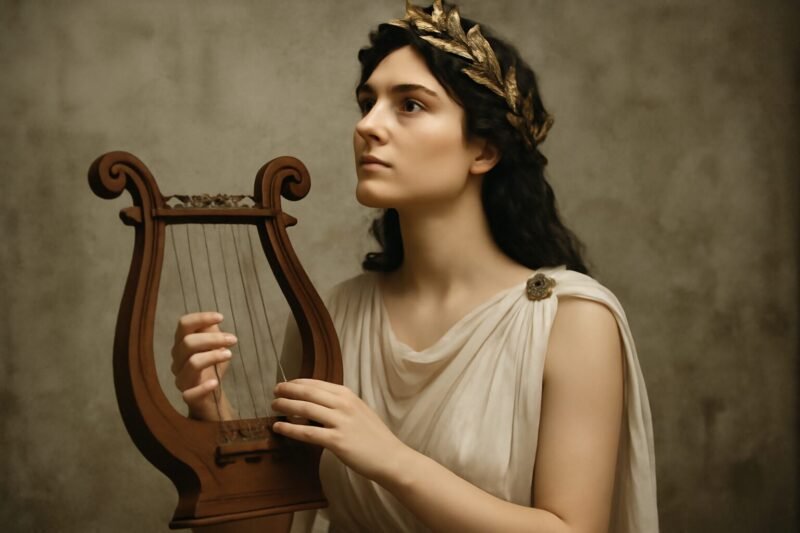
In Greek mythology, Hypate (meaning "the highest") was one of the three Musae or Muses specifically associated with music and the art of the lyre. Alongside her sisters Mese ("the middle") and Nete ("the lowest"), Hypate represented the highest-pitched string of the seven-stringed lyre, embodying the celestial harmony of the cosmos.
Role and Significance
Hypate and her sisters were considered the daughters of Apollo, the god of music and prophecy, and formed a triad that governed the musical scales and the philosophical principles of harmony. Unlike the nine better-known Muses who presided over arts and sciences, Hypate and her siblings were specialized deities of musical theory. They symbolized the connection between music, mathematics, and the divine order of the universe.
Ancient Greek musicians and philosophers, such as Pythagoras, revered Hypate as the embodiment of the highest musical tone, which was believed to resonate with the heavens. Her name was often invoked in discussions of musical intervals and the mathematical perfection of sound.
Mythology and Worship
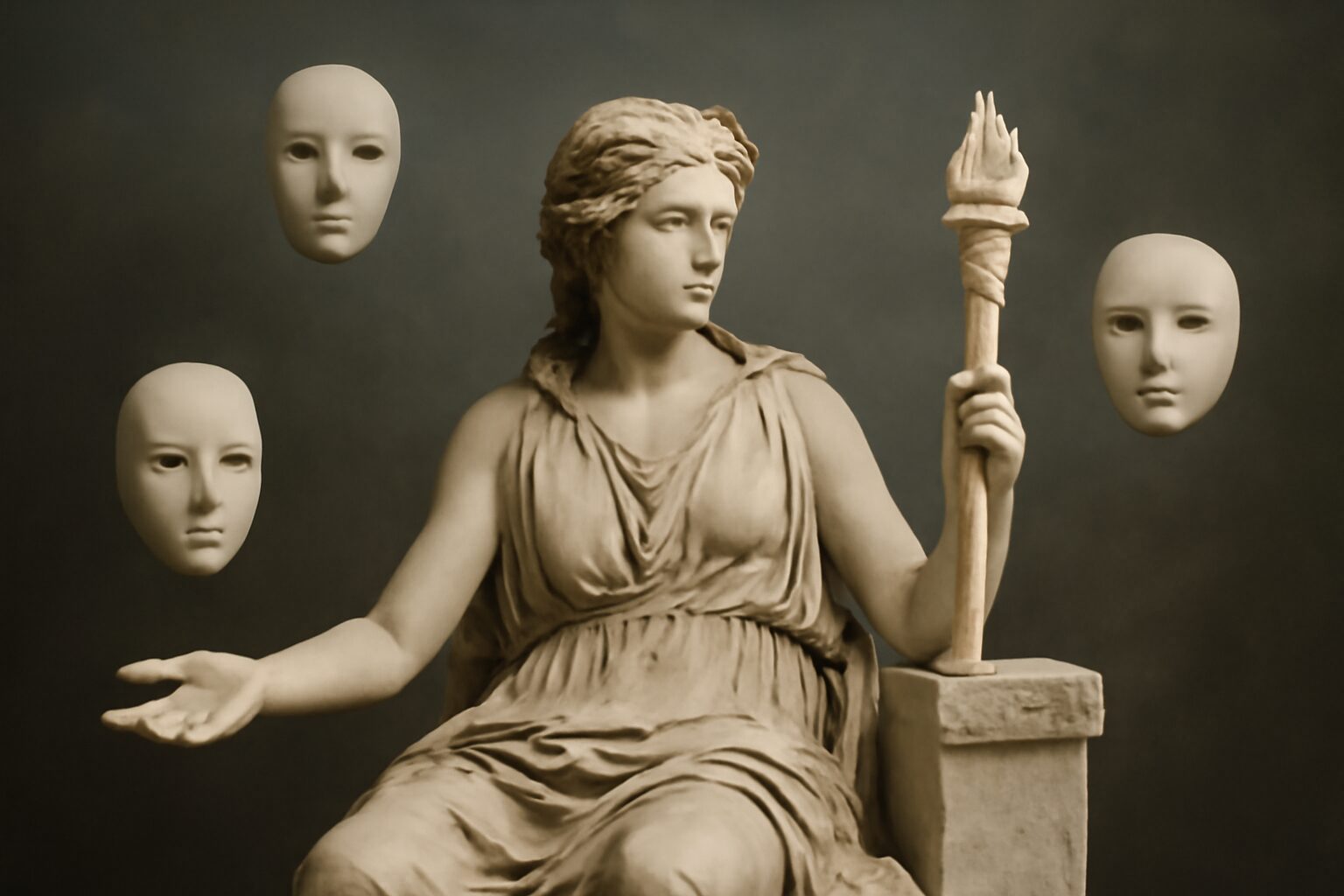
Though Hypate appears less frequently in myths than other Muses, she played a crucial role in the cultural understanding of music's power. Alongside her sisters, she was sometimes depicted in artistic representations of Apollo’s retinue, holding a lyre or gesturing to the sky to signify her connection to the highest notes.
Worship of Hypate was closely tied to the veneration of Apollo and the broader appreciation of music in religious and civic life. Musicians and poets would honor her before performances, seeking inspiration to achieve perfect harmony in their compositions.
Legacy
Hypate’s influence extended beyond mythology into the realms of philosophy and science. The concept of musical harmony she represented became a metaphor for cosmic balance in Greek thought, influencing later Western ideas about the "music of the spheres." Even today, her name is remembered in music theory as a symbol of the highest pitch in ancient scales.
Though lesser-known than some of her divine counterparts, Hypate remains a fascinating figure—a bridge between art, science, and the divine in the rich tapestry of Greek mythology.
Alternative Names for Hypate
God Name: Hypatos (Greek)
An alternative form of Hypate, used in some ancient Greek texts to denote a higher or supreme status of the deity.
God Name: Supremus (Roman)
A Roman epithet used to denote the highest or supreme nature of the god, analogous to the Greek Hypate.
God Name: Hyperion (Greek)
In some contexts, Hypate has been associated or conflated with Hyperion, the Titan god of light, due to shared themes of supremacy and celestial power.
God Name: Anax (Greek)
An ancient Greek title meaning 'lord' or 'king,' occasionally used as an epithet for Hypate to emphasize rulership and authority.
Tales about Hypate
Hypate and the Healing of Aceso
In the golden age of Olympus, Hypate, the muse of the highest musical note, once wandered the mortal realm, her lyre echoing the harmonies of the cosmos. She encountered a village stricken with a mysterious ailment that no mortal healer could cure. Desperate, the villagers prayed to Aceso, the goddess of the healing process, whose gentle touch mended wounds over time.
Moved by their plight, Hypate composed a melody so pure and resonant that it reached Aceso’s sacred grove. Intrigued by the music, Aceso descended, her presence bringing a soothing calm. Together, they worked in harmony: Hypate’s notes easing suffering and lifting spirits, while Aceso’s powers accelerated the healing, restoring health and vitality. The villagers celebrated their recovery with a festival of music and gratitude, forever honoring the divine partnership between sound and healing.
Hypate’s Duel with Aether
One evening, as Hypate tuned her lyre to the celestial spheres, she noticed a dissonance in the upper air—a disruption in the very fabric of the sky. It was Aether, the primordial god of the bright, glowing upper air, whose essence had become turbulent, threatening the balance of light and atmosphere.
The Harmonic Resolution
With deft fingers, Hypate played a sequence of ascending notes, each one piercing the chaos with clarity. Aether, initially resistant, found his chaotic energies soothed by the precision of her music. Hypate’s highest pitches resonated with Aether’s pure light, creating a symphony of order and radiance. The sky cleared, stars shone brighter, and Aether, grateful, granted Hypate the ability to always find harmony in the heavens, ensuring her music would forever be intertwined with the upper air.
Frequently Asked Questions
Who is Hypate in Greek mythology?
Hypate is one of the three Muses of the lyre in Greek mythology, specifically representing the highest note on the musical scale. She, along with her sisters Mese and Nete, symbolizes harmony and the art of music.
Why are the Muses like Hypate important in Greek mythology?
The Muses, including Hypate, are important because they inspire creativity, arts, and sciences. They were believed to bring knowledge and inspiration to poets, musicians, and scholars, making them central figures in cultural and intellectual pursuits.
What can we learn from Hypate and the Muses today?
Hypate and the Muses remind us of the timeless value of creativity and inspiration. Their legacy encourages us to pursue artistic expression and intellectual growth, highlighting how the arts and knowledge remain vital in modern life.
How does Hypate's role apply to music today?
Hypate's association with musical harmony reflects the enduring importance of balance and structure in music. Modern musicians and composers still draw on these principles, showing how ancient concepts continue to influence contemporary art forms.
Are there other lesser-known deities like Hypate in Greek mythology?
Yes, Greek mythology includes many lesser-known deities and divine figures, such as the Horae (goddesses of seasons) or the Charites (goddesses of charm). These figures often represent specific aspects of life, nature, or human experience, enriching the mythological tradition.