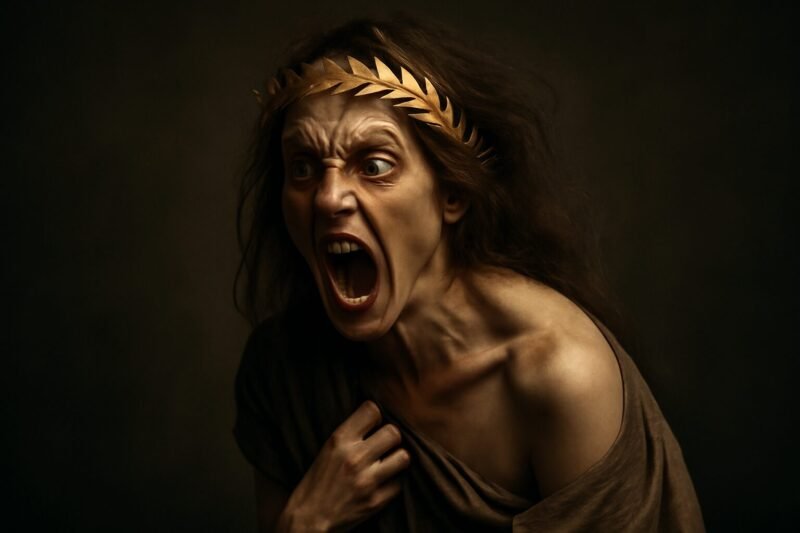
Mania: The Greek Goddess of Madness and Frenzy
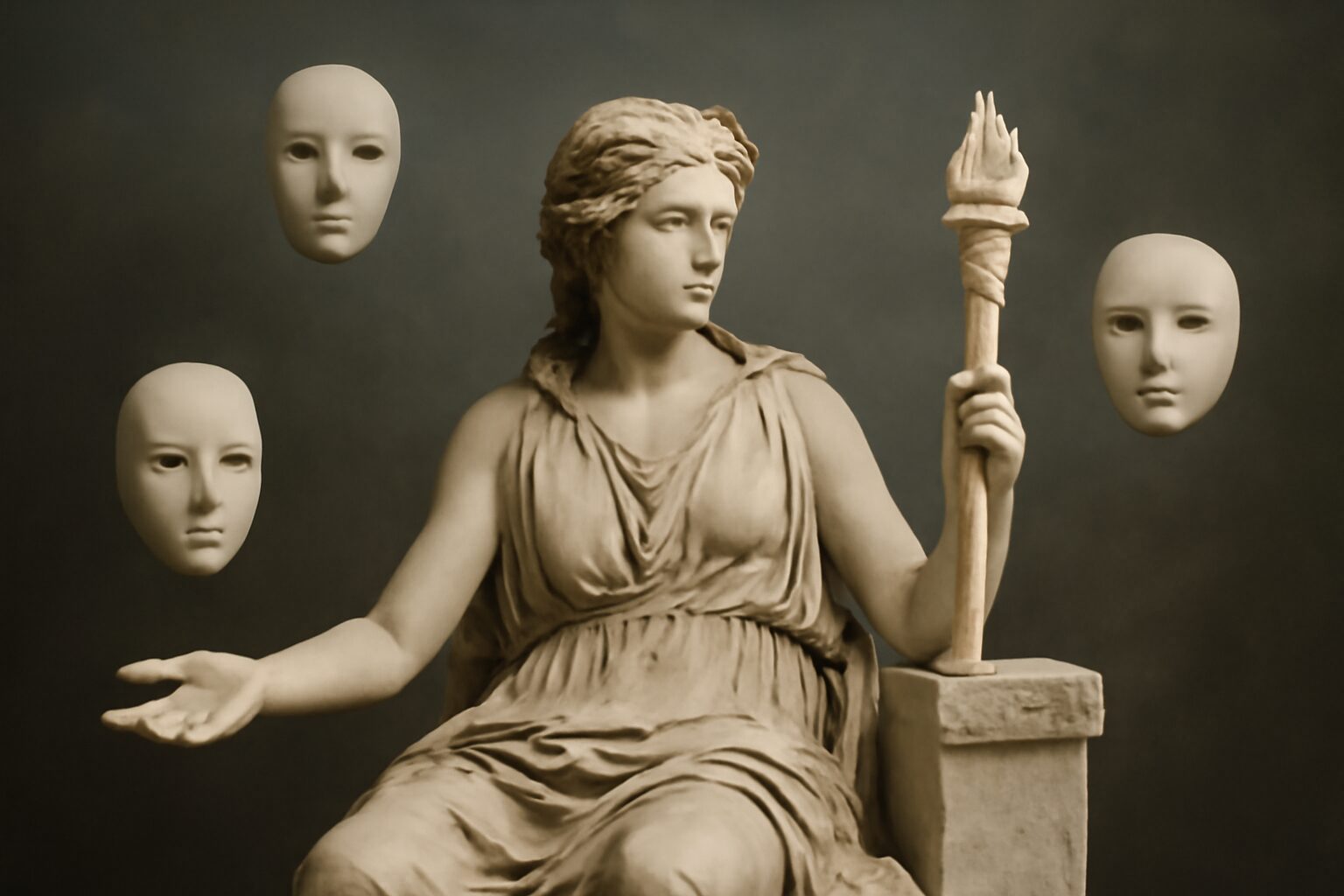
In Greek mythology, Mania (or Maniae) was the primordial goddess of madness, frenzy, and insanity. Though less well-known than major Olympian deities, she played a significant role in the darker aspects of human experience, embodying the uncontrollable forces of the mind.
Origins and Family
Mania was often considered a daughter of Nyx (Night) and Erebus (Darkness), placing her among the primordial deities associated with chaos and shadow. In some traditions, she was linked to Hades or Dionysus, gods connected to the underworld and ecstatic frenzy, respectively. Her Roman counterpart was Lua, a goddess of destruction.
Role and Powers
Mania personified the terrifying loss of reason, driving mortals—and sometimes even gods—into states of uncontrollable rage or delirium. She was believed to inflict madness as a divine punishment or curse, often appearing in myths where characters were driven to violence or self-destruction. Unlike Atë (goddess of folly), Mania represented a more extreme, all-consuming madness.
Her influence extended beyond individuals—some myths suggest she could incite mass hysteria, war frenzy, or prophetic madness in oracles. In later traditions, she was also associated with the Manes, spirits of the dead, linking her to the underworld.
Mythological Significance
Mania rarely appeared as a central figure in myths but was often invoked as a force behind tragic events. One notable connection is her role in the story of Heracles, where Hera (or Lyssa, a similar spirit of rage) used madness to drive the hero to kill his own family. Some interpretations suggest Mania’s influence in this tragedy.
In Roman tradition, Mania was also worshiped as a mother of the Lares, household guardian spirits, showing a dual aspect—both destructive and protective. Offerings were made to appease her and ward off insanity.
Legacy and Symbolism
Mania’s name survives in modern language as the root of words like mania and maniac, reflecting her ancient association with irrational frenzy. She represents the Greeks’ understanding of mental states beyond human control, often feared as divine retribution. Unlike later personifications of madness, Mania was not merely a metaphor but a deity believed to wield real, terrifying power over the mind.
Alternative Names for Mania
God Name: Mania (Roman)
The Roman counterpart of the Greek Mania, retaining the same name. She was associated with madness and the dead, often linked to the Lares and Manes, spirits of the household and the deceased.
God Name: Larva (Roman)
In Roman mythology, 'Larva' was sometimes used interchangeably with Mania to refer to spirits of the dead or malevolent entities causing madness. The term also connected to the concept of ghosts or specters.
God Name: Mater Larum (Roman)
Meaning 'Mother of the Lares,' this title was occasionally associated with Mania in Roman tradition, emphasizing her role as a protector or overseer of household spirits, though sometimes with darker connotations.
Tales about Mania
Mania and the Madness of Ares
In the heat of battle, where chaos reigned and blood soaked the earth, Mania found her truest ally in Ares, the god of war. One fateful conflict, as mortals clashed with unyielding fury, Ares summoned Mania to unleash her full power upon the warriors. She swept through the ranks like a storm, her presence twisting rational minds into vessels of pure, unthinking rage. Soldiers forgot their strategies, their allegiances, even their own names, consumed by a bloodlust that knew no bounds.
Ares, thrilled by the carnage, rode alongside her, his laughter echoing over the screams. Together, they turned the tide of battle not through skill, but through sheer, overwhelming madness. It was said that after that day, no army dared invoke Ares without fearing the touch of Mania—a partnership forged in the fires of insanity.
Mania’s Dance with Dionysus
During one of Dionysus' wild revels, where wine flowed like rivers and ecstasy hung thick in the air, Mania appeared uninvited yet not unwelcome. Dionysus, ever the patron of liberation and frenzy, embraced her chaotic energy. He challenged her to a contest: whose influence could make the mortals lose themselves more completely?
Mania’s madness drove them to tear at their clothes and dance until their feet bled, while Dionysus’ wine brought visions and delirious joy. The line between divine ecstasy and destructive mania blurred into a whirl of laughter and screams. In the end, even Dionysus bowed to her power, declaring that while he could inspire temporary abandon, Mania’s touch was eternal and absolute. Their collaboration birthed legends of bacchanals that crossed into nightmares.
Frequently Asked Questions
What is Mania in Greek mythology?
Mania is the Greek goddess or spirit (daimon) of madness, frenzy, and insanity. She was often associated with the madness brought by war or divine punishment, and was considered a force that could drive people to irrational behavior.
Who were the Daimones in Greek mythology?
The Daimones (or Daemones) were minor deities or spirits in Greek mythology, often personifying abstract concepts, emotions, or natural forces. They were considered intermediaries between gods and humans, and could be either benevolent or malevolent.
Why is Mania important in Greek mythology?
Mania represents the uncontrollable and destructive aspects of human nature, such as madness and frenzy. Her presence in myths serves as a reminder of the dangers of losing rationality and the consequences of divine wrath or unchecked emotions.
How does the concept of Mania apply today?
While not worshiped today, the idea of Mania can be seen in modern discussions about mental health, particularly in terms of mania as a psychological state. The mythological concept also influences literature and art, symbolizing chaos and loss of control.
Are Daimones the same as demons in modern religion?
No, Daimones in Greek mythology were not the same as the evil 'demons' in later Christian traditions. They were neutral or sometimes helpful spirits, embodying various aspects of life and nature, rather than purely malevolent entities.